
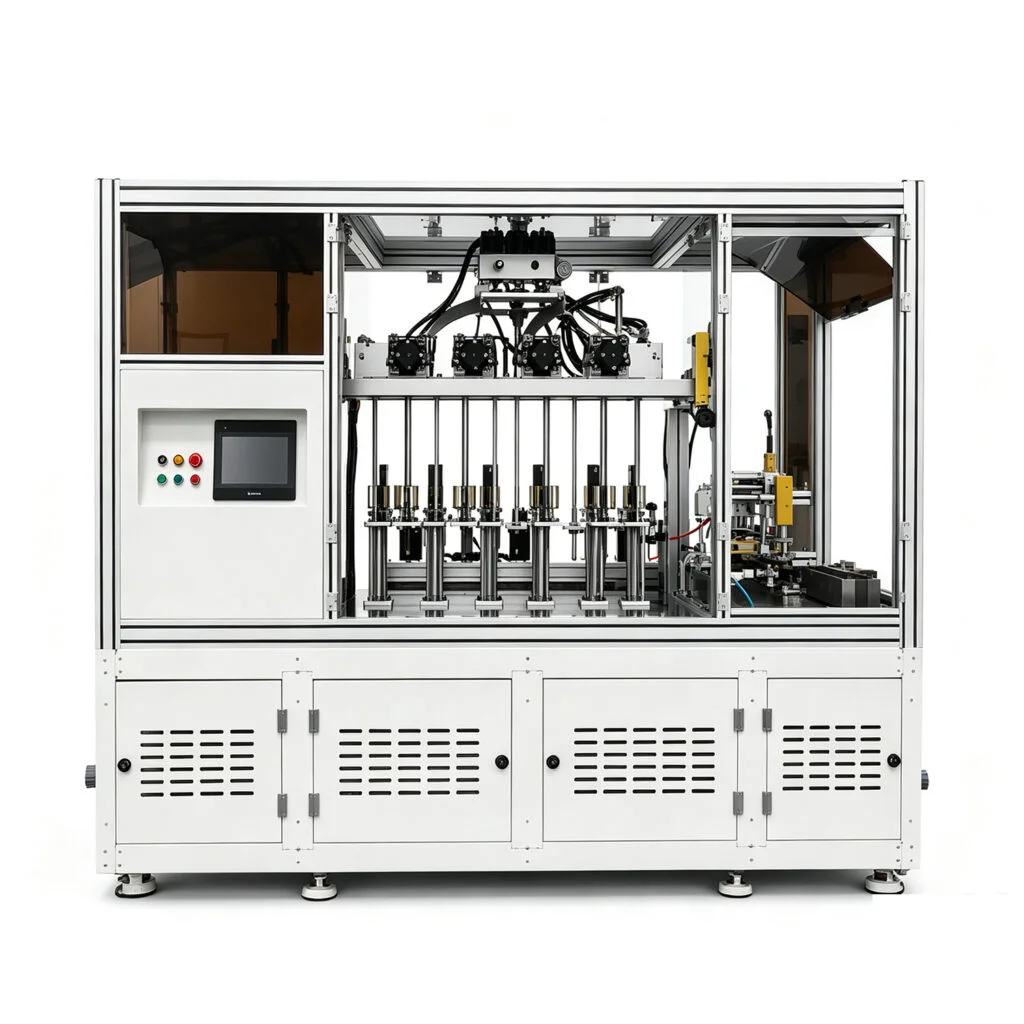
Copper Heat Pipe Vacuum Degassing Machine Guide
1. What Is a Copper Heat Pipe Vacuum Degassing Machine?
A Copper Heat Pipe Vacuum Degassing Machine removes unwanted gases from copper heat pipes during manufacturing.
Copper heat pipes transfer heat through evaporation and condensation. Their internal working environment directly affects thermal performance.
During production, residual air and other non-condensable gases may remain inside the tube. Moisture and surface contaminants may also affect internal cleanliness.
Therefore, manufacturers need suitable preparation and vacuum processing procedures.
A Copper Heat Pipe Vacuum Degassing Machine helps establish controlled vacuum conditions. Depending on its configuration, it may combine vacuum pumping, heating, monitoring, and process control.
The machine supports an important stage before final fluid charging and sealing. However, the exact sequence depends on the heat pipe design.
For manufacturers, suitable degassing equipment helps standardize production procedures. It also supports consistent process management across different product models.
2. Why Do Copper Heat Pipes Need Vacuum Degassing?
Vacuum degassing helps prepare the internal environment of copper heat pipes. This process addresses several manufacturing concerns.
2.1 Removing Non-Condensable Gases
Non-condensable gases can interfere with heat pipe operation. Unlike working-fluid vapor, these gases do not participate in the normal condensation cycle.
They may accumulate near the condenser section. Consequently, they can reduce the effective heat transfer area.
Vacuum processing helps remove residual gases before final sealing. However, manufacturers must select suitable process conditions.
2.2 Supporting Moisture Removal
Moisture can remain inside copper tubes after cleaning. Heating under suitable vacuum conditions can support moisture removal.
However, vacuum degassing does not replace proper cleaning. Manufacturers should control both preparation and drying procedures.
2.3 Improving Internal Process Consistency
Different tube batches may contain different residual contaminants. Consistent preparation helps reduce process variation.
A controlled vacuum process provides repeatable operating conditions. It also helps manufacturers establish documented production procedures.
2.4 Preparing Tubes for Fluid Charging
Vacuum processing often precedes working-fluid charging. A suitable internal environment supports the subsequent filling process.
Therefore, degassing and fluid filling require coordinated process planning.
For related equipment, consider the Heat Pipe Fluid Filling Machine internal link opportunity.
3. Working Principle of Vacuum Degassing Equipment
A Copper Heat Pipe Vacuum Degassing Machine uses vacuum technology to reduce internal gas pressure.
Its operating principle combines several process stages. The exact configuration varies between machine models.
3.1 Workpiece Loading
First, operators load copper heat pipes into suitable fixtures. The fixtures position the tubes for processing.
Their design should match tube dimensions. Proper positioning also supports stable connections.
3.2 Vacuum Connection
Next, operators connect the tubes to the vacuum system. The connection method depends on the machine structure.
Reliable connections help maintain vacuum conditions. They also reduce unwanted air leakage.
3.3 Vacuum Pumping
The vacuum system removes gas from the connected workpieces. Pumping continues according to the required process conditions.
The achievable vacuum level depends on the pump configuration. It also depends on system leakage and internal outgassing.
3.4 Heating and Degassing
Some systems combine heating with vacuum processing. Heating can help release moisture and volatile substances from internal surfaces.
However, temperature selection requires careful evaluation. It must suit the tube material and manufacturing process.
3.5 Vacuum Monitoring
The control system monitors relevant vacuum conditions. Operators can use these readings to assess process stability.
Depending on the equipment, the system may include programmable process settings. It may also support automatic cycle control.
3.6 Process Completion
After the required process conditions are reached, the machine completes the cycle.
Operators then follow the approved production sequence. This may include fluid charging, sealing, and subsequent inspection.
4. Main Components of the Machine
Different manufacturers offer different machine configurations. However, several components commonly support vacuum degassing operations.
4.1 Vacuum Pumping System
The vacuum pump removes gas from the workpiece and connected pipeline.
Pump selection depends on the required vacuum range. Manufacturers should also consider pumping speed and process conditions.
4.2 Heating System
Some machines include a heating unit. It helps support moisture removal during vacuum processing.
The heating configuration should match the workpiece design. Temperature control also requires appropriate process validation.
4.3 Workpiece Fixtures
Fixtures hold copper heat pipes during processing. Their design should accommodate product dimensions and connection positions.
Suitable fixtures can simplify loading and unloading. They also help maintain stable workpiece positioning.
4.4 Vacuum Pipelines and Valves
Pipelines connect the workpieces with the vacuum system. Valves control gas flow during different operating stages.
Suitable components help maintain system integrity. Material compatibility also matters during equipment selection.
4.5 Vacuum Measurement Instruments
Vacuum instruments monitor pressure conditions. Their measurement range should match the intended process.
Manufacturers should confirm instrument accuracy and maintenance requirements. Regular inspection helps maintain measurement reliability.
4.6 Electrical Control System
The control system coordinates machine operation. It may manage pumping, heating, timing, and process monitoring.
Programmable controls can simplify repeated production cycles. They also help standardize operating procedures.
5. Key Process Parameters and Control Factors
Vacuum degassing requires coordinated process control. Several factors can influence the final result.
5.1 Vacuum Level
The required vacuum level depends on the heat pipe design. Manufacturers should define suitable process targets through testing.
A higher vacuum specification does not automatically guarantee better production results. System leakage and workpiece cleanliness also matter.
5.2 Heating Temperature
Heating can promote moisture removal and internal outgassing. However, excessive temperatures may affect materials or connected components.
Therefore, manufacturers should establish suitable temperature limits. These limits should reflect the complete process design.
5.3 Processing Time
Processing time depends on tube dimensions and internal conditions. Larger internal volumes may require different processing arrangements.
Manufacturers should verify cycle times through production trials. They should avoid relying on untested assumptions.
5.4 Vacuum Stability
Vacuum stability is important during processing. Pressure fluctuations may indicate leakage or other system problems.
Operators should monitor pressure changes throughout the cycle. They should also inspect connections and valves regularly.
5.5 Workpiece Cleanliness
Clean internal surfaces support effective degassing. Residual oil, moisture, and particles can complicate vacuum processing.
Therefore, cleaning procedures should precede degassing. Manufacturers should also control workpiece handling.
6. Copper Heat Pipe Degassing Process
A typical manufacturing process includes several coordinated stages.
The exact workflow depends on product structure and equipment configuration.
Step 1: Copper Tube Preparation
Manufacturers prepare copper tubes according to product drawings. They check dimensions, surface conditions, and processing quality.
Tube cutting and forming may occur during earlier stages. The sequence depends on the manufacturing design.
Step 2: Internal Cleaning
The tubes undergo suitable cleaning procedures. This stage helps remove oil, particles, and other contaminants.
Cleaning methods should match the material and product requirements. Proper drying should follow the cleaning operation.
Step 3: Wick Structure Installation
Some heat pipes contain sintered powder or other wick structures. Manufacturers install these structures according to product specifications.
The wick supports liquid return during heat pipe operation. Its condition can influence overall thermal performance.
Step 4: Vacuum Degassing
Operators load the prepared tubes into the degassing equipment. The machine then performs the required vacuum process.
Heating may support moisture removal when the configuration includes this function. Operators should follow validated process parameters.
Step 5: Working Fluid Charging
After suitable preparation, manufacturers introduce the working fluid. The fluid type and quantity depend on the heat pipe design.
A Heat Pipe Fluid Filling Machine can support this operation.
Step 6: Tube Sealing
Manufacturers seal the heat pipe using a suitable process. Welding or another approved sealing method may apply.
The sealing process should protect the internal working environment. Its parameters require product-specific validation.
Step 7: Quality Inspection
Finished heat pipes undergo appropriate inspection. Testing may include leakage checks and thermal performance evaluation.
Manufacturers should define inspection standards before mass production. They should also record relevant process results.
7. How to Choose Suitable Degassing Equipment
Selecting a suitable Copper Heat Pipe Vacuum Degassing Machine requires detailed process information.
Price alone cannot determine equipment suitability. Buyers should evaluate the following factors.
7.1 Confirm Copper Tube Specifications
Provide tube diameter, length, wall thickness, and product drawings.
Different dimensions may require different fixtures. They may also influence the vacuum connection design.
7.2 Define Vacuum Requirements
Identify the required vacuum range and process conditions. Also, clarify whether the process requires heating.
These details help determine the vacuum system configuration. They also support more accurate technical evaluation.
7.3 Evaluate Production Capacity
Estimate the required output and daily operating hours. Then, determine the preferred loading method.
A batch system may suit certain production arrangements. Other factories may prefer multiple workpiece positions.
7.4 Consider Automation Requirements
Manual systems may suit flexible production. Automatic systems can support standardized and repetitive operations.
However, automation should match actual production needs. Buyers should evaluate loading, unloading, and process control.
7.5 Check Heating Control
If the process requires heating, confirm its temperature range and control method.
Also, review temperature uniformity requirements. These factors can influence the final machine configuration.
7.6 Review Maintenance Requirements
Inspect the accessibility of pumps, valves, and filters. Also, confirm maintenance intervals and replacement procedures.
Clear technical documentation supports routine maintenance. Suitable service support can also reduce operational interruptions.
7.7 Request Sample Testing
Provide representative copper heat pipes for testing. This approach helps verify equipment compatibility.
Manufacturers can then evaluate the process results. They can also discuss suitable machine configurations.
8. Integration with Copper Heat Pipe Production Lines
A vacuum degassing machine usually operates within a larger production system.
Its position depends on the manufacturing process. Therefore, manufacturers should coordinate upstream and downstream equipment.
A typical copper heat pipe production workflow may include:
- Copper tube cutting
- Tube cleaning and drying
- Wick structure preparation
- Powder filling and sintering
- Tube forming and bending
- Internal cleaning and preparation
- Vacuum degassing
- Working-fluid filling
- Sealing and welding
- Leakage inspection
- Thermal performance testing
Not every factory follows an identical sequence. Some processes may combine several operations.
For example, wick preparation may require specialized equipment. Powder filling and sintering also need suitable process coordination.
Consider these internal-link opportunities:
- Heat Pipe Production Line– Link to the overall manufacturing workflow.
- Heat Pipe Equipment Production Line– Link to integrated equipment configuration.
- Heat Pipe Fluid Filling Machine– Link to working-fluid charging equipment.
- Heat Pipe Filling & Welding Machine– Link to combined filling and welding operations.
- Automatic Heat Pipe Heating Degasser Machine– Link to heating and vacuum degassing equipment.
- U-Shaped Heat Pipe Vacuum Machine– Link to vacuum processing for U-shaped heat pipes.
- Vacuum Sintering Furnace– Link to wick structure manufacturing.
- Heat Pipe Multi-Station Dry-Out Tester– Link to heat pipe process testing.
A coordinated production line can reduce unnecessary handling. It can also improve process management and equipment utilization.
9. Common Degassing Problems and Solutions
Vacuum processing problems can interrupt manufacturing. Therefore, operators should establish clear inspection procedures.
9.1 Failure to Reach the Required Vacuum
Possible causes include system leakage or pump problems. Contaminated connections may also affect vacuum performance.
Suggested solutions:
- Inspect vacuum connections.
- Check valves and pipeline joints.
- Review pump operating conditions.
- Inspect relevant sealing components.
- Verify pressure measurement instruments.
9.2 Unstable Vacuum Readings
Unstable readings may indicate leakage or measurement issues. They may also reflect changing outgassing conditions.
Suggested solutions:
- Check system connections.
- Inspect vacuum instruments.
- Review the pumping sequence.
- Confirm workpiece cleanliness.
- Record pressure changes during processing.
9.3 Insufficient Moisture Removal
Moisture removal depends on several process factors. These include cleaning, drying, temperature, and vacuum conditions.
Suggested solutions:
- Improve upstream cleaning procedures.
- Confirm the drying process.
- Review heating parameters.
- Check vacuum system performance.
- Validate processing time with samples.
9.4 Excessive Processing Time
Long processing cycles can reduce production efficiency. Possible causes include unsuitable pump capacity or poor workpiece preparation.
Suggested solutions:
- Review the required vacuum conditions.
- Check system leakage.
- Evaluate workpiece loading.
- Improve cleaning and drying procedures.
- Discuss suitable pump configurations.
9.5 Inconsistent Results Between Batches
Batch differences can result from inconsistent preparation. Changes in fixtures and operating parameters may also contribute.
Suggested solutions:
- Standardize loading procedures.
- Record approved process settings.
- Inspect fixtures regularly.
- Monitor vacuum and heating conditions.
- Review inspection results by batch.
10. Industrial Applications of Copper Heat Pipes
Copper heat pipes serve many thermal management applications. Their use depends on operating temperature and product design.
10.1 Computer Cooling Systems
Copper heat pipes appear in many computer cooling assemblies. They transfer heat away from processors and other components.
Their manufacturing quality supports consistent thermal performance. Therefore, controlled internal preparation remains important.
10.2 LED Cooling Products
LED lighting systems require suitable heat dissipation. Heat pipes can support selected high-power LED designs.
Manufacturers should control tube preparation and filling. They should also verify finished product performance.
10.3 Telecommunications Equipment
Telecommunications devices often operate for extended periods. Effective thermal management helps control internal temperatures.
Copper heat pipes can support compact cooling structures. Their manufacturing processes should match the required design.
10.4 Industrial Electronics
Industrial electronic equipment may generate considerable heat. Suitable thermal management helps maintain operating conditions.
Heat pipes can serve selected industrial cooling applications. Their internal cleanliness and fluid charge remain important.
10.5 Automotive Electronics
Automotive systems contain many heat-generating components. Some designs use heat pipes for thermal management.
Manufacturers should evaluate operating conditions carefully. They should also follow the product’s technical requirements.
11. Why Choose cncooling-thermal?
Selecting suitable equipment requires technical communication. Buyers should explain their products and manufacturing requirements clearly.
cncooling-thermal focuses on heat pipe and thermal management manufacturing equipment. Its equipment solutions cover different stages of heat pipe production.
When discussing a Copper Heat Pipe Vacuum Degassing Machine, manufacturers should prepare:
- Copper tube drawings and dimensions
- Wick structure information
- Required vacuum conditions
- Heating requirements, if applicable
- Expected production volume
- Existing equipment configuration
- Downstream filling and sealing requirements
These details help clarify the required machine functions. They also support more accurate equipment evaluation.
Visit the official website:
https://cncooling-thermal.com/
Explore related solutions, including the Heat Pipe Production Line and Heat Pipe Equipment Production Line.
12. Frequently Asked Questions
Q1. What Is a Copper Heat Pipe Vacuum Degassing Machine?
It is manufacturing equipment that removes residual gases from copper heat pipes through vacuum processing.
Some configurations also include heating. The actual functions depend on the machine design.
Q2. Why Do Copper Heat Pipes Need Vacuum Degassing?
Residual non-condensable gases can interfere with heat transfer. Vacuum degassing helps prepare the internal environment before subsequent manufacturing operations.
Q3. Does Vacuum Degassing Remove Moisture?
Vacuum processing can support moisture removal. Heating may improve this process when the equipment includes a suitable heating system.
However, proper cleaning and drying remain necessary.
Q4. Can One Machine Process Different Copper Heat Pipe Sizes?
Some machines support multiple product sizes. Fixture design and connection compatibility determine the available range.
Buyers should provide product drawings before equipment selection.
Q5. Is Heating Necessary During Vacuum Degassing?
Not every process requires heating. Its necessity depends on internal cleanliness and manufacturing requirements.
Manufacturers should confirm suitable parameters through process testing.
Q6. What Equipment Follows Vacuum Degassing?
The next operation may involve working-fluid charging. Sealing and welding may follow according to the production sequence.
A suitable Heat Pipe Fluid Filling Machine can support fluid charging.
Q7. How Can Manufacturers Improve Degassing Consistency?
They should standardize cleaning, loading, vacuum, and heating procedures. Regular equipment inspections also support stable operation.
Q8. What Information Should Buyers Provide When Ordering?
Provide tube dimensions, product drawings, vacuum requirements, and production targets.
Also, explain heating needs and downstream process requirements. These details help suppliers evaluate suitable equipment configurations.