
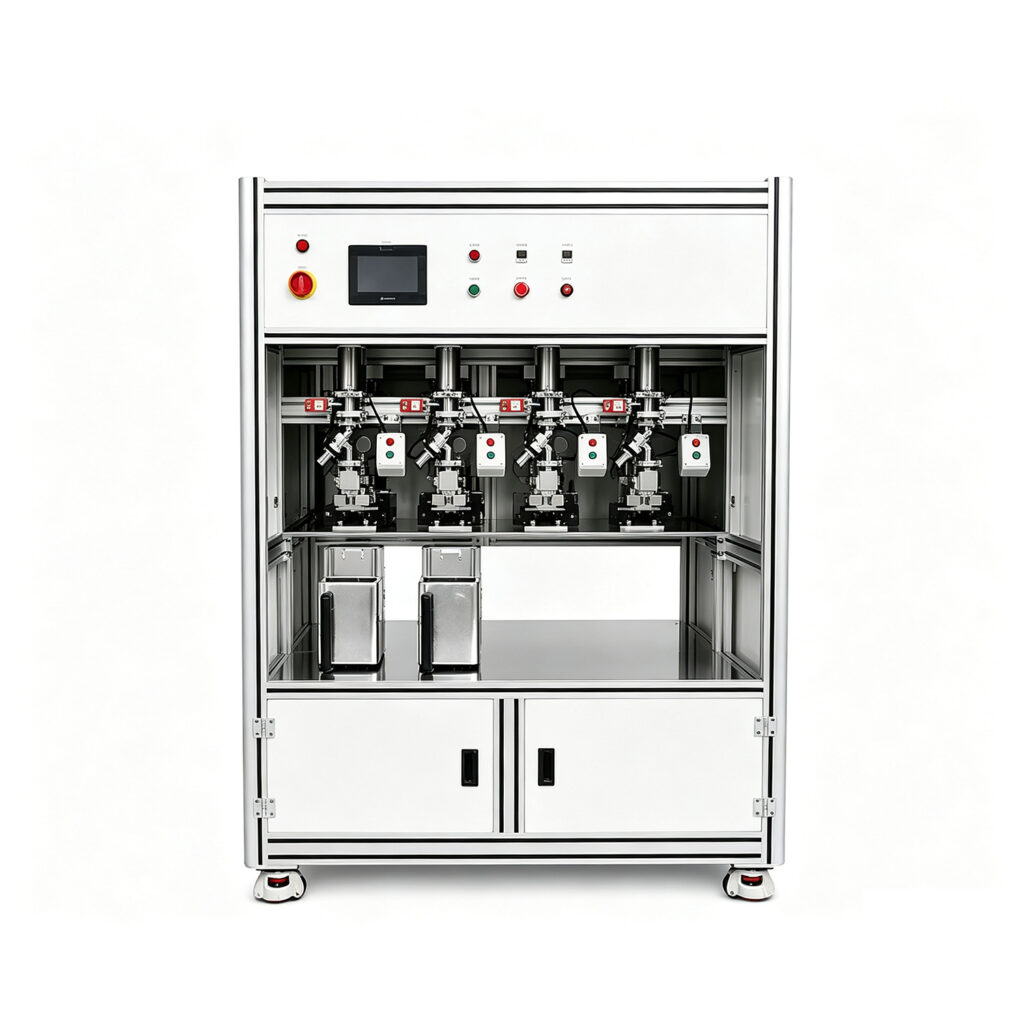
Heat Pipe Production Line: Design and Process Guide
1. Introduction to Heat Pipe Production Line Design
A Heat Pipe Production Line connects manufacturing processes into one organized production system. It supports consistent output and controlled product quality.
Heat pipes transfer thermal energy through evaporation and condensation. They serve electronics, telecommunications, automotive systems, and industrial cooling applications.
As electronic devices become more compact, thermal management becomes increasingly important. Consequently, manufacturers need reliable heat pipe production capabilities.
A complete manufacturing solution requires more than individual machines. It also needs suitable process planning, equipment coordination, and quality management.
A typical production system may include:
- Copper tube preparation
- Tube cutting and forming
- Wick structure processing
- Vacuum sintering
- Cleaning and drying
- Working-fluid charging
- Vacuum degassing
- Tube sealing and welding
- Leakage inspection
- Thermal performance testing
However, each factory has different production requirements. Therefore, manufacturers should design the production system around their target products.
2. Heat Pipe Production Requirements and Planning
Before building a production facility, manufacturers should define their product requirements. This step helps determine the manufacturing process and equipment configuration.
2.1 Identify Target Heat Pipe Products
First, identify the heat pipe types that the factory will manufacture. Common products include standard copper heat pipes and ultra-thin heat pipes.
Different products require different manufacturing arrangements. Their dimensions and internal structures also influence equipment selection.
Important product information includes:
- Tube diameter and length
- Tube wall thickness
- Material specifications
- Wick structure type
- Working fluid requirements
- Product shape and dimensions
- Expected thermal performance
Furthermore, manufacturers should prepare product drawings. These drawings help equipment suppliers evaluate technical requirements.
2.2 Estimate Production Demand
Next, calculate the expected production volume. Consider daily output, monthly demand, and working shifts.
Production planning should also account for product changes. Frequent model changes may influence equipment utilization.
Therefore, manufacturers should avoid choosing machines based only on maximum speed. The complete manufacturing process determines actual output.
2.3 Define Manufacturing Objectives
A production facility may prioritize different objectives. Some manufacturers focus on high-volume production.
Others require flexible equipment for multiple product specifications. Meanwhile, new factories may prioritize manageable investment and future expansion.
Consequently, production objectives should guide every planning decision.
3. Heat Pipe Production Line Process Flow
A suitable Heat Pipe Production Line follows a clearly defined manufacturing sequence. Each stage prepares the product for subsequent operations.
3.1 Raw Material Inspection
First, manufacturers inspect incoming copper tubes and other materials. Material consistency supports stable manufacturing conditions.
Operators should check dimensions and surface quality. They should also verify material specifications.
3.2 Tube Cutting and Preparation
Next, cutting equipment prepares tubes according to product drawings. Accurate cutting helps maintain consistent dimensions.
After cutting, manufacturers may perform cleaning and additional preparation. These operations remove contaminants and improve process consistency.
3.3 Tube Forming and Shaping
Some heat pipe designs require additional forming operations. These may include necking, bending, or other dimensional adjustments.
The forming process must match the product structure. Suitable fixtures help maintain repeatable results.
Internal link opportunity: Heat Pipe Necking Machine
3.4 Wick Structure Manufacturing
The wick structure supports liquid return inside the heat pipe. Different structures require different manufacturing methods.
Common wick types include:
- Sintered copper powder
- Copper mesh
- Grooved internal structures
- Composite wick structures
For powder-based products, filling equipment introduces copper powder into the tube. A sintering furnace then forms the porous structure.
For other designs, manufacturers need suitable forming or insertion processes. Therefore, wick selection directly influences production planning.
Internal link opportunities: Heat Pipe Powder Filling Machine; Vacuum Sintering Furnace
3.5 Cleaning and Drying
After structural processing, manufacturers remove unwanted contaminants. Drying equipment also helps remove residual moisture.
This stage supports suitable internal conditions. Process requirements depend on materials and product design.
3.6 Vacuum Degassing
Next, vacuum equipment removes unwanted gases. This process helps prepare the heat pipe for working-fluid charging.
Manufacturers should establish suitable vacuum conditions. They should also maintain consistent operating procedures.
Internal link opportunity: Heat Pipe Degassing Machine
3.7 Working-Fluid Filling
Filling equipment introduces the specified working fluid. Accurate charging supports the intended thermal characteristics.
However, the required quantity depends on product dimensions and internal volume. Manufacturers should validate filling parameters.
3.8 Welding and Sealing
After filling, welding equipment seals the tube. A reliable sealing process helps maintain internal operating conditions.
Manufacturers should monitor welding parameters and fixture positioning. They should also inspect finished joints.
Internal link opportunity: Heat Pipe Filling & Welding Machine
3.9 Final Testing and Inspection
Finally, manufacturers inspect finished heat pipes. Testing may include leakage checks and thermal performance evaluation.
These procedures help identify manufacturing defects. They also support product consistency and process improvement.
Internal link opportunities: Heat Pipe Multi-Station Dry-Out Tester; Thermal Performance Testing Equipment
4. Key Factors in Production Line Design
A successful production system needs balanced planning. Manufacturers should consider several technical and operational factors.
4.1 Product Structure
The internal wick structure determines important manufacturing requirements. For example, sintered powder products require powder filling and sintering processes.
Mesh structures require suitable mesh preparation and positioning. Grooved structures may need specialized tube processing.
Therefore, manufacturers should define the product structure before selecting equipment.
4.2 Tube Dimensions
Tube diameter and length influence machine compatibility. They also affect fixtures and material handling.
A flexible configuration may support multiple dimensions. However, manufacturers should confirm the actual adjustment range.
4.3 Process Sequence
Each manufacturing operation should follow a logical sequence. Poor process planning can create unnecessary handling.
Furthermore, the output from one process must match the next operation. This reduces additional adjustment and production interruptions.
4.4 Equipment Compatibility
Equipment compatibility affects overall production efficiency. Machines should support consistent workpiece dimensions and process requirements.
Manufacturers should review machine interfaces and operating conditions. They should also confirm the complete process flow with suppliers.
4.5 Maintenance Requirements
Production equipment requires regular inspection and maintenance. Therefore, factories should consider maintenance access during layout planning.
Accessible machine arrangements simplify servicing. They also help reduce unnecessary downtime.
5. Equipment Configuration and Process Coordination
A Heat Pipe Production Line combines multiple equipment categories. The final configuration depends on manufacturing requirements.
5.1 Tube Processing Equipment
Tube processing equipment prepares the metal envelope. It may include cutting, necking, and forming machines.
These machines establish the required tube geometry. Their accuracy influences subsequent operations.
5.2 Wick Processing Equipment
Wick processing equipment creates the internal capillary structure. It may include powder filling and vacuum sintering systems.
Other wick designs require different preparation equipment. Manufacturers should select suitable machines for each product type.
5.3 Vacuum Processing Equipment
Vacuum systems support drying, degassing, and other controlled processes. Their configuration depends on production methods.
Manufacturers should evaluate vacuum requirements and operating stability. Regular maintenance also supports reliable operation.
5.4 Filling and Welding Equipment
Filling and welding systems introduce working fluid and seal the product. These processes require suitable control and positioning.
A coordinated system can reduce repeated handling. It may also simplify production management.
5.5 Testing Equipment
Testing equipment evaluates finished product characteristics. It helps manufacturers monitor quality and identify process problems.
Testing arrangements should reflect product applications. Manufacturers should also define inspection standards.
6. Production Capacity and Factory Layout
Factory layout affects material movement and equipment utilization. Therefore, manufacturers should plan workstation positions carefully.
6.1 Calculate Production Capacity
Start by estimating the required daily output. Then, evaluate the cycle time of each manufacturing stage.
The slowest process may restrict overall production. Consequently, equipment capacity should match the complete workflow.
6.2 Organize Workstations
Arrange machines according to the manufacturing sequence. This approach can reduce unnecessary transportation.
Also, reserve enough space for operators and maintenance. Material storage should not obstruct production movement.
6.3 Plan Material Flow
Raw materials should move through clearly defined production areas. Finished products should follow a separate inspection and storage route.
This arrangement improves production organization. It also helps reduce handling errors.
6.4 Reserve Expansion Space
Production demand may increase over time. Therefore, manufacturers should consider future equipment installation.
A flexible layout can simplify expansion. However, factory planning should reflect realistic business requirements.
7. Automation Solutions for Heat Pipe Manufacturing
Automation can improve process coordination and reduce manual operations. However, manufacturers should select an appropriate automation level.
7.1 Manual and Semi-Automatic Production
Manual and semi-automatic systems offer flexibility. They can support smaller batches and varied product specifications.
Operators handle some material transfers and machine adjustments. Meanwhile, specialized equipment performs important processing operations.
7.2 Automatic Material Handling
Automatic handling systems move workpieces between selected stations. They may include feeding, positioning, and transfer mechanisms.
These systems can reduce repeated manual handling. However, manufacturers should evaluate product compatibility.
7.3 Integrated Production Monitoring
Production monitoring helps operators understand machine conditions. It can track selected process parameters and production information.
For example, manufacturers may record temperature and vacuum data. They can also monitor equipment operating status.
7.4 Flexible Production Configuration
Some factories manufacture several heat pipe models. Therefore, flexible equipment and changeover procedures become important.
Standardized fixtures may simplify product changes. Suitable process documentation also supports consistent operation.
8. Quality Management Throughout Production
Quality management should begin with incoming materials. It should continue through every manufacturing stage.
8.1 Incoming Material Inspection
Check material specifications and dimensional consistency. Also, inspect tube surfaces for visible defects.
Clear inspection procedures help prevent unsuitable materials from entering production.
8.2 Process Parameter Control
Monitor important manufacturing parameters. These may include filling quantities, sintering conditions, and vacuum settings.
Consistent process control supports repeatable results. It also helps operators identify abnormal conditions.
8.3 Welding and Sealing Inspection
Inspect welding quality and sealing conditions. Leakage may affect internal operating conditions.
Manufacturers should establish suitable inspection methods. They should also maintain clear records.
8.4 Thermal Performance Evaluation
Thermal testing helps evaluate heat transfer behavior. It can also support product comparison and development.
Manufacturers should use repeatable testing conditions. Results should follow defined acceptance requirements.
8.5 Production Traceability
Production records help identify process variations. They also support quality analysis.
Useful records include material batches and machine settings. Testing results and maintenance information also provide value.
9. Challenges in Heat Pipe Production Line Operation
Manufacturers may face several operational challenges. However, proper planning can reduce many common problems.
9.1 Unbalanced Production Capacity
Different machines may have different processing times. This can create bottlenecks between manufacturing stages.
Manufacturers should monitor workstation cycle times. Then, they can adjust equipment capacity or production arrangements.
9.2 Product Specification Changes
Different heat pipe models may require different fixtures. Frequent changes can increase preparation time.
Therefore, manufacturers should evaluate product flexibility before purchasing equipment. Standardized tooling may also simplify changeovers.
9.3 Inconsistent Wick Processing
Wick structure consistency influences heat pipe operation. Manufacturers should control filling and forming procedures.
For sintered products, they should also monitor furnace conditions. Process validation helps establish suitable settings.
9.4 Vacuum and Sealing Problems
Vacuum instability and poor sealing can affect product reliability. Regular inspection helps identify equipment problems.
Manufacturers should also maintain suitable vacuum systems. Clear welding procedures support consistent sealing.
9.5 Inadequate Testing Capacity
Insufficient testing capacity may delay finished product inspection. Consequently, testing equipment should match production requirements.
Manufacturers should include inspection capacity in initial planning. This prevents avoidable production delays.
10. How to Select a Heat Pipe Production Solution
Choosing a manufacturing solution requires technical and operational evaluation. Manufacturers should compare complete configurations rather than individual machine prices.
First, prepare product drawings and material information. Then, define the expected production volume.
Next, review the proposed manufacturing process. Confirm whether each machine supports the required operations.
Also, evaluate these factors:
- Product dimensions and structure
- Manufacturing process requirements
- Equipment compatibility
- Production capacity
- Automation level
- Factory layout
- Testing requirements
- Maintenance and technical support
- Future expansion options
Furthermore, discuss customization requirements with suppliers. Provide clear information about target products and operating conditions.
Finally, compare equipment configuration and service scope. Consider long-term production needs alongside initial investment.
11. Why Choose cncooling-thermal?
cncooling-thermal focuses on thermal manufacturing equipment and industrial production solutions. The company supports manufacturers exploring heat pipe production equipment.
A suitable production system starts with product requirements. Therefore, manufacturers should evaluate the complete process before selecting machinery.
cncooling-thermal can be included in supplier discussions about equipment configuration and production requirements. Manufacturers can review relevant information through its official website.
When planning a new factory or upgrading existing equipment, consider:
- Target heat pipe products
- Manufacturing process requirements
- Equipment configuration
- Production capacity
- Automation preferences
- Quality inspection needs
- Factory layout
- Future expansion plans
Furthermore, clear technical communication helps reduce configuration uncertainty. It also supports more practical equipment planning.
Visit the official website:
cncooling-thermal – Heat Pipe Manufacturing Equipment
For better technical evaluation, prepare product drawings and expected output information. These details help suppliers understand manufacturing requirements.
12. Frequently Asked Questions
Q1. What is a Heat Pipe Production Line?
A Heat Pipe Production Line combines machines and processes for manufacturing heat pipes. It supports tube preparation, wick processing, vacuum treatment, filling, sealing, and testing.
Q2. What are the main stages of heat pipe manufacturing?
The main stages include material preparation and tube processing. They also include wick formation, cleaning, degassing, fluid charging, welding, and testing.
Q3. What equipment does a heat pipe factory need?
A factory may need cutting, forming, powder filling, and sintering equipment. It may also require vacuum systems, filling machines, welding machines, and testing equipment.
Q4. What wick structures can a production line manufacture?
Common wick structures include sintered powder, mesh, and grooved designs. Each structure requires suitable manufacturing processes.
Q5. How does production capacity affect equipment selection?
Production capacity determines equipment requirements and workstation arrangements. Manufacturers should balance machine cycle times across the complete process.
Q6. Can one production line manufacture multiple heat pipe models?
Some production systems support multiple product specifications. However, compatibility depends on machine design and available tooling.
Q7. Is automation necessary for heat pipe manufacturing?
Automation is not essential for every factory. Semi-automatic systems may suit smaller production batches.
Larger production volumes may benefit from integrated automation. Manufacturers should evaluate actual requirements before investing.
Q8. How can manufacturers improve heat pipe quality?
Control material quality and manufacturing parameters. Also, inspect wick structures, vacuum conditions, welding, and thermal performance.
Consistent production records support further improvement.
Q9. What should manufacturers prepare before requesting equipment quotations?
Prepare product drawings and material specifications. Also, provide expected output, wick structure, and automation requirements.
These details help suppliers evaluate suitable equipment configurations.
Q10. Where can manufacturers learn about heat pipe production equipment?
Manufacturers can explore industrial thermal equipment information through cncooling-thermal.
Official website: https://cncooling-thermal.com/
Conclusion
A reliable Heat Pipe Production Line requires suitable equipment and coordinated manufacturing processes. Product specifications should guide every important design decision.
Furthermore, balanced production capacity improves equipment utilization. Proper factory layout also supports efficient material movement.
Meanwhile, process monitoring and thermal testing help maintain product consistency. Regular maintenance supports long-term equipment operation.
Manufacturers should evaluate the complete production system before purchasing machinery. This approach helps establish a practical manufacturing foundation.
For heat pipe equipment information and production solutions, visit cncooling-thermal.