
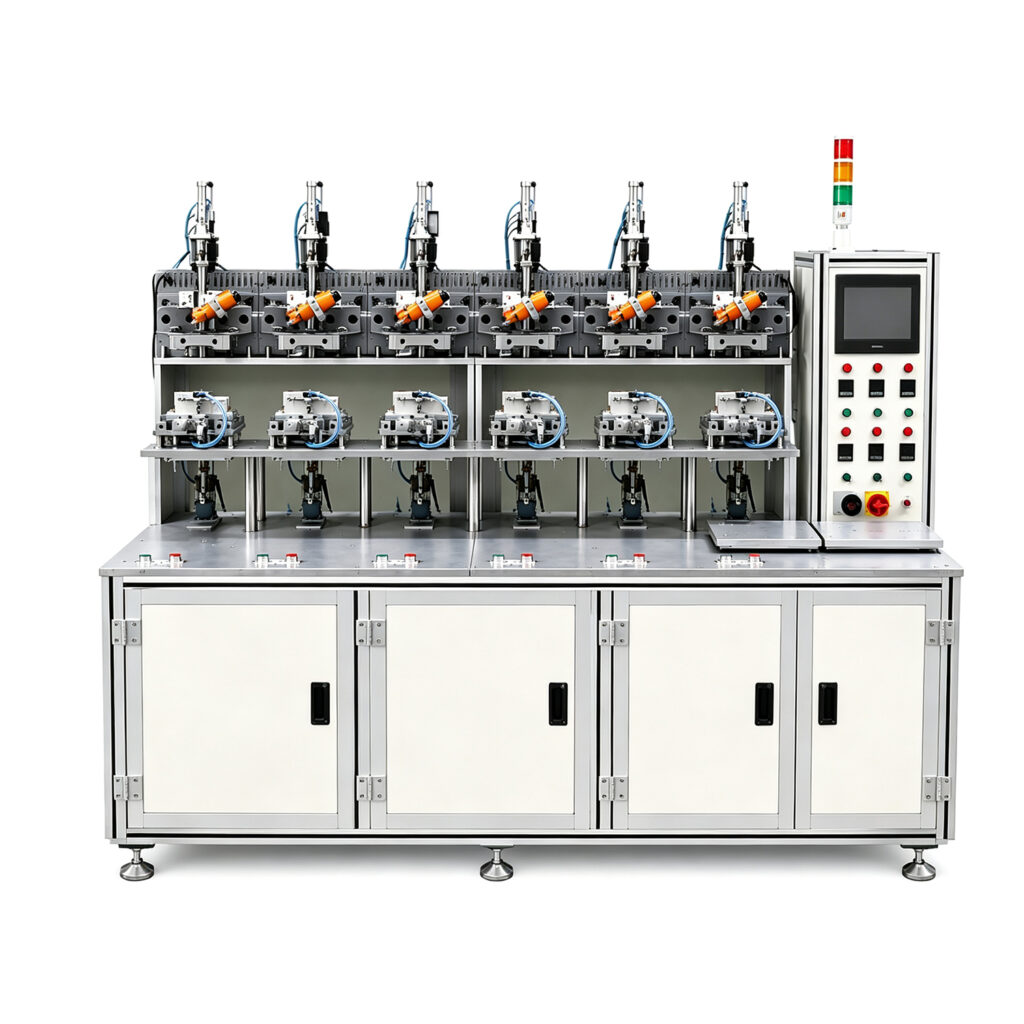
Heat Pipe Production Line: Complete Manufacturing Guide
1. Introduction
Heat pipes play an important role in modern thermal management. They transfer heat efficiently through evaporation and condensation. Manufacturers use them in electronics, automotive systems, telecommunications, and industrial cooling applications.
However, producing reliable heat pipes requires more than simple tube processing. Each product needs a suitable internal wick structure, controlled working fluid, and reliable sealing. Every manufacturing stage can influence the final thermal performance.
A Heat Pipe Production Line integrates multiple processes into an organized manufacturing system. It helps manufacturers coordinate tube preparation, powder filling, sintering, vacuum processing, fluid charging, welding, and product testing.
An appropriately designed production line can reduce unnecessary handling. It can also improve process consistency and support higher production capacity.
This guide explains the main manufacturing stages, essential equipment, automation options, and purchasing considerations. It also explores how manufacturers can develop an efficient heat pipe manufacturing process.
2. What Is a Heat Pipe Production Line?
A Heat Pipe Production Line is an integrated manufacturing system for producing heat pipes. It combines equipment and processes that prepare, assemble, fill, seal, and inspect heat pipe products.
A typical heat pipe consists of three main elements:
- A sealed metal container, usually a tube.
- An internal wick structure that returns liquid.
- A working fluid that transfers heat through phase changes.
During operation, the working fluid absorbs heat at the evaporator section. It evaporates and moves toward the condenser section. There, it releases heat and returns to liquid form.
The wick structure transports the liquid back toward the evaporator. This cycle continues during normal operation.
To achieve reliable performance, manufacturers must control several production factors. These include tube dimensions, wick structure, cleanliness, working fluid quantity, vacuum conditions, and sealing quality.
A complete production line may include:
- Tube cutting and preparation.
- Tube cleaning and forming.
- Wick material filling.
- Sintering and structural processing.
- Tube sealing and welding preparation.
- Vacuum extraction and degassing.
- Working fluid filling.
- Final welding and sealing.
- Performance and leakage testing.
Not every production line uses the same configuration. The required equipment depends on heat pipe design, production volume, and manufacturing technology.
3. Main Manufacturing Processes in a Heat Pipe Production Line
A complete production process requires coordination between several specialized operations.
3.1 Tube Cutting and Preparation
First, manufacturers prepare metal tubes according to product specifications. Cutting equipment produces the required tube length.
The cutting process should maintain dimensional consistency. Burrs and deformation may affect later operations.
After cutting, manufacturers may perform cleaning and end preparation. These steps help create suitable conditions for subsequent processing.
Related equipment: Automatic Tube Cutting Machine and Heat Pipe Automatic Tail Cutting Machine.
3.2 Tube Forming and Necking
Some heat pipe designs require a reduced tube diameter or special end geometry. A necking machine helps shape the tube according to the product design.
Accurate forming helps maintain consistent dimensions. It also supports proper fixture positioning during later production stages.
The forming process must match the tube material and wall thickness.
Related equipment: Heat Pipe Necking Machine.
3.3 Wick Structure Preparation
The wick structure plays a critical role in heat pipe operation. It returns condensed working fluid from the condenser to the evaporator.
Common wick structures include:
- Sintered powder wick
- Grooved wick
- Screen mesh wick
- Composite wick
Manufacturers select the wick according to thermal performance requirements and product geometry.
For sintered powder wicks, metal powder enters the tube through a controlled filling process. The powder then forms a porous structure during sintering.
Related equipment: Heat Pipe Powder Filling Machine.
3.4 Powder Filling and Sintering
Powder filling requires control over material quantity and distribution. Uneven filling may create inconsistent wick structures.
After filling, manufacturers use a suitable sintering process. Heat treatment bonds powder particles while maintaining the required porous structure.
The process parameters depend on powder material, particle size, tube structure, and product design.
Related equipment: Heat Pipe Powder Filling Machine and Vacuum Sintering Furnace.
3.5 Tube Cleaning and Preparation
Cleanliness affects the internal environment of a heat pipe. Contamination may interfere with fluid behavior and thermal performance.
Manufacturers should select suitable cleaning methods for their materials and process requirements. They should also prevent contamination after cleaning.
Some production processes include additional surface preparation or drying operations.
3.6 Vacuum Degassing
After internal preparation, manufacturers need to remove residual gases and moisture. Vacuum degassing helps establish suitable internal conditions.
Non-condensable gases can reduce the effective heat transfer area. They may also interfere with vapor movement.
A suitable vacuum process helps reduce these risks. The required conditions depend on the product design and validated manufacturing specifications.
Related equipment: Heat Pipe Degassing Machine.
3.7 Working Fluid Filling
After vacuum processing, manufacturers introduce the specified working fluid.
Water is common in copper heat pipes. However, other fluids may suit different materials and operating temperature ranges.
The required filling quantity depends on several factors:
- Internal tube volume
- Wick structure and porosity
- Tube diameter and length
- Operating temperature
- Product thermal requirements
Accurate charging helps maintain consistent product behavior. Manufacturers should establish product-specific filling parameters.
Related equipment: Heat Pipe Filling & Welding Machine.
3.8 Welding and Final Sealing
After filling, manufacturers seal the charging opening. The sealing process must prevent fluid leakage and preserve the internal environment.
Depending on the product structure, manufacturers may use resistance welding or another suitable welding technology.
The selected method must match the material and joint geometry. Proper parameter control helps maintain consistent sealing quality.
Related equipment: Heat Pipe Filling & Welding Machine and Resistance Welding Machine.
3.9 Dry-Out and Performance Testing
Finished heat pipes require appropriate testing. Dry-out testing evaluates the product’s thermal behavior under defined conditions.
Thermal performance testing can help manufacturers assess heat transfer capability. Leakage inspection can also verify sealing integrity.
Manufacturers should establish suitable acceptance standards for each product model.
Related equipment: Heat Pipe Multi-station Dry-out Tester and Multi-station Thermal Performance Tester.
4. Essential Equipment in a Heat Pipe Production Line
Different manufacturing processes require different machines. The following equipment categories commonly support heat pipe production.
Equipment | Main Function |
Automatic Tube Cutting Machine | Cuts tubes to specified lengths |
Heat Pipe Necking Machine | Forms or reduces tube ends |
Heat Pipe Powder Filling Machine | Introduces wick powder into tubes |
Vacuum Sintering Furnace | Forms porous sintered wick structures |
Heat Pipe Degassing Machine | Removes residual gases and moisture |
Heat Pipe Filling & Welding Machine | Charges working fluid and seals filling openings |
Resistance Welding Machine | Supports suitable metal joining operations |
Heat Pipe Multi-station Dry-out Tester | Evaluates dry-out behavior |
Multi-station Thermal Performance Tester | Measures thermal performance under defined conditions |
The final equipment combination depends on the manufacturing process. Some products require fewer operations. Others need additional forming, cleaning, and inspection stations.
5. Types of Heat Pipe Production Lines
Manufacturers can configure production lines according to product characteristics and output requirements.
5.1 Standard Copper Heat Pipe Production Line
Copper heat pipes are common in electronic cooling applications. They often use sintered powder or grooved wick structures.
A typical production process includes tube cutting, wick preparation, sintering, vacuum processing, fluid filling, welding, and testing.
Manufacturers should select equipment according to tube dimensions and wick design.
5.2 Thin Heat Pipe Production Line
Thin heat pipes serve compact electronic devices. Their dimensions and internal volumes require careful manufacturing control.
Filling accuracy becomes particularly important for products with small internal spaces.
Fixtures and processing equipment must also accommodate thin tube structures without unnecessary deformation.
5.3 High-Capacity Heat Pipe Production Line
Large-scale manufacturers may require multiple workstations and automated material handling.
An integrated layout can coordinate different manufacturing stages. It may also reduce manual transfers and production waiting time.
However, actual capacity depends on the cycle time of each process. Manufacturers should balance the complete line rather than optimize only one machine.
5.4 Customized Heat Pipe Production Line
Some applications require special tube shapes, dimensions, or thermal characteristics.
A customized line can combine suitable equipment according to product requirements. Manufacturers should provide technical drawings and samples during the design stage.
6. Benefits of an Integrated Heat Pipe Production Line
An integrated manufacturing system offers several potential advantages.
6.1 Improved Production Coordination
Separate machines can create unnecessary waiting time between processes. An integrated production layout helps coordinate operations.
Manufacturers can arrange workstations according to the actual manufacturing sequence. This improves material flow and production planning.
6.2 More Consistent Manufacturing Processes
Standardized equipment settings help reduce process variation. Manufacturers can also define operating recipes for different product models.
However, consistency requires suitable process validation and regular maintenance.
6.3 Reduced Manual Handling
Manual transfers increase labor requirements. They may also introduce positioning errors and contamination risks.
Automation can reduce some handling steps. The actual benefits depend on the line configuration.
6.4 Better Production Management
A suitable control system can coordinate equipment operations. Some systems also support production data collection.
These functions help manufacturers review process conditions. They can also support traceability and continuous improvement.
6.5 Flexible Production Expansion
A modular production layout can simplify future expansion. Manufacturers may add workstations when production requirements increase.
However, expansion requires sufficient factory space and compatible process connections.
7. Key Factors When Designing a Heat Pipe Production Line
Production line design should begin with the product, not the machine list.
7.1 Define Heat Pipe Specifications
Manufacturers should prepare the main product parameters:
- Tube material
- Tube diameter
- Tube length
- Wall thickness
- Wick structure
- Working fluid
- Filling quantity
- Required thermal performance
These specifications determine equipment compatibility.
7.2 Determine Production Capacity
Calculate the expected output per shift or day. Then evaluate the cycle time of each manufacturing stage.
Pay particular attention to sintering, vacuum processing, filling, and testing. These operations may influence the overall production rate.
7.3 Select Suitable Automation Levels
Some factories prefer semi-automatic equipment. Others need automatic loading, transfer, and process control.
The best choice depends on production volume, labor availability, and product changeover frequency.
7.4 Consider Factory Layout
Equipment arrangement affects material movement and operator access.
A good layout should provide suitable space for loading, unloading, maintenance, and inspection. It should also consider utilities and safety requirements.
7.5 Plan Quality Inspection
Quality control should cover the entire manufacturing process.
Important inspection points include:
- Tube dimensions
- Wick structure consistency
- Internal cleanliness
- Vacuum conditions
- Working fluid quantity
- Welding quality
- Leakage performance
- Thermal performance
Inspection requirements should match product specifications and customer standards.
8. Common Challenges in Heat Pipe Manufacturing
Even a well-designed production line requires careful process management.
Production Challenge | Possible Cause | Recommended Approach |
Uneven wick structure | Inconsistent powder distribution | Review powder filling and sintering parameters |
Poor thermal performance | Incorrect fluid quantity or wick structure | Validate product design and charging specifications |
Unstable vacuum | Leaking connections or equipment issues | Inspect vacuum components and seals |
Fluid leakage | Inconsistent sealing quality | Review welding parameters and leak inspection |
Tube deformation | Unsuitable forming conditions | Optimize tooling and process settings |
Low production efficiency | Unbalanced station cycle times | Analyze the complete production flow |
Inconsistent product results | Process variation between batches | Standardize recipes and inspection procedures |
Manufacturers should identify root causes before changing production parameters. This helps prevent additional quality problems.
9. How to Choose a Heat Pipe Production Line Supplier
Selecting a supplier requires technical and manufacturing evaluation.
9.1 Review Equipment Experience
Look for suppliers familiar with heat pipe manufacturing processes. They should understand wick structures, vacuum processing, fluid charging, and sealing.
9.2 Request Process Evaluation
Provide product drawings and representative samples. Ask the supplier to review the manufacturing process and recommend suitable equipment.
9.3 Confirm Equipment Compatibility
Check whether the proposed machines support your tube materials and dimensions. Also confirm compatibility with the selected working fluid and production process.
9.4 Evaluate Testing Capability
Ask how the supplier verifies filling, welding, and thermal performance. Sample testing can help confirm process compatibility.
9.5 Review After-Sales Support
Consider installation guidance, operator training, spare parts, and technical assistance.
A reliable supplier should provide clear information about machine operation and maintenance.
cncooling-thermal focuses on heat pipe and vapor chamber manufacturing equipment. Visit cncooling-thermal.com to explore related production solutions.
Before requesting a quotation, prepare technical drawings, product samples, expected output, and process requirements. This information helps suppliers recommend a more suitable production configuration.
10. Maintenance and Process Optimization
Regular maintenance helps maintain stable production conditions.
10.1 Maintain Vacuum Equipment
Inspect vacuum pumps, pipelines, valves, and connection seals. Follow the manufacturer’s maintenance schedule.
10.2 Check Filling Systems
Inspect dosing components and fluid pipelines. Keep fluid-contact parts clean and compatible with the selected working fluid.
10.3 Inspect Welding Components
Check electrodes, fixtures, and electrical connections. Replace worn parts when necessary.
10.4 Monitor Sintering Conditions
Review furnace temperature and process settings. Maintain suitable records for each product specification.
10.5 Review Production Data
Analyze cycle times, rejection rates, and equipment downtime. These indicators help identify improvement opportunities.
11. Frequently Asked Questions
Q1. What is a Heat Pipe Production Line?
A Heat Pipe Production Line is an integrated manufacturing system for producing heat pipes. It may include tube preparation, wick formation, vacuum processing, fluid filling, welding, and testing equipment.
Q2. What machines are needed for heat pipe production?
Common equipment includes tube cutting machines, powder filling machines, sintering furnaces, degassing machines, filling and welding machines, and thermal testing equipment.
Q3. What is the most important process in heat pipe manufacturing?
Several processes influence product quality. Wick structure formation, vacuum processing, working fluid charging, and final sealing all require careful control.
Q4. Can a production line manufacture different heat pipe sizes?
A suitably designed line may support multiple sizes through adjustable fixtures and process settings. The actual range depends on the equipment configuration.
Q5. What working fluid do heat pipes use?
Water is common in copper heat pipes. Other working fluids may suit different materials and operating temperature ranges.
Q6. Why does heat pipe production require vacuum equipment?
Vacuum equipment removes residual gases and moisture. This helps establish suitable internal conditions for heat pipe operation.
Q7. How do manufacturers test heat pipe quality?
They may inspect dimensions, sealing integrity, leakage, and thermal performance. Specific testing methods depend on product requirements.
Q8. Can the production line be customized?
Yes. Manufacturers can configure equipment according to product dimensions, wick structures, output targets, and automation requirements.
Q9. How can manufacturers improve production efficiency?
They can balance workstation cycle times, reduce unnecessary handling, standardize process settings, and improve preventive maintenance.
Q10. What information should buyers provide when requesting a quotation?
Provide product drawings, materials, dimensions, wick specifications, working fluid, expected output, and automation requirements. Samples can further support technical evaluation.
12. Conclusion
A Heat Pipe Production Line combines specialized equipment and manufacturing processes. It supports every major stage, from tube preparation to final product testing.
An effective production line must match the heat pipe design. It should also provide suitable process control, production capacity, and quality inspection.
Manufacturers should evaluate product specifications before selecting equipment. They should also consider automation, factory layout, maintenance, and future expansion.
With proper planning, an integrated production line can improve manufacturing coordination and product consistency.
For heat pipe and vapor chamber equipment solutions, visit cncooling-thermal.