
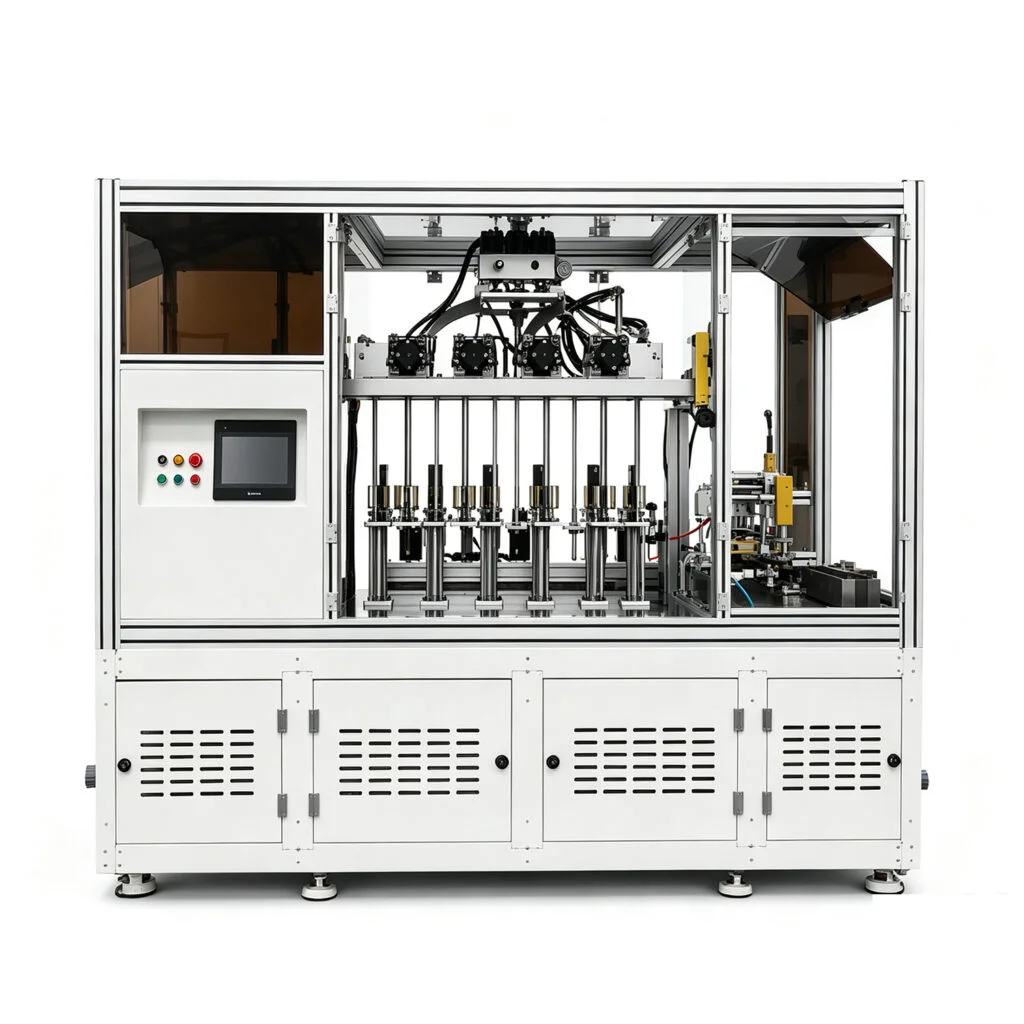
Heat Pipe Equipment Production Line: Complete Guide
1. What Is a Heat Pipe Equipment Production Line?
A Heat Pipe Equipment Production Line combines specialized machines for manufacturing heat pipes. It supports every major stage of the production process.
Heat pipes transfer thermal energy through evaporation and condensation. Their internal working fluid moves between heating and cooling sections.
This technology supports efficient heat transfer in compact structures. Therefore, heat pipes serve many electronics and industrial cooling applications.
Typical applications include:
- CPU and GPU cooling systems
- Server and data center equipment
- LED lighting products
- Telecommunications devices
- Automotive electronics
- Industrial thermal management
- Power electronics
- Consumer electronic products
However, manufacturing reliable heat pipes requires several specialized machines.
These machines handle tube preparation, wick manufacturing, vacuum treatment, fluid filling, sealing, and inspection.
A complete production solution connects these operations into an organized workflow.
The required configuration depends on product dimensions, materials, wick structures, and production targets.
For example, sintered wick heat pipes require suitable powder filling and sintering equipment.
Meanwhile, other wick structures may require different processing methods.
Therefore, equipment selection should begin with the actual product design.
2. Main Equipment Used in Heat Pipe Manufacturing
A professional Heat Pipe Equipment Production Line may include several specialized machines.
Each machine performs a specific manufacturing function.
2.1 Automatic Heat Pipe Cutting Machine
The automatic cutting machine prepares metal tubes for further processing.
It cuts tubes according to specified dimensions and production requirements.
Consistent cutting helps maintain product dimensions. It also supports subsequent forming and assembly operations.
When selecting a cutting machine, consider:
- Compatible tube materials
- Supported tube diameters
- Cutting length range
- Cutting accuracy
- Automatic feeding options
- Production cycle time
The machine should match the dimensions of the intended products.
2.2 Heat Pipe Powder Filling Machine
The powder filling machine introduces metal powder into heat pipe tubes.
It supports the production of sintered wick structures.
Powder distribution affects the resulting porous structure. Therefore, consistent filling is important.
An automatic powder filling machine can reduce manual handling. It can also improve production repeatability.
Manufacturers should evaluate filling accuracy, tooling, powder compatibility, and cleaning requirements.
2.3 Vacuum Sintering Furnace
A vacuum sintering furnace bonds metal powder particles together through controlled heating.
This process creates the porous wick structure inside the heat pipe.
The furnace must support suitable temperature and atmospheric conditions.
Important selection factors include:
- Temperature control range
- Temperature uniformity
- Vacuum performance
- Furnace capacity
- Heating configuration
- Process control system
The correct furnace configuration depends on the material and wick design.
2.4 Heat Pipe Degassing Machine
The degassing machine removes unwanted gases and moisture from the heat pipe.
This operation prepares the internal cavity for working fluid filling.
Manufacturers may choose different configurations according to production requirements.
Primary, secondary, and multi-station systems serve different processing arrangements.
A suitable machine should provide stable vacuum conditions and repeatable operation.
2.5 Heat Pipe Filling and Welding Machine
The filling and welding machine introduces working fluid and seals the heat pipe.
Depending on its configuration, it may integrate vacuum treatment and fluid dosing.
The machine may also perform the required welding operation.
Accurate fluid filling is essential for consistent product behavior.
Reliable sealing helps prevent working fluid leakage.
Manufacturers should confirm compatibility with their tube dimensions and product designs.
2.6 Heat Pipe Necking Machine
The necking machine reduces the diameter of a selected tube section.
This operation prepares the tube for subsequent sealing or processing.
Suitable tooling helps maintain consistent dimensions.
The required necking range depends on product specifications.
2.7 Heat Pipe Tail Cutting Machine
The tail cutting machine removes excess tube material.
It helps achieve the required final dimensions.
Consistent tail cutting also supports a cleaner finished appearance.
2.8 Heat Pipe Multi-Station Dry-Out Tester
A multi-station dry-out tester evaluates heat pipe behavior under defined thermal conditions.
It allows manufacturers to test multiple samples during one operating cycle.
Testing requirements depend on product design and application.
2.9 Thermal Performance Testing Equipment
Thermal performance testing evaluates the heat transfer behavior of finished products.
Manufacturers can compare test results against design requirements.
Consistent testing conditions help improve result reliability.
3. How Production Equipment Works Together
Individual machines must operate as part of a coordinated manufacturing system.
The connection between machines affects material flow, production efficiency, and process consistency.
3.1 Tube Preparation Stage
The process begins with tube cutting and cleaning.
The cutting machine prepares the required dimensions.
The cleaning process then removes contaminants from internal and external surfaces.
Prepared tubes proceed to wick manufacturing.
3.2 Wick Manufacturing Stage
For sintered wick products, the powder filling machine introduces metal powder.
The filled tubes then enter the vacuum sintering furnace.
Controlled heating creates the porous wick structure.
The required process depends on material characteristics and product design.
3.3 Vacuum Processing Stage
After wick formation, the heat pipe requires suitable internal preparation.
The degassing machine removes unwanted gases and moisture.
Stable vacuum conditions help prepare the product for working fluid filling.
3.4 Filling and Sealing Stage
The filling system introduces the specified working fluid.
The sealing equipment then closes the tube.
Depending on the production arrangement, these functions may operate within one integrated machine.
3.5 Final Inspection Stage
Finished products undergo dimensional and visual inspection.
Manufacturers may also perform leakage and thermal performance tests.
Inspection results help determine whether products meet customer requirements.
3.6 Equipment Coordination
Production equipment should have compatible operating capacities.
A machine with a much longer cycle time may create a bottleneck.
Therefore, manufacturers should compare cycle times across the entire workflow.
Suitable material handling can also reduce unnecessary waiting and transportation.
4. Equipment Configuration for Different Heat Pipe Products
Different heat pipe designs require different manufacturing equipment.
A suitable production line should reflect the actual product structure.
4.1 Sintered Wick Heat Pipes
Sintered wick heat pipes use porous metal structures.
Their production generally requires powder filling and sintering equipment.
The process must control powder distribution and heating conditions.
Manufacturers should also evaluate internal cleaning and vacuum processing requirements.
4.2 Grooved Wick Heat Pipes
Grooved wick heat pipes use internal channels to transport liquid.
Their manufacturing process differs from sintered wick production.
Suitable machining or forming equipment creates the required grooves.
Therefore, manufacturers should confirm the wick structure before selecting machines.
4.3 Screen Mesh Wick Heat Pipes
Screen mesh heat pipes use metal mesh as the wick structure.
Manufacturing requires suitable mesh preparation and internal assembly processes.
The mesh material and positioning influence product consistency.
4.4 Flat Heat Pipes
Flat heat pipes have a flattened structure.
Their manufacturing may require additional forming and dimensional control.
The equipment must support the required product geometry.
Manufacturers should provide drawings and samples for technical evaluation.
4.5 Customized Heat Pipe Products
Some applications require special dimensions or internal structures.
These products may need customized tooling and machine configurations.
A professional supplier should evaluate the manufacturing process before recommending equipment.
5. Automatic and Semi-Automatic Production Solutions
Manufacturers can select different automation levels.
The decision depends on production volume, product variety, labor planning, and investment budgets.
5.1 Semi-Automatic Production Equipment
Semi-automatic systems combine automated machines with manual operations.
They offer flexibility for manufacturers producing different specifications.
Their main advantages include:
- Flexible production arrangements
- Easier product changeovers
- Lower integration complexity
- Adaptability to varied batches
However, manual handling increases operator involvement.
It may also create additional process variation.
5.2 Fully Automatic Production Equipment
Fully automatic systems integrate more manufacturing operations.
They may include automatic feeding, positioning, transfer, and process monitoring.
Automation can reduce repetitive manual work.
It can also improve coordination between production stages.
However, manufacturers should confirm compatibility across all machines.
5.3 Customized Equipment Integration
Some factories require a combination of automatic and semi-automatic equipment.
A customized system can address specific production requirements.
For example, a factory may automate tube preparation and filling. It may retain manual inspection for selected quality checks.
The final arrangement depends on process requirements.
6. Key Technical Factors When Selecting Equipment
Choosing suitable equipment requires a detailed review of product and manufacturing requirements.
The following factors help manufacturers evaluate potential solutions.
6.1 Product Dimensions
Provide tube diameter, length, wall thickness, and final geometry.
These details determine machine compatibility and tooling requirements.
6.2 Wick Structure
Identify whether the product uses sintered powder, grooves, screen mesh, or another structure.
Different wick designs require different manufacturing processes.
6.3 Working Fluid Requirements
Specify the intended working fluid and filling quantity requirements.
The filling system should support the product’s process parameters.
6.4 Production Capacity
Estimate daily and annual output requirements.
Then compare the cycle times of individual machines.
Equipment capacity should support the complete manufacturing workflow.
6.5 Automation Requirements
Define the required level of automatic feeding and material transfer.
Consider whether centralized monitoring provides practical value.
Automation should improve the production process rather than create unnecessary complexity.
6.6 Factory Conditions
Consider available floor space, power supply, ventilation, and other installation requirements.
These conditions can affect equipment selection and project planning.
6.7 Maintenance Requirements
Review machine accessibility and routine maintenance procedures.
Ask about spare parts and technical support.
These factors influence long-term operating costs.
7. Improving Equipment Efficiency and Product Quality
Suitable equipment alone cannot guarantee consistent production.
Manufacturers also need effective process management and maintenance.
7.1 Standardize Operating Procedures
Establish clear procedures for each machine.
Include operating parameters, inspection points, and safety requirements.
Standard procedures help reduce variation between operators.
7.2 Monitor Critical Process Parameters
Monitor relevant parameters during powder filling, sintering, degassing, and welding.
Maintain production records for important operations.
These records help identify process deviations.
7.3 Improve Material Handling
Organize material transfer between machines.
Reduce unnecessary movement and waiting time.
Suitable fixtures and transfer systems can improve workflow efficiency.
7.4 Maintain Equipment Regularly
Inspect important components according to a maintenance schedule.
Check vacuum systems, heating elements, fixtures, and moving parts.
Preventive maintenance helps reduce unexpected downtime.
7.5 Train Equipment Operators
Operators should understand machine functions and process requirements.
Proper training helps prevent operating errors.
It also supports safer and more consistent production.
7.6 Establish Product Traceability
Record production batches and relevant inspection results.
Connect these records with machine settings where practical.
Traceability helps manufacturers investigate quality issues.
8. Common Equipment Problems and Solutions
Production equipment may experience operational problems.
Early diagnosis helps reduce downtime and production losses.
Common problem | Possible cause | Recommended action |
Inconsistent powder filling | Unstable feeding or unsuitable tooling | Check filling settings and powder characteristics |
Uneven sintering results | Temperature variation | Review furnace conditions and maintenance |
Slow vacuum processing | Leakage or system deterioration | Inspect seals, connections, and vacuum components |
Incorrect fluid quantity | Dosing variation | Check calibration and filling procedures |
Welding defects | Incorrect parameters or positioning | Inspect fixtures and welding settings |
Inconsistent test results | Different test conditions | Standardize testing procedures |
Frequent machine downtime | Insufficient maintenance | Establish preventive maintenance schedules |
8.1 Powder Filling Problems
Inconsistent powder filling may create uneven wick structures.
Manufacturers should inspect powder quality and feeding mechanisms.
They should also verify tooling compatibility.
8.2 Sintering Problems
Uneven heating can affect wick formation.
Manufacturers should review temperature uniformity and furnace condition.
Process records can help identify recurring deviations.
8.3 Vacuum System Problems
Slow vacuum processing may result from leakage or component deterioration.
Inspect seals, connections, and relevant vacuum components.
Follow the equipment manufacturer’s maintenance recommendations.
8.4 Filling and Welding Problems
Inaccurate filling may result from dosing variation.
Welding defects may come from unsuitable parameters or positioning.
Manufacturers should check calibration, fixtures, and process settings.
9. How to Choose a Reliable Equipment Manufacturer
Selecting an equipment supplier requires more than comparing quotations.
Manufacturers should evaluate technical experience and project support.
9.1 Review the Equipment Range
Check whether the supplier provides machines for different manufacturing stages.
A broad equipment range may simplify project coordination.
However, machine compatibility remains essential.
9.2 Evaluate Technical Understanding
A capable supplier should understand heat pipe manufacturing processes.
It should review product drawings and explain equipment requirements.
The proposal should match actual product specifications.
9.3 Request a Clear Equipment Configuration
Ask for a detailed equipment list and process arrangement.
Confirm each machine’s function and operating requirements.
Avoid proposals that provide only general machine descriptions.
9.4 Confirm Customization Capabilities
Some products require special tooling or machine configurations.
Discuss these requirements before ordering.
The supplier should explain any limitations clearly.
9.5 Review Installation and Training Support
Ask about installation, commissioning, and operator training.
Confirm the technical documents included with the equipment.
Clear support arrangements help simplify project implementation.
9.6 Consider Long-Term Service
Check spare parts availability and troubleshooting support.
Also discuss maintenance recommendations and equipment upgrades.
Long-term support matters throughout the equipment’s operating life.
10. Frequently Asked Questions
10.1 What Is a Heat Pipe Equipment Production Line?
A Heat Pipe Equipment Production Line combines specialized machines for manufacturing heat pipes.
It may include cutting, powder filling, sintering, degassing, fluid filling, welding, and testing equipment.
The configuration depends on product design and production targets.
10.2 What Machines Are Used in Heat Pipe Manufacturing?
Common machines include automatic tube cutters and powder filling machines.
Manufacturers may also require vacuum sintering furnaces, degassing machines, and filling and welding equipment.
Testing systems support final product inspection.
10.3 Is a Vacuum Sintering Furnace Necessary for Every Heat Pipe?
No. A vacuum sintering furnace is necessary for manufacturing processes that use sintered wick structures.
Other wick designs may require different manufacturing equipment.
The process depends on the internal structure.
10.4 What Does a Heat Pipe Degassing Machine Do?
A degassing machine removes unwanted gases and moisture from the internal cavity.
It prepares the heat pipe for working fluid filling.
Suitable vacuum processing supports consistent manufacturing conditions.
10.5 Can One Equipment Line Manufacture Different Heat Pipe Sizes?
Some systems support multiple dimensions through adjustable tooling.
However, the supported range depends on machine design.
Manufacturers should confirm product compatibility before purchasing equipment.
10.6 What Is the Difference Between Automatic and Semi-Automatic Equipment?
Automatic equipment performs more operations with limited manual intervention.
Semi-automatic equipment requires operators for selected production steps.
The best option depends on production volume and product variety.
10.7 How Can Manufacturers Improve Equipment Efficiency?
Manufacturers should balance machine capacities and standardize operating procedures.
They should also maintain equipment and reduce unnecessary material handling.
Suitable automation can further improve process coordination.
10.8 Can Equipment Suppliers Provide Customized Solutions?
Many equipment suppliers can configure machines around specific product requirements.
Customization may include tooling, machine selection, and automation.
Manufacturers should provide drawings and samples for evaluation.
10.9 What Information Is Needed for an Equipment Quotation?
Prepare product drawings, materials, dimensions, and expected production capacity.
Also describe the wick structure and required manufacturing processes.
This information helps suppliers prepare a suitable equipment proposal.
11. Conclusion
A reliable Heat Pipe Equipment Production Line connects specialized machines into an organized manufacturing system.
Each machine supports a specific operation, from tube preparation to final inspection.
However, equipment selection must follow actual product requirements.
Manufacturers should evaluate machine compatibility, automation, capacity, and long-term maintenance.
A well-planned solution can improve process coordination and manufacturing consistency.
For heat pipe manufacturing equipment and customized production solutions, visit cncooling-thermal.