
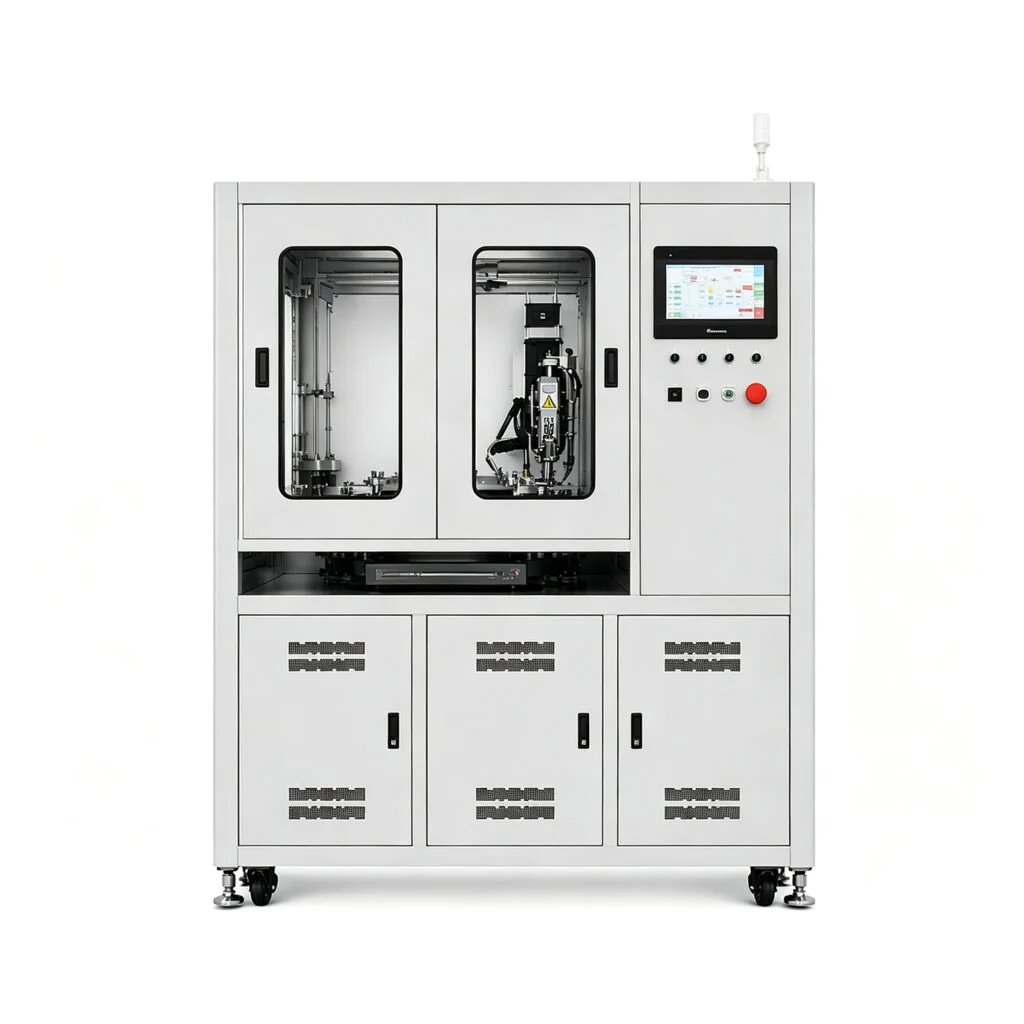
Heat Pipe Fluid Filling Machine: Complete Guide
1. What Is a Heat Pipe Fluid Filling Machine?
A heat pipe fluid filling machine supplies working fluid into heat pipes during manufacturing. It supports accurate fluid charging and consistent production processes.
Heat pipes transfer heat through evaporation and condensation. Therefore, the working fluid plays an essential role.
The fluid absorbs heat at the evaporator section. Then, vapor travels toward the cooler condenser section.
After releasing heat, the vapor condenses into liquid. Finally, the liquid returns through the internal wick structure.
However, an unsuitable fluid charge can affect thermal performance. Therefore, manufacturers need reliable filling equipment.
A Heat Pipe Fluid Filling Machine helps control this important manufacturing operation. It can also support repeatable filling procedures.
Depending on the production design, manufacturers may use manual, semi-automatic, or automatic systems.
The appropriate configuration depends on several factors. These include tube dimensions, working fluid, production volume, and process requirements.
2. Why Is Fluid Filling Important in Heat Pipe Manufacturing?
Fluid filling directly influences heat pipe operation. Therefore, manufacturers must manage this process carefully.
2.1 Maintaining the Correct Fluid Charge
Each heat pipe requires an appropriate working-fluid quantity. The required amount depends on its internal structure and design.
Too much fluid may occupy unnecessary internal space. Consequently, vapor movement and thermal behavior may change.
Too little fluid can also create problems. For example, the evaporator section may experience insufficient liquid supply.
Therefore, manufacturers should establish suitable filling parameters. They should also verify these parameters during production.
2.2 Supporting Thermal Performance
Heat pipes rely on continuous evaporation and condensation. Their working fluid enables this heat transfer cycle.
However, filling errors can affect operating stability. Consistent fluid charging helps manufacturers control process variation.
2.3 Improving Production Consistency
Manual filling can introduce operator-related differences. These differences may increase across large production batches.
A suitable filling system helps standardize operations. It also supports repeatable manufacturing procedures.
2.4 Reducing Material Waste
Working fluids may require careful handling. Uncontrolled filling can increase material loss.
A properly configured machine helps manage fluid delivery. Therefore, it can support better material utilization.
3. How Does a Heat Pipe Fluid Filling Machine Work?
A Heat Pipe Fluid Filling Machine performs controlled fluid delivery. Its exact operating sequence depends on the machine configuration.
However, a typical process includes several stages.
Step 1: Prepare the Heat Pipe
First, operators prepare the heat pipe for filling. They check its dimensions and connection condition.
The internal structure should meet the required manufacturing specifications. Additionally, the tube should complete necessary preparation procedures.
Step 2: Connect the Filling System
Next, operators connect the heat pipe to the filling equipment. The connection must provide a suitable interface.
A stable connection helps prevent fluid leakage. It also supports consistent process conditions.
Step 3: Prepare the Working Fluid
The filling system uses the specified working fluid. Its selection depends on the heat pipe design and operating temperature.
Manufacturers should follow the approved material requirements. They should also maintain suitable storage and handling conditions.
Step 4: Set Filling Parameters
Operators configure the relevant filling parameters. These may include fluid quantity, delivery conditions, and process timing.
Some systems support programmable operation. This function helps standardize repeated production tasks.
Step 5: Deliver the Working Fluid
The machine introduces working fluid into the heat pipe. Its delivery method depends on the equipment design.
Controlled delivery helps maintain consistent filling conditions. Meanwhile, operators can monitor the process.
Step 6: Complete the Filling Operation
After fluid delivery, the machine completes its programmed cycle. Operators then inspect the connection and filling result.
The next manufacturing stage may involve sealing or welding. The sequence depends on the production process.
4. Main Components of a Fluid Filling Machine
Different machines use different configurations. However, several components commonly support fluid filling operations.
4.1 Fluid Storage System
The storage system holds the working fluid. Its design should match the selected material and production requirements.
Suitable storage conditions help maintain material quality. Furthermore, proper connections support reliable fluid delivery.
4.2 Fluid Delivery Unit
The delivery unit transfers fluid into the heat pipe. Depending on the design, it may use controlled pumping or another metering method.
Its configuration affects filling consistency. Therefore, manufacturers should evaluate delivery accuracy carefully.
4.3 Filling Connections
Filling connections link the machine with the workpiece. They should match the heat pipe interface.
Reliable connections help reduce leakage risks. They also support stable operation during production.
4.4 Control System
The control system manages machine operation. It may support parameter settings and process monitoring.
Programmable controls can simplify repeated operations. They also help operators maintain consistent procedures.
4.5 Safety Protection
Working-fluid handling requires appropriate safety measures. Therefore, manufacturers should consider material compatibility and workplace requirements.
The machine design should support safe operation. Its protection features should match the working fluid and factory environment.
5. Key Features of Modern Filling Equipment
A modern Heat Pipe Fluid Filling Machine should match the manufacturer’s process requirements.
Several features deserve attention during equipment evaluation.
5.1 Controlled Fluid Delivery
Controlled delivery helps manufacturers manage fluid quantities. It also supports repeatable production conditions.
However, the required accuracy depends on the product design. Buyers should confirm the machine’s actual capabilities.
5.2 Adjustable Process Parameters
Different heat pipe models may require different settings. Therefore, flexible parameter adjustment can improve production adaptability.
Operators can configure suitable procedures for different products. This approach also supports product changeovers.
5.3 Stable Workpiece Connections
Connection stability affects the filling process. A suitable interface helps reduce leakage and interruption risks.
Manufacturers should check compatibility with their tube designs. They should also evaluate fixture adjustment requirements.
5.4 Convenient Operation
A clear control interface helps operators manage production. It can also simplify routine parameter adjustments.
For automated factories, control integration may provide additional value. However, compatibility should be confirmed before purchasing.
5.5 Maintenance Accessibility
Routine maintenance supports long-term equipment operation. Therefore, buyers should examine component accessibility.
They should also review cleaning procedures and replacement requirements. These details can influence operating costs.
6. Different Types of Heat Pipe Filling Systems
Manufacturers can select different filling configurations. The appropriate choice depends on production requirements.
6.1 Manual Filling Equipment
Manual systems require direct operator involvement. They may suit small production volumes or specialized manufacturing tasks.
However, results can depend heavily on operator procedures. Therefore, manufacturers should establish clear operating standards.
6.2 Semi-Automatic Filling Equipment
Semi-automatic machines combine manual preparation with controlled machine operation. They can reduce repetitive operator tasks.
This configuration may suit factories with varied product models. It also provides a practical automation option.
6.3 Automatic Filling Equipment
Automatic systems perform filling operations through programmed controls. They can support standardized production workflows.
However, automation requirements differ between factories. Buyers should evaluate actual cycle requirements and integration conditions.
6.4 Integrated Filling and Welding Systems
Some production processes combine fluid filling with other operations. For example, manufacturers may integrate filling and welding equipment.
This arrangement can reduce separate handling steps. Nevertheless, the process sequence must match the heat pipe design.
For related equipment, consider the Heat Pipe Filling & Welding Machine internal link opportunity.
7. How to Select the Right Filling Machine
Choosing suitable equipment requires more than comparing machine prices. Manufacturers should evaluate their products and production processes first.
7.1 Confirm Heat Pipe Specifications
Start with the product dimensions and structure. Consider tube diameter, length, and connection design.
Different products may require different fixtures. Therefore, provide representative workpiece samples during equipment evaluation.
7.2 Identify the Working Fluid
The working fluid determines important equipment requirements. Its properties influence material compatibility and handling procedures.
Manufacturers should provide accurate fluid information. They should also discuss relevant safety requirements with the equipment supplier.
7.3 Define Filling Requirements
Clarify the required fluid quantity and process range. Also, identify acceptable process variation.
These details help suppliers recommend suitable configurations. They also provide a basis for equipment acceptance testing.
7.4 Evaluate Production Volume
Production volume affects automation decisions. A small workshop may prefer flexible equipment.
In contrast, larger factories may require automatic operation. They may also need multiple filling stations.
7.5 Check Automation Compatibility
Consider how the machine will connect with existing equipment. Review electrical controls and communication requirements.
Also, evaluate fixture loading and unloading. These factors influence the overall production workflow.
7.6 Review After-Sales Support
Equipment buyers should review installation and training arrangements. They should also confirm maintenance support.
Clear technical documentation can simplify daily operation. Furthermore, accessible spare parts help support equipment maintenance.
8. Integration with a Heat Pipe Production Line
A fluid filling machine usually operates within a larger manufacturing process. Therefore, equipment coordination matters.
A typical heat pipe production workflow may include:
- Copper tube cutting
- Tube cleaning and preparation
- Wick structure installation
- Powder filling or wick processing
- Sintering or other thermal treatment
- Forming and bending
- Evacuation and degassing
- Working-fluid filling
- Sealing and welding
- Performance testing
The actual sequence depends on the heat pipe design. Some processes may also combine multiple operations.
For example, vacuum processing can influence the filling sequence. Manufacturers should coordinate these stages carefully.
Consider these related internal-link opportunities:
- Heat Pipe Production Line– Link to the complete manufacturing workflow.
- Heat Pipe Equipment Production Line– Link to equipment configuration and integration.
- Automatic Heat Pipe Heating Degasser Machine– Link to heating and degassing equipment.
- U-Shaped Heat Pipe Vacuum Machine– Link to vacuum processing for U-shaped products.
- Heat Pipe Filling & Welding Machine– Link to combined filling and welding equipment.
- Heat Pipe Multi-Station Dry-Out Tester– Link to process testing equipment.
- Vacuum Sintering Furnace– Link to wick manufacturing equipment.
A coordinated production line can reduce unnecessary handling. It can also improve process management and manufacturing consistency.
9. Common Filling Problems and Solutions
Fluid filling problems may affect production efficiency. Therefore, manufacturers should establish systematic inspection procedures.
9.1 Inconsistent Fluid Quantities
Different filling quantities can create product variation. Possible causes include unstable delivery conditions or incorrect settings.
Suggested actions:
- Check the filling parameter settings.
- Inspect the fluid delivery system.
- Review calibration procedures.
- Standardize operator instructions.
- Record filling results for process analysis.
9.2 Fluid Leakage at Connections
Leaks may occur around filling interfaces. Incorrect fixtures or damaged sealing components can contribute.
Suggested actions:
- Inspect connection surfaces.
- Check fixture compatibility.
- Replace damaged sealing components.
- Confirm proper installation procedures.
- Follow the approved leakage inspection method.
9.3 Unstable Machine Operation
Unstable operation can interrupt production. It may result from control issues or equipment maintenance problems.
Suggested actions:
- Inspect electrical connections.
- Review control parameters.
- Check the delivery mechanism.
- Follow the maintenance schedule.
- Contact technical support when necessary.
9.4 Unsuitable Filling Parameters
Incorrect settings may affect filling quality. Different heat pipe designs can require different process conditions.
Suggested actions:
- Confirm the product specifications.
- Verify the working-fluid requirements.
- Test parameters using representative samples.
- Document approved production settings.
- Review changes after product modifications.
10. Applications Across Thermal Management Industries
Heat pipes support thermal management in many industries. Their applications depend on product structure and operating conditions.
10.1 Electronics Cooling
Heat pipes help transfer heat away from electronic components. Manufacturers use them in various cooling assemblies.
Examples include computer cooling systems and electronic heat sinks. Reliable fluid filling supports consistent manufacturing processes.
10.2 LED Thermal Management
LED products require effective heat dissipation. Heat pipes can support thermal management in suitable designs.
A controlled filling process helps manufacturers manage production quality. It also supports repeatable assembly procedures.
10.3 Industrial Cooling Equipment
Some industrial systems use heat pipes for thermal transfer. Their design depends on operating conditions and installation requirements.
Manufacturers must select suitable working fluids. They must also control critical manufacturing stages.
10.4 Telecommunications Equipment
Telecommunications devices often operate continuously. Therefore, thermal management can influence equipment reliability.
Heat pipes provide a passive heat transfer solution. Their manufacturing quality remains important for stable operation.
10.5 Automotive Electronics
Automotive electronic systems generate heat during operation. Suitable thermal management helps control component temperatures.
Heat pipe designs may support selected cooling applications. Production equipment should match their specific dimensions and requirements.
11. Why Choose cncooling-thermal?
Choosing manufacturing equipment requires technical evaluation. Buyers should consider machine functions, process compatibility, and production goals.
cncooling-thermal focuses on heat pipe and thermal management manufacturing equipment. Its equipment solutions support different stages of heat pipe production.
When evaluating a Heat Pipe Fluid Filling Machine, manufacturers should discuss several details:
- Heat pipe dimensions and product drawings
- Working-fluid type and handling requirements
- Required fluid quantity and process range
- Production volume and automation expectations
- Existing equipment and factory layout
- Filling, vacuum, and sealing process arrangements
These details help determine a suitable equipment configuration. They also support clearer technical communication before purchasing.
Visit the official website: https://cncooling-thermal.com/
For related manufacturing solutions, explore the Heat Pipe Equipment Production Line and Heat Pipe Production Line pages.
12. Frequently Asked Questions
Q1. What Does a Heat Pipe Fluid Filling Machine Do?
It introduces working fluid into heat pipes during manufacturing. The machine supports controlled fluid delivery and repeatable production procedures.
Q2. Why Is Accurate Fluid Filling Important?
The working fluid supports evaporation and condensation. Incorrect fluid quantities may affect heat pipe performance and consistency.
Q3. Which Fluids Can Heat Pipe Filling Equipment Handle?
The suitable fluid depends on the heat pipe design. Water and other working fluids may serve different temperature ranges and applications.
Manufacturers should confirm material compatibility before equipment selection.
Q4. Can One Machine Fill Different Heat Pipe Models?
Some machines support different product models. However, fixture design and parameter adjustment determine actual compatibility.
Buyers should provide representative product samples. They should also confirm the required changeover process.
Q5. Can Filling Equipment Connect with Vacuum Systems?
Yes, some production configurations coordinate filling with vacuum processing. However, the actual process depends on the heat pipe design.
Manufacturers should confirm the required sequence with their equipment supplier.
Q6. What Information Should Buyers Provide?
Buyers should provide tube dimensions, working-fluid details, filling requirements, and production volume.
Product drawings and representative samples can also help. These materials support more accurate equipment evaluation.
Q7. Can Filling Equipment Improve Production Efficiency?
Suitable equipment can standardize filling procedures. It may also reduce repetitive manual operations.
Actual efficiency depends on product design and factory conditions. Therefore, buyers should evaluate the complete production process.
Q8. How Should Manufacturers Maintain a Filling Machine?
Follow the manufacturer’s maintenance instructions. Regularly inspect connections, delivery components, controls, and safety systems.
Also, maintain appropriate cleaning and inspection records. These practices support reliable equipment operation.