
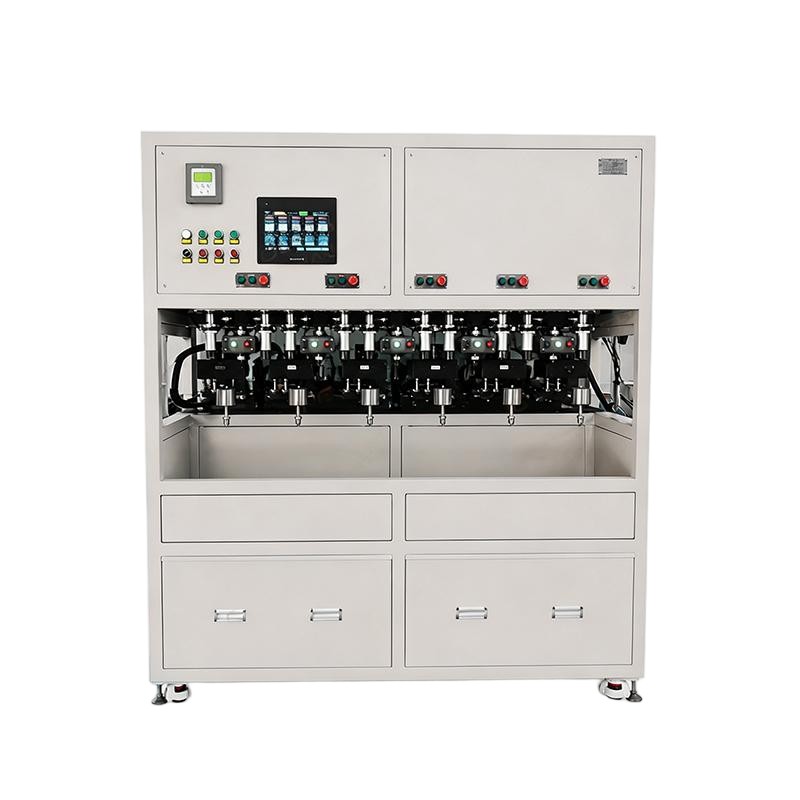
Heat Pipe Production Line: Manufacturing Process Guide
1. Introduction
Heat pipes provide efficient thermal management for many modern products. They transfer heat through evaporation and condensation inside sealed structures. Manufacturers use them in electronics, automotive systems, telecommunications, and industrial cooling.
However, producing reliable heat pipes requires several precise manufacturing operations. Each stage influences the final product’s performance and consistency. Manufacturers must control tube dimensions, wick structures, working fluid, vacuum conditions, and sealing quality.
A Heat Pipe Production Line combines specialized machines into an organized manufacturing system. It connects tube preparation, wick processing, sintering, vacuum treatment, fluid filling, welding, and product testing.
A well-designed line helps coordinate these processes. It can also reduce unnecessary handling and improve production management. Therefore, equipment configuration should match actual product specifications and factory requirements.
This guide explains the complete manufacturing workflow. It also covers essential machines, automation options, quality control, and equipment selection.
2. What Is a Heat Pipe Production Line?
A Heat Pipe Production Line is an integrated manufacturing system for producing heat pipes. It combines different machines to complete preparation, assembly, filling, sealing, and inspection.
A typical heat pipe contains three main components:
- Metal container:Provides the sealed structure for internal operation.
- Wick structure:Returns condensed liquid through capillary action.
- Working fluid:Transfers heat through evaporation and condensation.
During operation, the working fluid absorbs heat at the evaporator section. It changes into vapor and moves toward the condenser section. There, it releases heat and condenses into liquid. The wick then returns the liquid to the evaporator.
This continuous cycle enables efficient heat transfer. However, manufacturers must maintain suitable internal conditions.
A typical production line may include:
- Metal tube cutting and preparation.
- Tube forming and end processing.
- Wick material filling or internal structure preparation.
- Sintering for powder wick designs.
- Cleaning and drying.
- Vacuum degassing.
- Working fluid filling.
- Welding and final sealing.
- Leakage and thermal performance testing.
Not every heat pipe uses the same production process. For example, sintered powder wicks require different equipment from grooved wick structures. Therefore, manufacturers should design the line around their product technology.
3. Complete Heat Pipe Manufacturing Process
Each production stage performs a specific function. Proper coordination helps maintain stable manufacturing conditions.
3.1 Raw Tube Cutting
The manufacturing process begins with metal tube preparation. Cutting equipment produces tubes according to specified lengths.
Consistent cutting supports accurate dimensions. It also helps maintain stable positioning during later operations.
Manufacturers should consider tube material, diameter, wall thickness, and cutting tolerance. They should also inspect cut edges for burrs and deformation.
Related equipment: Automatic Tube Cutting Machine.
3.2 Tube Forming and Necking
Some heat pipe designs require special end shapes or reduced diameters. A necking machine forms the tube according to the product drawing.
This operation helps prepare the tube for subsequent filling and sealing. Suitable tooling also reduces unwanted deformation.
Manufacturers should validate forming parameters for different tube materials and dimensions.
Related equipment: Heat Pipe Necking Machine.
3.3 Wick Structure Preparation
The wick structure controls liquid return inside the heat pipe. It directly affects capillary performance and thermal behavior.
Common wick structures include:
- Sintered metal powder
- Grooved structures
- Screen mesh
- Composite wick structures
Manufacturers select the structure according to thermal requirements and product geometry.
For sintered powder designs, metal powder enters the tube through a controlled filling process. The filled material then undergoes sintering.
Related equipment: Heat Pipe Powder Filling Machine.
3.4 Powder Filling and Sintering
Powder filling requires consistent material quantity and distribution. Uneven filling may create an inconsistent wick structure.
After filling, manufacturers use a suitable sintering process. Controlled heating bonds powder particles while preserving the required porosity.
The process depends on powder material, particle size, tube structure, and product design.
Related equipment: Heat Pipe Powder Filling Machine and Vacuum Sintering Furnace.
3.5 Cleaning and Drying
Cleaning helps remove contamination from the tube and internal structure. Residual particles or moisture may affect subsequent processing.
Manufacturers should select suitable cleaning methods for their materials. They should also maintain clean handling conditions after preparation.
Drying helps prepare the workpiece for vacuum processing.
3.6 Vacuum Degassing
Vacuum degassing removes residual gases and moisture from the internal space.
Non-condensable gases can interfere with vapor movement. They may also reduce the effective heat transfer area.
A suitable vacuum process helps establish the required internal conditions. Manufacturers should determine vacuum parameters through product validation.
Related equipment: Heat Pipe Degassing Machine.
3.7 Working Fluid Filling
After vacuum treatment, the filling system introduces the specified working fluid.
Water is common in copper heat pipes. Other fluids may suit different materials and operating temperature ranges.
The required filling quantity depends on:
- Internal volume
- Tube diameter and length
- Wick structure and porosity
- Operating temperature
- Thermal performance requirements
Accurate filling helps maintain consistent product behavior. Manufacturers should define separate charging parameters for different models.
Related equipment: Heat Pipe Filling & Welding Machine.
3.8 Welding and Final Sealing
After fluid charging, manufacturers seal the filling opening. The sealing process must prevent leakage and preserve internal conditions.
Depending on the tube material and joint design, manufacturers may use resistance welding or another suitable method.
The process requires suitable positioning and parameter control. Manufacturers should inspect weld quality and verify sealing integrity.
Related equipment: Heat Pipe Filling & Welding Machine and Resistance Welding Machine.
3.9 Final Inspection and Testing
Finished heat pipes require appropriate inspection. Manufacturers may check dimensions, sealing quality, leakage, and thermal performance.
Dry-out testing evaluates heat pipe behavior under defined operating conditions. Thermal performance testing helps assess heat transfer capability.
The inspection plan should follow product specifications and customer requirements.
Related equipment: Heat Pipe Multi-station Dry-out Tester and Multi-station Thermal Performance Tester.
4. Essential Equipment for a Heat Pipe Production Line
The equipment configuration depends on the manufacturing process. The following machines commonly support heat pipe production.
Equipment | Main Function |
Automatic Tube Cutting Machine | Cuts metal tubes to specified lengths |
Heat Pipe Necking Machine | Forms or reduces tube ends |
Heat Pipe Powder Filling Machine | Introduces powder for sintered wick structures |
Vacuum Sintering Furnace | Creates porous sintered wick structures |
Heat Pipe Degassing Machine | Removes residual gases and moisture |
Heat Pipe Filling & Welding Machine | Charges working fluid and seals filling openings |
Resistance Welding Machine | Supports suitable metal joining operations |
Heat Pipe Multi-station Dry-out Tester | Evaluates dry-out behavior |
Thermal Performance Tester | Measures thermal performance under defined conditions |
Some production lines need additional cleaning or inspection equipment. Others may integrate automatic loading and material transfer systems.
The final machine list should reflect the actual product design. Avoid purchasing equipment that does not support the selected manufacturing process.
5. Different Types of Heat Pipe Production Lines
Heat pipe products vary in dimensions, structures, and thermal requirements. Therefore, manufacturers may need different line configurations.
5.1 Standard Copper Heat Pipe Production Line
Copper heat pipes serve many electronic cooling applications. They commonly use sintered powder or grooved wick structures.
A typical production line includes tube cutting, wick preparation, sintering when required, vacuum processing, filling, welding, and testing.
Manufacturers should select machines according to tube dimensions and wick technology.
5.2 Thin Heat Pipe Production Line
Thin heat pipes support compact electronic products. They appear in laptops, tablets, and other space-limited devices.
Their small internal volume requires careful filling control. The fixtures must also support stable positioning without damaging the tube.
Manufacturers should verify equipment compatibility through sample processing.
5.3 High-Volume Heat Pipe Production Line
Large-scale factories may require multiple workstations and automated material handling.
An integrated layout can reduce waiting time between operations. It can also support more organized production scheduling.
However, actual output depends on the cycle time of every major process. Manufacturers should balance the complete production workflow.
5.4 Customized Heat Pipe Production Line
Some applications require special tube shapes, dimensions, or internal structures.
A customized line can combine equipment according to these requirements. Manufacturers should provide technical drawings and samples during the design stage.
6. Benefits of an Integrated Heat Pipe Production Line
An integrated production system offers several manufacturing advantages.
6.1 Improved Production Coordination
Separate machines can create waiting time between operations. A coordinated production layout helps improve material flow.
It also makes production planning easier.
6.2 More Consistent Process Control
Standardized machine settings help reduce process variation. Manufacturers can define different operating recipes for different product models.
However, process consistency also requires regular maintenance and inspection.
6.3 Reduced Manual Handling
Manual transfers increase operator workload. They may also introduce positioning errors and contamination risks.
Automation can reduce unnecessary handling steps. The actual improvement depends on the line configuration.
6.4 Better Production Management
A suitable control system can coordinate machine operations. Some configurations also support production data recording.
These functions help manufacturers review operating conditions. They can also support process optimization.
6.5 Flexible Production Expansion
A modular production layout can support future expansion. Manufacturers may add workstations when output requirements increase.
However, expansion requires suitable factory space and compatible utilities.
7. How to Design a Suitable Heat Pipe Production Line
A successful production line begins with product requirements. Manufacturers should define the manufacturing process before selecting equipment.
7.1 Confirm Product Specifications
Prepare the following technical information:
- Tube material
- Tube diameter
- Tube length
- Wall thickness
- Product geometry
- Wick structure
- Working fluid
- Required thermal performance
These parameters determine equipment compatibility.
7.2 Define the Manufacturing Technology
Different wick structures require different production processes.
For example, sintered powder wicks require powder filling and sintering. Grooved structures may require specialized internal forming methods.
Therefore, manufacturers should confirm the wick technology first.
7.3 Calculate Production Capacity
Determine the expected daily output and shift requirements.
Then evaluate the cycle time of each manufacturing stage. Pay particular attention to sintering, vacuum processing, filling, and testing.
The slowest operation may limit total production capacity.
7.4 Choose the Automation Level
Manufacturers can select manual, semi-automatic, or automatic equipment.
Consider production volume, labor availability, product variety, and changeover frequency. The best solution should match actual factory operations.
7.5 Plan the Factory Layout
Arrange machines according to the production sequence.
Provide enough space for loading, unloading, maintenance, and inspection. Also consider power, compressed air, vacuum, and cooling requirements where applicable.
8. Quality Control Throughout the Production Process
Quality control should cover every important manufacturing stage.
Production Stage | Main Inspection Points |
Tube cutting | Length and edge quality |
Tube forming | Shape and dimensional accuracy |
Powder filling | Material quantity and distribution |
Sintering | Temperature and wick structure |
Cleaning | Internal cleanliness and dryness |
Vacuum degassing | Vacuum stability and process conditions |
Fluid filling | Working fluid quantity |
Welding | Joint appearance and sealing integrity |
Final testing | Leakage and thermal performance |
Manufacturers should establish inspection standards for every product model.
They should also maintain process records when possible. These records help identify variations and support continuous improvement.
9. Common Manufacturing Problems and Solutions
Heat pipe production involves several technical challenges.
Common Problem | Possible Cause | Recommended Solution |
Uneven wick structure | Inconsistent powder distribution | Review filling and sintering parameters |
Poor thermal performance | Incorrect fluid quantity or wick design | Validate product specifications |
Unstable vacuum | Leaking connections | Inspect seals and vacuum pipelines |
Fluid leakage | Inconsistent welding quality | Review welding parameters and leak testing |
Tube deformation | Unsuitable forming conditions | Optimize tooling and process settings |
Low production output | Unbalanced workstation cycle times | Analyze the complete workflow |
Batch quality variation | Inconsistent process settings | Standardize recipes and inspection |
Manufacturers should identify the root cause before changing machine parameters. This approach helps prevent additional production problems.
10. How to Choose a Heat Pipe Production Line Supplier
Choosing a supplier requires technical evaluation and clear communication.
10.1 Review Industry Experience
Look for suppliers familiar with heat pipe manufacturing. They should understand wick structures, vacuum processing, fluid charging, welding, and testing.
10.2 Request Technical Evaluation
Provide product drawings and representative samples. Ask the supplier to review the proposed manufacturing process.
This helps determine whether the equipment matches the actual product.
10.3 Confirm Machine Compatibility
Check supported materials, tube dimensions, and processing methods. Also confirm whether the machines can handle the required product range.
10.4 Evaluate Sample Testing
Sample testing helps verify filling, welding, and thermal performance. It also provides a practical basis for equipment acceptance.
10.5 Check Technical Support
Discuss installation, commissioning, operator training, spare parts, and maintenance.
A clear support arrangement helps reduce production risks.
cncooling-thermal focuses on manufacturing equipment for heat pipes and vapor chambers. Visit cncooling-thermal.com to explore related production equipment.
Before requesting a quotation, prepare product drawings, samples, target output, and process requirements. These details help suppliers recommend a suitable configuration.
11. Frequently Asked Questions
Q1. What is a Heat Pipe Production Line?
A Heat Pipe Production Line is an integrated system for manufacturing heat pipes. It may include tube preparation, wick formation, sintering, vacuum processing, filling, welding, and testing.
Q2. What machines are required for heat pipe production?
Common machines include tube cutting equipment, powder filling machines, sintering furnaces, degassing machines, filling and welding machines, and thermal testing equipment.
Q3. Does every heat pipe need a sintering process?
No. Sintering applies to heat pipes that use sintered powder wick structures. Other wick designs require different manufacturing methods.
Q4. Can one production line manufacture different heat pipe sizes?
A suitably designed line may support multiple sizes through adjustable fixtures and process settings. The actual range depends on machine specifications.
Q5. Why is vacuum degassing important?
Vacuum degassing removes residual gases and moisture. This helps establish suitable internal conditions for heat pipe operation.
Q6. Why does filling accuracy matter?
The working fluid supports the evaporation and condensation cycle. Incorrect quantities may affect thermal performance and product consistency.
Q7. How do manufacturers test finished heat pipes?
They may perform dimensional inspection, leak testing, dry-out testing, and thermal performance testing. The inspection plan depends on product requirements.
Q8. Can manufacturers customize a Heat Pipe Production Line?
Yes. Manufacturers can configure equipment according to tube dimensions, wick structure, working fluid, production capacity, and automation requirements.
Q9. How can a production line improve efficiency?
It can coordinate manufacturing stages and reduce unnecessary handling. Proper cycle-time balancing and maintenance also support efficient operation.
Q10. What information should buyers prepare before requesting a quotation?
Prepare product drawings, materials, dimensions, wick specifications, working fluid, target output, and automation requirements. Samples can also support technical evaluation.
12. Conclusion
A Heat Pipe Production Line combines specialized equipment for different manufacturing operations. It supports tube preparation, wick formation, vacuum processing, fluid filling, welding, and final inspection.
A suitable configuration must match the product design and production targets. Manufacturers should evaluate equipment compatibility, automation, capacity, and quality control before purchasing.
With proper planning, an integrated production line can improve manufacturing coordination and process consistency.
For heat pipe and vapor chamber manufacturing equipment, visit cncooling-thermal.