
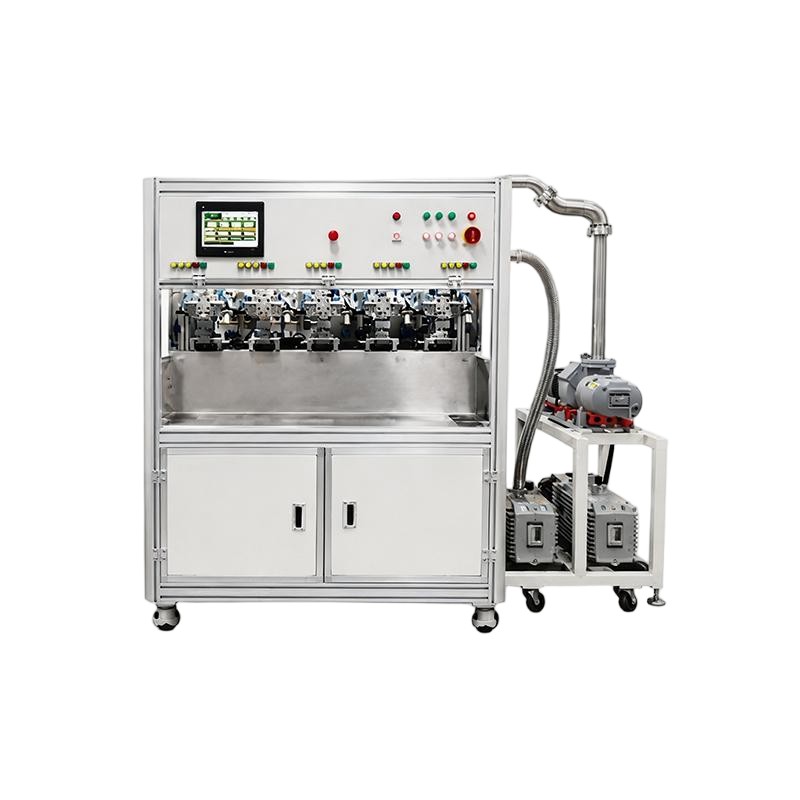
Heat Pipe Production Line: Complete Manufacturing Guide
1. What Is a Heat Pipe Production Line?
A Heat Pipe Production Line is an integrated manufacturing system for producing heat pipes. It combines material preparation, internal structure processing, vacuum treatment, fluid filling, sealing, and testing.
Heat pipes transfer heat through phase changes inside sealed tubes. They use evaporation and condensation to move thermal energy efficiently.
Manufacturers use heat pipes in electronics and industrial cooling systems. They also appear in power equipment, telecommunications, and thermal management products.
A complete production line connects different manufacturing operations. Each stage must meet the requirements of the next process.
A typical line may include:
- Tube cutting and preparation equipment
- Tube cleaning and drying equipment
- Powder filling machines
- Vacuum sintering furnaces
- Degassing machines
- Working fluid filling systems
- Welding and sealing machines
- Dry-out equipment
- Thermal performance testing systems
The exact configuration depends on product design. Tube dimensions, wick structures, and production targets also influence the layout.
For manufacturers, an integrated solution can improve process coordination. It also provides a clearer framework for production management.
2. How Does a Heat Pipe Production Line Work?
A Heat Pipe Production Line follows a sequence of manufacturing operations. Each operation prepares the product for the next stage.
The process begins with metal tube preparation. Manufacturers then create the internal wick structure and prepare the sealed working environment.
A typical production flow follows these steps:
- Raw material inspection
- Tube cutting and preparation
- Internal wick structure processing
- Cleaning and drying
- Vacuum treatment
- Working fluid filling
- Welding and sealing
- Dry-out and stabilization
- Leakage inspection
- Thermal performance testing
Not every heat pipe uses the same manufacturing method. Sintered, grooved, and mesh wick structures require different processes.
Manufacturers should establish the production route before selecting equipment. This prevents unsuitable machine combinations and unnecessary investment.
3. Main Stages of Heat Pipe Manufacturing
3.1 Raw Material Preparation
Manufacturing starts with suitable metal tubes and other materials. Copper is widely used in many heat pipe applications.
Material selection depends on thermal requirements and product design. Manufacturers should check dimensions and material specifications before processing.
Incoming inspection helps reduce downstream production problems. It also supports consistent manufacturing quality.
3.2 Tube Cutting and Forming
Tube preparation determines the dimensions of the workpiece. Cutting equipment produces tubes according to product drawings.
Some products also require bending or necking. These operations depend on the final structure and application.
Manufacturers should control tube length and forming accuracy. Consistent dimensions support later filling and sealing operations.
Internal link opportunity: Heat Pipe Necking Machine
3.3 Wick Structure Manufacturing
The wick structure returns liquid from the condenser to the evaporator. It plays an important role in heat pipe operation.
Common wick structures include:
- Sintered powder structures
- Grooved structures
- Mesh structures
- Composite wick structures
Sintered powder structures require additional processing. Manufacturers introduce metal powder into the tube and form a porous structure through sintering.
Grooved structures use different internal processing methods. Mesh structures require suitable material preparation and positioning.
The selected wick design determines the required equipment. It also affects manufacturing complexity and product performance.
3.4 Powder Filling and Distribution
For sintered heat pipes, powder filling is a critical operation. A powder filling machine introduces metal powder into prepared tubes.
The powder quantity and distribution affect the wick structure. Manufacturers should validate filling procedures for each product design.
Stable material feeding supports repeatable production. Proper equipment maintenance also helps reduce process variation.
Internal link opportunity: Heat Pipe Powder Filling Machine
3.5 Vacuum Sintering
After powder filling, the prepared tubes enter a sintering process. A vacuum sintering furnace supports controlled heating.
The process bonds powder particles into a porous structure. Temperature and vacuum conditions depend on material characteristics.
Manufacturers should validate the process using suitable samples. They should also establish repeatable loading and cooling procedures.
Internal link opportunity: Vacuum Sintering Furnace
3.6 Cleaning and Drying
Cleaning removes unwanted contaminants from prepared components. Drying helps prepare the tube for vacuum processing.
Residual contamination may affect internal conditions. Manufacturers should choose cleaning procedures that suit their materials and process requirements.
Equipment layout should also support convenient material transfer. This reduces unnecessary handling between operations.
3.7 Vacuum Degassing
Vacuum degassing removes unwanted gases from the heat pipe. This operation prepares the internal environment before fluid filling.
A dedicated degassing machine can support controlled vacuum processing. Its configuration depends on tube dimensions and production requirements.
Manufacturers should define suitable process parameters through testing. Consistent procedures help reduce variation between products.
Internal link opportunity: Heat Pipe Degassing Machine
3.8 Working Fluid Filling
The working fluid transfers heat through evaporation and condensation. Water is common in many copper heat pipe designs.
Other working fluids may suit different operating conditions. Selection depends on temperature range and application requirements.
Filling equipment introduces the specified fluid quantity. Manufacturers should control filling conditions and process consistency.
3.9 Welding and Sealing
After filling, manufacturers seal the heat pipe. Welding creates a closed structure that maintains the internal environment.
The welding method depends on material and product design. Manufacturers should validate joint quality and sealing reliability.
A suitable filling and welding system can coordinate these operations. It can also simplify production workflow.
Internal link opportunity: Heat Pipe Filling & Welding Machine
3.10 Dry-Out and Stabilization
Some production processes include a dry-out stage. This stage prepares products for subsequent inspection or processing.
Multi-station equipment can support batch operations. The actual cycle time depends on product requirements and process settings.
Manufacturers should define the purpose of this stage clearly. The process should follow validated technical procedures.
Internal link opportunity: Heat Pipe Multi-Station Dry-Out Tester
3.11 Final Inspection and Testing
Final inspection evaluates product quality. Testing methods should match the intended application and acceptance criteria.
Common inspection activities include dimensional checks and leakage tests. Thermal performance testing evaluates heat transfer behavior.
Manufacturers should maintain consistent test conditions. Reliable records also support process improvement.
4. Key Equipment for a Complete Production Line
A Heat Pipe Production Line requires equipment that matches its manufacturing route. The following machines support common production operations.
4.1 Tube Cutting Equipment
Tube cutting equipment prepares tubes to the required dimensions. It supports consistent workpiece preparation.
Selection factors include tube diameter and material. Cutting accuracy and production cycle time also matter.
4.2 Heat Pipe Powder Filling Machine
This machine introduces metal powder into prepared tubes. It supports sintered wick manufacturing.
Important factors include powder compatibility and filling control. Tube positioning and cleaning requirements also need attention.
4.3 Vacuum Sintering Furnace
The furnace forms porous wick structures through controlled heating. It should suit the selected powder and tube materials.
Manufacturers should review temperature uniformity and vacuum performance. Furnace capacity must also match production planning.
4.4 Heat Pipe Degassing Machine
Degassing equipment removes unwanted gases from heat pipes. It prepares the product for working fluid filling and sealing.
The system should match product dimensions and process requirements. Vacuum performance and batch handling deserve careful evaluation.
4.5 Heat Pipe Filling and Welding Machine
This equipment supports working fluid filling and final sealing. Its configuration depends on product dimensions and welding requirements.
Manufacturers should review filling accuracy and welding stability. Fixture design and operator safety also matter.
4.6 Testing Equipment
Testing equipment evaluates product quality and thermal behavior. It supports inspection and manufacturing process improvement.
Testing methods should reflect the product application. Manufacturers should also establish clear acceptance criteria.
5. How to Plan a Heat Pipe Production Line
Production line planning should begin with product requirements. Manufacturers should avoid selecting machines based only on general capacity claims.
5.1 Define the Product Range
List the heat pipe models planned for production. Include dimensions, materials, and internal wick structures.
Different product types may require different tooling. A wider product range may also increase changeover requirements.
5.2 Map the Manufacturing Process
Create a process flow diagram before choosing equipment. Identify every manufacturing and inspection stage.
The diagram should show material movement between machines. It should also identify required buffers and inspection points.
5.3 Calculate Equipment Capacity
Estimate the required output for each product family. Consider cycle time and available operating hours.
The slowest operation may become a production bottleneck. Manufacturers should balance capacity across the complete process.
5.4 Plan the Factory Layout
Arrange equipment according to manufacturing sequence. Keep material movement simple and direct.
Allow sufficient space for operation and maintenance. Consider electrical connections and other utility requirements.
5.5 Define Staffing and Operating Procedures
Determine operator requirements for each production stage. Define machine responsibilities and material handling procedures.
Standard operating procedures support consistent production. They also help train new employees.
5.6 Plan Future Expansion
Production demand may increase over time. A flexible layout can make later expansion easier.
Consider additional machines and automated handling. Utility capacity and factory space also affect expansion plans.
6. Production Capacity and Line Efficiency
Production capacity depends on more than individual machine speed. The complete manufacturing process determines actual output.
6.1 Understand the Production Bottleneck
Each operation has its own processing time. A slow stage can restrict the entire production line.
Manufacturers should compare cycle times across operations. They can then identify where additional capacity is necessary.
6.2 Reduce Unnecessary Material Handling
Repeated manual transfers consume time. They may also increase the risk of product damage.
A clear production layout helps reduce unnecessary movement. Suitable fixtures and handling systems can further improve workflow.
6.3 Improve Equipment Utilization
Equipment utilization depends on operating schedules and process stability. Maintenance and changeovers also affect available production time.
Manufacturers should monitor machine downtime. They should also review the causes of repeated interruptions.
6.4 Standardize Changeover Procedures
Different heat pipe models may require different tooling. Unclear changeover procedures can increase production delays.
Prepare standard tooling and setup instructions. Record validated parameters for each product model.
6.5 Monitor Production Data
Production records help identify recurring problems. Useful information includes output, downtime, defects, and process parameters.
Manufacturers can use these records to improve planning. Data also supports continuous process optimization.
7. Automation and Smart Manufacturing
Automation can improve material handling and process coordination. However, manufacturers should introduce automation according to actual production needs.
7.1 Automatic Material Loading
Automatic loading systems move tubes into processing machines. They can reduce repetitive manual operations.
The system must match tube dimensions and machine interfaces. Product protection should remain a design priority.
7.2 Automatic Powder Feeding
Automatic powder feeding supports controlled material delivery. It can also reduce repetitive operator tasks.
The design should suit powder characteristics. Dust management and maintenance access require attention.
7.3 Automated Filling and Sealing
Integrated filling and sealing systems can coordinate related operations. Their design depends on product specifications.
Manufacturers should validate filling and welding procedures. Automation cannot replace proper process development.
7.4 Production Monitoring
Monitoring systems can collect selected machine parameters. These records support production analysis and troubleshooting.
Relevant information may include temperature and vacuum data. Filling and welding parameters may also be recorded.
7.5 Flexible Production Systems
Manufacturers may produce several heat pipe models. Flexible fixtures and adjustable equipment can support product changes.
The available range depends on machine design. Buyers should confirm changeover requirements before purchasing.
8. Quality Control Throughout Production
Quality control should cover every important manufacturing stage. Final testing alone cannot prevent all process defects.
8.1 Incoming Material Inspection
Check tube dimensions and material specifications. Verify powder and working fluid requirements.
Material inspection helps reduce production variation. It also supports supplier quality management.
8.2 Dimensional Inspection
Inspect tube length and relevant forming dimensions. Check critical features against product drawings.
Consistent dimensions support stable machine operation. They also help maintain assembly quality.
8.3 Wick Structure Inspection
The wick structure influences liquid return and heat transfer. Manufacturers should establish suitable inspection methods.
For sintered structures, process validation is important. Manufacturers should monitor relevant material and sintering parameters.
8.4 Vacuum and Sealing Inspection
Vacuum treatment and sealing affect the internal environment. Manufacturers should define suitable process controls.
Leak inspection methods should match product requirements. Acceptance criteria must be established before mass production.
8.5 Thermal Performance Testing
Thermal performance testing evaluates heat transfer characteristics. It helps identify variation between products.
Manufacturers should standardize test conditions. Fixtures and measurement procedures should remain consistent.
Internal link opportunity: Thermal Performance Testing Equipment
8.6 Production Traceability
Traceability connects products with manufacturing records. It helps support quality investigations and customer requirements.
Manufacturers may record batch numbers and inspection results. Selected equipment parameters can also support traceability.
9. Applications of Heat Pipe Production Lines
Heat pipe manufacturing supports several thermal management industries. Product requirements differ across applications.
9.1 Consumer Electronics
Heat pipes help transfer heat inside compact electronic devices. They appear in computers and other electronic products.
Manufacturers may need thin and lightweight designs. Production equipment must support the required dimensions.
9.2 Telecommunications Equipment
Telecommunications systems generate heat during operation. Heat pipes can support thermal management in selected equipment.
Product designs depend on power density and installation conditions. Manufacturers should confirm thermal requirements with customers.
9.3 Industrial Electronics
Industrial control systems often require reliable thermal management. Heat pipes can help move heat away from critical components.
Production requirements may include different sizes and configurations. Consistent manufacturing supports product reliability.
9.4 Power Electronics
Power conversion equipment generates heat during operation. Heat pipes may form part of a larger cooling solution.
Manufacturers should evaluate operating temperatures and heat loads. Product testing should reflect actual application conditions.
9.5 Automotive and Transportation Electronics
Vehicles contain various electronic control and power systems. Some designs use heat pipes for thermal management.
Production requirements depend on installation space and operating conditions. Material and product validation remain important.
10. How to Choose a Heat Pipe Production Line Supplier
Selecting a supplier requires technical and project evaluation. Manufacturers should compare complete solutions rather than individual machine prices.
10.1 Review Technical Capabilities
Check whether the supplier understands heat pipe manufacturing processes. Ask about equipment functions and process integration.
Technical discussions should reference actual product drawings. This helps establish whether the proposed configuration is suitable.
10.2 Evaluate Equipment Compatibility
Confirm that machines support the required tube dimensions. Check compatibility with wick structures and working fluids.
Ask for detailed equipment specifications. Review tooling and changeover requirements.
10.3 Request a Process Proposal
A useful proposal should explain the manufacturing sequence. It should also identify the equipment required at each stage.
Review the proposed layout and material flow. Confirm utility requirements and installation conditions.
10.4 Confirm Testing and Acceptance Procedures
Discuss sample processing and equipment acceptance. Define the required test conditions before purchasing.
The agreement should clarify responsibilities and acceptance criteria. This helps reduce misunderstandings during commissioning.
10.5 Review Installation and Technical Support
Equipment installation requires proper planning. Commissioning and operator training also affect project readiness.
Ask about technical documentation and spare parts. Maintenance support should be clearly explained.
11. Common Production Challenges and Solutions
11.1 Unbalanced Production Capacity
Different operations may have different cycle times. This can create waiting periods and bottlenecks.
Review the complete production flow. Adjust equipment capacity and work scheduling where necessary.
11.2 Inconsistent Wick Structures
Material preparation and process parameters affect wick quality. Inconsistent powder filling or sintering can create variation.
Standardize material handling and process procedures. Validate parameters using representative products.
11.3 Unstable Vacuum Processing
Vacuum performance can influence internal preparation. Equipment condition and process setup require regular attention.
Maintain vacuum systems according to supplier instructions. Record relevant process data for troubleshooting.
11.4 Sealing and Leakage Problems
Poor sealing can affect product integrity. Welding parameters and fixture conditions require validation.
Inspect sealing quality during production. Establish suitable leakage inspection procedures.
11.5 High Manual Handling Requirements
Excessive handling can slow production. It may also increase operator workload.
Improve the factory layout and material flow. Consider suitable handling equipment where justified.
11.6 Incomplete Production Records
Limited records make troubleshooting difficult. They also reduce visibility into process variation.
Define essential production data fields. Maintain records for key manufacturing and inspection stages.
12. Frequently Asked Questions
Q1. What is a heat pipe production line?
A heat pipe production line is an integrated manufacturing system. It produces heat pipes through preparation, wick processing, vacuum treatment, filling, sealing, and testing.
The exact configuration depends on product design. Manufacturers should define requirements before selecting equipment.
Q2. What machines are required for heat pipe manufacturing?
Common machines include tube cutting equipment and powder filling machines. Sintering furnaces, degassing machines, filling and welding machines, and testing equipment may also be required.
The selected wick structure determines the process route. Not every product needs identical equipment.
Q3. What is the difference between a heat pipe production line and individual heat pipe machines?
Individual machines perform specific manufacturing operations. A production line connects these machines into a coordinated system.
The complete line considers material flow and capacity. It also includes process control and quality inspection.
Q4. Can one production line manufacture different heat pipe sizes?
Some production lines support several product dimensions. However, compatibility depends on machine design and tooling.
Manufacturers should confirm supported dimensions. They should also evaluate model changeover time.
Q5. What determines heat pipe production capacity?
Production capacity depends on machine cycle times and operating hours. Material handling and equipment downtime also influence output.
The bottleneck operation often limits overall production. Manufacturers should evaluate the complete process.
Q6. Is automation necessary for a heat pipe production line?
Automation is not essential for every manufacturer. Production volume and labor requirements influence the decision.
Manual, semi-automatic, and automatic configurations are possible. Manufacturers should compare investment with expected operating benefits.
Q7. Why is vacuum sintering important?
Vacuum sintering forms porous wick structures in sintered heat pipes. The process bonds metal powder particles under controlled conditions.
Suitable parameters depend on materials and product design. Manufacturers should validate the process before mass production.
Q8. How do manufacturers test finished heat pipes?
Testing may include dimensional inspection and leakage checks. Thermal performance testing evaluates heat transfer behavior.
The test method depends on product requirements. Manufacturers should define acceptance criteria clearly.
Q9. What information is needed to design a production line?
Suppliers need product drawings and material specifications. Tube dimensions, wick structures, working fluids, and output targets are also important.
Testing requirements and automation preferences help complete the proposal. Factory conditions may also affect equipment layout.
Q10. How can manufacturers improve production efficiency?
Start by balancing equipment capacity. Reduce unnecessary handling and standardize operating procedures.
Monitor downtime and production data. Regular maintenance also supports stable operation.
13. Conclusion
A Heat Pipe Production Line combines multiple processes into one manufacturing system. Its configuration should match product design and production requirements.
Successful planning begins with clear product specifications. Manufacturers should then define the process route and select compatible equipment.
Capacity balance and factory layout also influence production efficiency. Automation can improve coordination when processes are stable.
Quality control must cover every critical manufacturing stage. Standardized procedures and production records support consistent results.
For manufacturers planning a new facility or upgrading existing operations, integrated equipment planning is essential. A properly configured line provides a foundation for reliable heat pipe manufacturing.
cncooling-thermal focuses on heat pipe and vapor chamber manufacturing equipment. Visit cncooling-thermal.com to explore related equipment and production solutions.