
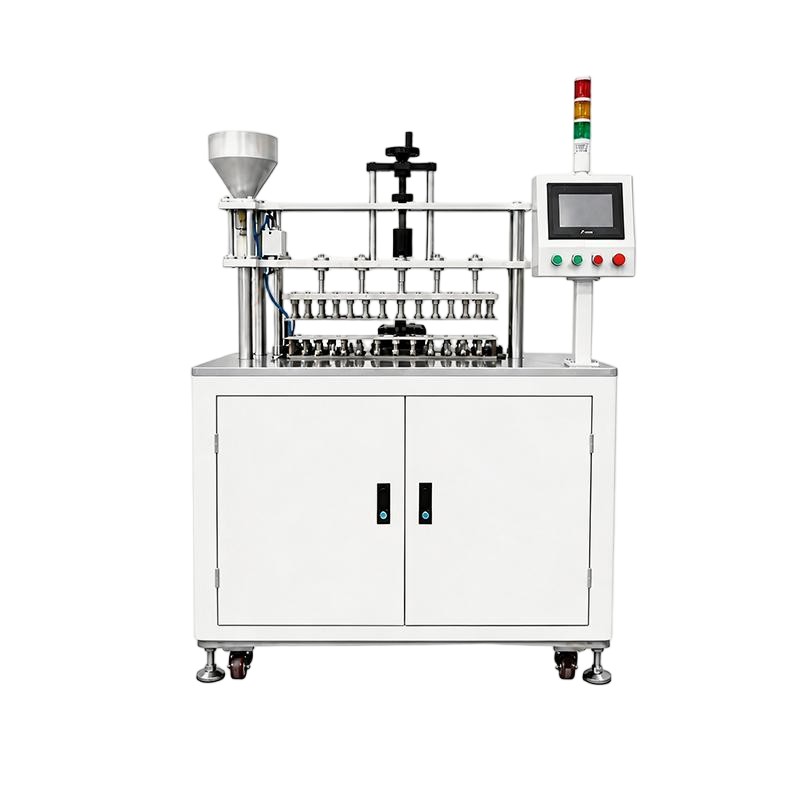
Heat Pipe Equipment Production Line: Complete Guide
1. Understanding a Heat Pipe Equipment Production Line
A Heat Pipe Equipment Production Line consists of machines used to manufacture heat pipes. It supports material preparation, wick production, vacuum processing, fluid filling, sealing, and product inspection.
Heat pipes transfer thermal energy through evaporation and condensation. Their internal structures allow heat to move between different sections.
Manufacturers use heat pipes in electronics and industrial cooling systems. They also support thermal management in telecommunications and power equipment.
A complete equipment system may contain:
- Tube cutting and preparation machines
- Tube necking machines
- Powder filling machines
- Vacuum sintering furnaces
- Cleaning and drying equipment
- Vacuum degassing machines
- Working fluid filling systems
- Welding and sealing machines
- Dry-out equipment
- Thermal performance testing systems
Not every factory needs all these machines. The final configuration depends on product design and manufacturing methods.
A well-planned system connects each machine through a defined process. This approach helps manufacturers manage production and equipment utilization.
2. Why Equipment Configuration Matters
Equipment configuration affects manufacturing efficiency and product consistency. Poorly matched machines can create bottlenecks and unnecessary handling.
For example, a high-capacity powder filling machine cannot improve output if sintering capacity remains limited. The entire process requires balanced equipment capacity.
Correct configuration also helps manufacturers control investment. They can purchase equipment according to actual production requirements.
Several factors influence equipment planning:
- Heat pipe dimensions
- Tube material and wall thickness
- Wick structure design
- Working fluid requirements
- Target production volume
- Product changeover frequency
- Inspection requirements
- Factory space and utilities
Manufacturers should define these requirements before requesting equipment quotations. Detailed specifications help suppliers recommend suitable configurations.
3. Essential Equipment for Heat Pipe Manufacturing
Each machine performs a specific operation. The complete equipment combination depends on the manufacturing process.
3.1 Tube Cutting Machine
A tube cutting machine prepares raw tubes to the required length. It provides the starting dimensions for subsequent operations.
Accurate cutting helps reduce downstream fitting problems. Consistent cutting also supports stable material handling.
When selecting cutting equipment, consider:
- Compatible tube materials
- Tube diameter range
- Cutting length range
- Cutting accuracy
- Burr control
- Loading and unloading methods
Manufacturers should confirm the machine’s working range against product drawings.
3.2 Heat Pipe Necking Machine
A Heat Pipe Necking Machine reduces tube diameter at selected positions. It prepares tube ends for later processing.
Necking requirements vary with product dimensions. Tooling must match the tube material and forming design.
Important evaluation factors include forming consistency and changeover time. Manufacturers should also review tooling replacement procedures.
Internal link opportunity: Heat Pipe Necking Machine
3.3 Heat Pipe Powder Filling Machine
A Heat Pipe Powder Filling Machine introduces metal powder into prepared tubes. It supports the production of sintered wick structures.
Powder quantity and distribution influence the internal structure. Stable feeding helps improve process consistency.
Before selecting a machine, evaluate:
- Powder material compatibility
- Filling quantity control
- Tube positioning accuracy
- Feeding stability
- Cleaning requirements
- Suitable tube dimensions
The equipment should match the powder characteristics. Manufacturers should validate the filling process using representative products.
Internal link opportunity: Heat Pipe Powder Filling Machine
3.4 Vacuum Sintering Furnace
A Vacuum Sintering Furnace forms porous wick structures through controlled heating. It supports bonding between metal powder particles.
The required process depends on material and product design. Temperature and vacuum conditions require technical validation.
Important selection factors include furnace capacity and temperature uniformity. Vacuum performance and loading methods also deserve attention.
Manufacturers should confirm whether the furnace supports their planned production batches. They should also review maintenance and operating requirements.
Internal link opportunity: Vacuum Sintering Furnace
3.5 Cleaning and Drying Equipment
Cleaning equipment removes contaminants from prepared components. Drying equipment helps prepare products for later processing.
The cleaning method should suit the tube material. Manufacturers should also consider drying conditions and material handling.
Proper cleaning procedures support consistent downstream processing. They can also help reduce contamination risks.
3.6 Heat Pipe Degassing Machine
A Heat Pipe Degassing Machine removes unwanted gases from heat pipes. This operation prepares the internal environment before working fluid filling.
Equipment selection depends on product dimensions and process requirements. Manufacturers should evaluate vacuum performance and batch capacity.
The process should follow validated operating procedures. Regular equipment maintenance also supports stable operation.
Internal link opportunity: Heat Pipe Degassing Machine
3.7 Heat Pipe Filling and Welding Machine
A Heat Pipe Filling & Welding Machine supports working fluid filling and tube sealing. It combines important operations in the manufacturing process.
The machine configuration depends on product dimensions. Filling and welding methods must match the product design.
Buyers should evaluate:
- Fluid filling control
- Vacuum system compatibility
- Welding method
- Fixture design
- Operating safety
- Production cycle time
Manufacturers should validate sealing quality before mass production.
Internal link opportunity: Heat Pipe Filling & Welding Machine
3.8 Heat Pipe Multi-Station Dry-Out Tester
A Heat Pipe Multi-Station Dry-Out Tester supports batch processing. Multiple stations can process products during the same operating period.
This configuration may improve equipment utilization. Actual output depends on process duration and station arrangement.
Manufacturers should confirm the equipment’s operating conditions. They should also review compatibility with product dimensions.
Internal link opportunity: Heat Pipe Multi-Station Dry-Out Tester
3.9 Thermal Performance Testing Equipment
Thermal performance testing equipment evaluates heat transfer characteristics. It helps manufacturers assess finished product performance.
Testing conditions should reflect the intended application. Heat input, temperature measurement, orientation, and cooling conditions can affect results.
Manufacturers should define acceptance criteria before production. Standardized testing also improves comparison between batches.
Internal link opportunity: Thermal Performance Testing Equipment
4. Equipment Configuration for Different Wick Structures
Wick structure is one of the most important factors in equipment planning. Different structures require different manufacturing processes.
4.1 Sintered Powder Wick Heat Pipes
Sintered powder wick structures use metal particles inside the tube. A controlled sintering process forms the porous structure.
A typical equipment configuration includes:
- Tube cutting equipment
- Tube preparation equipment
- Powder filling machine
- Vacuum sintering furnace
- Cleaning and drying equipment
- Vacuum degassing machine
- Fluid filling and welding machine
- Inspection and testing equipment
The powder filling and sintering stages require particular attention. Their process parameters influence the final wick structure.
4.2 Grooved Wick Heat Pipes
Grooved heat pipes use internal channels to support liquid return. Their manufacturing process differs from sintered structures.
Equipment requirements depend on the groove design. Tube processing and internal structure preparation are important considerations.
Manufacturers should confirm the required tooling and machining methods. They should not assume that powder filling equipment is necessary.
4.3 Mesh Wick Heat Pipes
Mesh wick structures use metallic mesh materials inside the tube. The manufacturing process requires suitable mesh preparation and positioning.
Equipment may include cutting and assembly fixtures. Cleaning, vacuum processing, fluid filling, and sealing equipment may also be required.
The final configuration depends on product dimensions. Manufacturers should validate assembly consistency before scaling production.
4.4 Composite Wick Structures
Some heat pipes use combined wick structures. These designs may integrate sintered powder, grooves, or mesh.
Composite structures can increase process complexity. Equipment selection should follow the actual product design.
Manufacturers should prepare detailed drawings and process requirements. This helps suppliers evaluate machine compatibility.
5. How to Match Machines with Production Requirements
A suitable Heat Pipe Equipment Production Line should match the planned manufacturing workload. Machine selection should consider both individual performance and process coordination.
5.1 Define the Product Specifications
Start with the product drawings and technical requirements. Identify the dimensions and materials of every product family.
Important details include:
- Tube length and diameter
- Tube material
- Wall thickness
- Wick structure
- Working fluid
- Filling requirements
- Sealing method
- Testing conditions
These details provide the basis for equipment selection.
5.2 Estimate Required Output
Calculate the expected production volume. Consider operating shifts and planned production days.
Different operations may have different cycle times. Manufacturers should identify the process with the lowest effective capacity.
Equipment planning should address this bottleneck. Otherwise, additional machine speed may not increase total output.
5.3 Match Equipment Working Ranges
Check whether each machine supports the intended product dimensions. Confirm fixture compatibility and tooling requirements.
A machine may support several models with different fixtures. However, changeover procedures can influence production efficiency.
Buyers should request clear working-range information. They should also confirm whether custom tooling is available.
5.4 Consider Product Changeovers
Manufacturers may produce multiple heat pipe models. Frequent model changes can increase setup time.
Adjustable fixtures can support product flexibility. Standardized tooling can also simplify changeovers.
The best solution depends on product variety and order patterns.
5.5 Plan Inspection Requirements
Inspection equipment should match customer requirements. Different applications may require different performance tests.
Define inspection points throughout the process. This helps determine the necessary testing equipment.
6. Automation and Production Line Integration
Automation can improve material movement and process coordination. It should support a stable and clearly defined manufacturing process.
6.1 Automatic Tube Loading
Automatic loading systems transfer tubes into processing machines. They can reduce repetitive manual handling.
The loading system must match machine fixtures. It should also protect tubes against deformation or surface damage.
6.2 Automatic Powder Feeding
Automatic feeding systems deliver powder to filling equipment. They can support more consistent material supply.
Powder characteristics influence feeding performance. Dust control and cleaning procedures also require attention.
6.3 Integrated Vacuum Processing
Connected vacuum processes may reduce repeated handling. However, system design depends on process requirements.
Manufacturers should confirm vacuum compatibility and machine interfaces. They should also define maintenance and safety procedures.
6.4 Automated Filling and Welding
Automated filling and welding can coordinate related operations. It may reduce repetitive operator tasks.
The system must support the required fluid quantity and sealing method. Product-specific validation remains essential.
6.5 Production Data Monitoring
Monitoring systems can record selected machine parameters. These records help operators identify process variation.
Useful information may include temperature and vacuum readings. Filling and welding data may also support traceability.
7. Factory Layout and Utility Planning
Factory layout affects material flow and equipment operation. It should follow the manufacturing sequence.
7.1 Arrange Machines by Process Sequence
Place machines according to the actual workflow. This helps reduce unnecessary movement.
Separate incoming materials from finished products. Provide suitable space for work-in-process storage.
7.2 Reserve Maintenance Space
Operators need access to machine doors and service areas. Maintenance teams also require room for component replacement.
Consider these requirements during layout planning. A compact layout should not prevent safe maintenance.
7.3 Confirm Utility Requirements
Different machines may require electrical power and compressed air. Vacuum systems and cooling arrangements may also need dedicated utilities.
Request utility specifications before installation. Confirm available factory connections with the equipment supplier.
7.4 Consider Material and Operator Safety
Plan safe routes for material movement. Provide suitable working space around equipment.
Powder handling and hot processing stages require appropriate controls. Follow the equipment supplier’s safety instructions and applicable regulations.
8. Equipment Investment and Operating Costs
Equipment investment includes more than the initial purchase price. Manufacturers should evaluate the complete ownership cost.
8.1 Initial Equipment Investment
The initial budget depends on the required equipment configuration. Automation level and machine capacity also influence cost.
A complete proposal should identify each machine. It should also explain tooling and optional systems.
8.2 Installation and Commissioning
Installation may require factory preparation and utility connections. Commissioning also requires technical personnel and sample materials.
Include these items in project planning. Confirm supplier responsibilities before signing the purchase agreement.
8.3 Operating Costs
Operating costs may include electricity and consumables. Labor and routine maintenance also affect long-term expenses.
Manufacturers should request relevant operating information. Actual costs depend on production conditions and equipment configuration.
8.4 Maintenance and Spare Parts
Regular maintenance helps keep equipment operating reliably. Spare parts availability can also affect downtime.
Review maintenance schedules and recommended spare parts. Confirm technical support arrangements before purchasing.
8.5 Future Expansion Costs
Production demand may change after installation. Additional machines or automation may become necessary.
Plan space and utility capacity for possible expansion. Modular equipment arrangements can offer greater flexibility.
9. Equipment Commissioning and Process Validation
Equipment commissioning confirms whether machines operate according to agreed requirements. Process validation checks whether the production method suits the intended product.
9.1 Installation Inspection
Check machine positioning and utility connections. Confirm that installation follows supplier instructions.
Review electrical connections and safety devices. Record any issues before commissioning.
9.2 Machine Function Testing
Test each machine independently. Confirm basic functions and operating controls.
Check fixtures and material handling. Verify that the machine supports the specified working range.
9.3 Sample Production
Use representative product samples during process validation. Record relevant operating parameters.
Inspect the samples after each critical stage. Compare results with the agreed product requirements.
9.4 Integrated Line Testing
Operate connected machines according to the planned workflow. Check material transfer and production coordination.
Observe bottlenecks and handling problems. Adjust the layout or process sequence when necessary.
9.5 Operator Training
Train operators on normal operation and maintenance. Explain process controls and safety requirements.
Provide clear operating documents. Training records can support later production management.
10. Common Equipment Selection Mistakes
10.1 Buying Machines Before Defining Product Requirements
General equipment specifications may not suit every heat pipe design. Product drawings should guide machine selection.
Prepare a product specification sheet first. Then request a technical proposal.
10.2 Focusing Only on Machine Speed
High machine speed does not guarantee high line output. Other stages may have lower capacity.
Evaluate the entire production process. Balance equipment capacity before increasing individual machine speed.
10.3 Ignoring Wick Structure Differences
Different wick structures require different processes. A single equipment configuration may not support every design.
Identify the wick structure for each product. Confirm process compatibility with the supplier.
10.4 Underestimating Factory Requirements
Equipment may need more space than expected. Utility and maintenance access also influence layout.
Review the factory layout before purchase. Confirm installation dimensions and utility specifications.
10.5 Over-Automating the Production Process
Full automation may not suit low-volume production. It can also increase investment and maintenance complexity.
Compare automation benefits with actual production needs. Introduce automation where it solves a clear problem.
10.6 Neglecting Testing Equipment
A production line needs suitable quality inspection. Without testing, manufacturers may struggle to verify product consistency.
Define testing requirements early. Include suitable inspection equipment in the project plan.
11. How to Evaluate a Heat Pipe Equipment Manufacturer
Choosing an equipment manufacturer requires technical evaluation. Buyers should review the complete solution rather than only the quotation.
11.1 Understand the Manufacturing Process
A qualified supplier should understand the required manufacturing stages. They should explain how machines connect.
Discuss product drawings and process requirements. Ask for a clear equipment configuration proposal.
11.2 Review Machine Specifications
Check machine working ranges and technical parameters. Confirm compatibility with the planned product models.
Ask for documentation and layout drawings. Review optional tooling and automation features.
11.3 Request Sample Processing
Sample processing helps verify equipment suitability. It can reveal problems before full production begins.
Agree on sample materials and acceptance criteria. Record the results for future reference.
11.4 Evaluate Technical Support
Installation and commissioning require clear responsibilities. Operator training and maintenance support also matter.
Ask about spare parts and documentation. Confirm how technical issues will be handled.
11.5 Compare Complete Project Value
Compare equipment configuration and project scope. Consider installation, commissioning, and support.
The lowest initial price may not represent the lowest ownership cost. Evaluate the complete manufacturing solution.
cncooling-thermal focuses on heat pipe and vapor chamber manufacturing equipment. Its equipment range supports different manufacturing operations and production requirements.
Visit cncooling-thermal.com to explore related equipment and manufacturing solutions.
12. Frequently Asked Questions
Q1. What is a heat pipe equipment production line?
A heat pipe equipment production line combines machines for heat pipe manufacturing. It supports preparation, wick processing, vacuum treatment, filling, sealing, and testing.
The configuration depends on product design. Production targets also influence equipment selection.
Q2. What equipment is needed to manufacture heat pipes?
Common equipment includes tube cutting and necking machines. Powder filling machines, sintering furnaces, degassing machines, and filling and welding systems may also be required.
Testing equipment supports finished product inspection. The exact configuration depends on the wick structure.
Q3. What is the most important machine in a heat pipe production line?
There is no single most important machine for every process. Each machine supports a different manufacturing operation.
The required equipment depends on product design. Manufacturers should evaluate the complete process rather than one machine.
Q4. Can one production line manufacture different heat pipe models?
Some production lines can support several models. Compatibility depends on machine working ranges and tooling.
Manufacturers should confirm dimensions and changeover requirements. Sample processing can help verify suitability.
Q5. What is the role of a vacuum sintering furnace?
A vacuum sintering furnace forms porous wick structures. It bonds metal powder particles under controlled heating conditions.
The process depends on powder material and product design. Manufacturers should validate suitable parameters.
Q6. Why does heat pipe manufacturing need degassing equipment?
Degassing removes unwanted gases from prepared heat pipes. It helps establish the internal environment before fluid filling and sealing.
The process depends on product requirements. Suitable vacuum equipment supports repeatable processing.
Q7. Is a fully automatic production line better?
Not necessarily. The best configuration depends on production volume and product variety.
Manual or semi-automatic systems may suit flexible production. Larger operations may benefit from additional automation.
Q8. How should manufacturers calculate equipment capacity?
Start with the required output and operating schedule. Then evaluate the cycle time of each process.
The bottleneck stage may limit overall production. Capacity planning should consider the entire line.
Q9. What should buyers prepare before requesting a quotation?
Prepare product drawings and material specifications. Include tube dimensions and wick structure details.
Provide working fluid and production targets. Testing requirements and factory conditions are also useful.
Q10. How long does equipment commissioning take?
Commissioning time depends on equipment quantity and project complexity. Factory readiness and process validation also influence the schedule.
Manufacturers should request a project schedule. Confirm installation and acceptance responsibilities in advance.
13. Conclusion
A Heat Pipe Equipment Production Line requires coordinated machines and clearly defined processes. Equipment selection should reflect product structure and manufacturing targets.
Manufacturers should evaluate capacity and automation together. Factory layout and utility planning also affect project success.
Process validation is essential before mass production. Suitable testing procedures help maintain product consistency.
For manufacturers planning new equipment investments, detailed process analysis should come first. The right equipment configuration can support stable production and future expansion.