
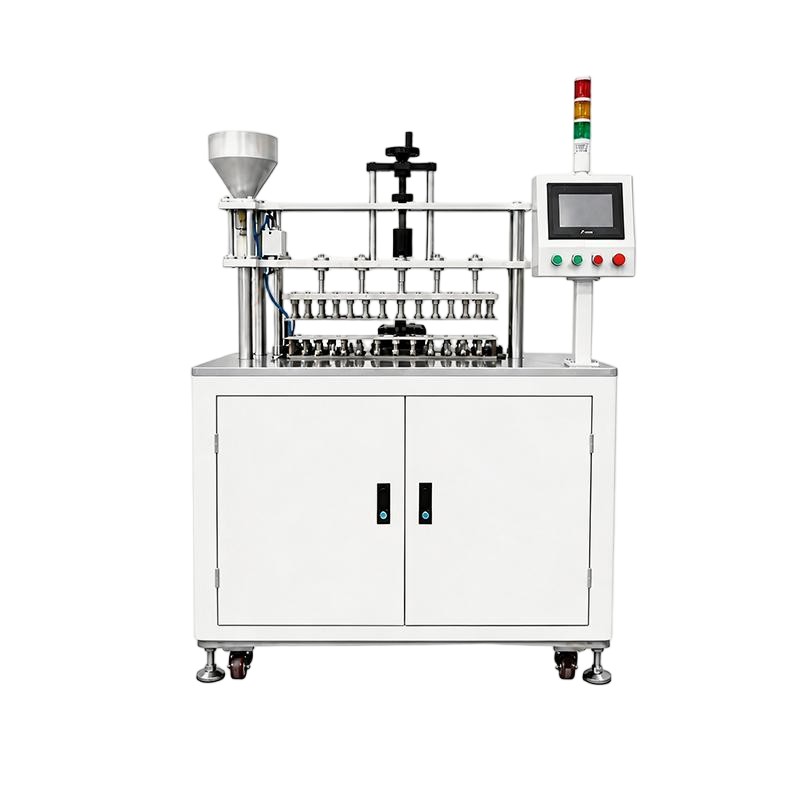
Heat Pipe Filling & Welding Machine: Production Guide
1. Introduction
Heat pipes provide efficient thermal transfer for many modern products. Manufacturers use them in computers, telecommunications equipment, automotive electronics, and industrial cooling systems.
However, producing a reliable heat pipe requires precise manufacturing processes. The internal working fluid must meet specific requirements. The sealed structure must also maintain its integrity during operation.
A Heat Pipe Filling & Welding Machine supports these critical manufacturing operations. It helps introduce working fluid into heat pipes and seal their filling ports. Depending on the configuration, it can also integrate vacuum processing and automated process control.
For heat pipe manufacturers, stable filling and welding operations help improve production consistency. They also reduce unnecessary manual handling and support quality management.
This article explains the equipment’s functions, operating process, technical considerations, and purchasing requirements. It also explores how manufacturers can select suitable equipment for different heat pipe products.
2. What Is a Heat Pipe Filling & Welding Machine?
A Heat Pipe Filling & Welding Machine is industrial equipment designed for heat pipe charging and sealing.
A conventional heat pipe contains several important components:
Metal tube or container
Internal wick structure
Working fluid
Sealed internal environment
During operation, the working fluid absorbs heat and evaporates. The vapor moves toward the cooler condenser section. It releases heat and condenses into liquid. Then, the wick structure returns the liquid through capillary action.
This continuous phase-change process enables efficient heat transfer.
However, the process depends on suitable internal conditions. Incorrect fluid quantity or poor sealing can affect thermal performance. Therefore, manufacturers need reliable filling and welding processes.
The machine typically supports the following operations:
- Workpiece positioning and connection.
- Vacuum extraction when required.
- Controlled working fluid charging.
- Filling port sealing.
- Welding and process control.
- Finished workpiece inspection.
Different manufacturers may require different machine configurations. Some prefer a combined workstation. Others integrate separate filling and welding stations into an automated production line.
3. Why Does Heat Pipe Manufacturing Require Specialized Filling Equipment?
Heat pipe production involves several sensitive manufacturing steps. Filling equipment must match the internal design and production requirements.
3.1 Control the Working Fluid Quantity
The working fluid directly supports the heat transfer process. Water is common in copper heat pipes. Other applications may require different working fluids.
The correct filling quantity depends on several factors:
- Heat pipe internal volume
- Tube diameter and length
- Wick structure
- Porosity and capillary characteristics
- Operating temperature
- Product thermal requirements
An insufficient fluid quantity may reduce heat transfer capability. Excessive charging may also affect internal operation.
Therefore, manufacturers should establish a suitable filling specification for each product model.
3.2 Maintain Suitable Internal Conditions
Many heat pipe designs require vacuum extraction before charging. This operation removes residual gases from the internal space.
Non-condensable gases can interfere with vapor movement. They may also reduce the effective heat transfer area.
A suitable vacuum process helps control these conditions. However, manufacturers must define the required parameters through product testing.
3.3 Achieve Reliable Sealing
After charging, the manufacturer must seal the filling opening. The sealed structure must prevent working fluid leakage.
Poor sealing can cause product failure. It may also result in internal pressure changes and reduced performance.
A suitable welding process helps create consistent joints. Manufacturers should validate the welding parameters for each material and tube structure.
4. Main Working Process of a Heat Pipe Filling & Welding Machine
The exact production sequence depends on the equipment design. However, most systems follow several common stages.
4.1 Workpiece Preparation
First, operators prepare the heat pipe for filling. The tube should have a suitable connection opening.
Manufacturers should remove contamination before processing. Clean workpieces help protect the filling system and improve process consistency.
4.2 Workpiece Positioning
Next, operators place the heat pipe into the fixture. The fixture keeps the workpiece stable during processing.
Accurate positioning helps prevent connection errors. It also supports consistent sealing locations.
4.3 Vacuum Connection
The machine connects the heat pipe to the vacuum system. Suitable sealing interfaces help establish a controlled connection.
The system then removes residual gases when the process requires vacuum extraction.
Manufacturers should monitor the process according to their validated specifications. Stable connections also help reduce vacuum fluctuations.
4.4 Working Fluid Charging
After vacuum processing, the machine introduces the working fluid. The filling system controls the required quantity.
Different heat pipe models may require different charging recipes. Therefore, manufacturers should define product-specific parameters.
4.5 Filling Port Welding
The machine seals the filling opening after charging. Depending on the design, it may use resistance welding or another suitable welding method.
The welding process must match the tube material and joint structure. Suitable parameter control helps maintain repeatable sealing quality.
4.6 Finished Product Inspection
Finally, operators inspect the completed heat pipe. They may check the weld appearance and workpiece dimensions.
Additional leak testing can help verify sealing integrity. Manufacturers should establish inspection standards for each product category.
5. Key Technical Systems and Their Functions
A Heat Pipe Filling & Welding Machine may combine several functional modules.
5.1 Working Fluid Dosing System
The dosing system controls the amount of working fluid entering the heat pipe.
Its configuration may include:
- Fluid storage container
- Dosing mechanism
- Control valves
- Fluid delivery pipelines
- Connection components
The system should match the selected working fluid. Suitable material compatibility also helps maintain fluid cleanliness.
5.2 Vacuum Extraction System
The vacuum system removes residual gases from the heat pipe. It may include a vacuum pump, pressure measurement components, valves, and pipelines.
The required configuration depends on the product design. Manufacturers should evaluate vacuum performance and process cycle time together.
5.3 Welding Unit
The welding unit closes the filling opening. Its design depends on the selected welding technology.
Resistance welding may suit certain metal tube structures. Other applications may require different joining methods.
Important considerations include electrode condition, welding pressure, electrical parameters, and workpiece positioning.
5.4 Fixture System
Fixtures hold the heat pipe during filling and welding. They must match the workpiece dimensions and connection locations.
For manufacturers with multiple product models, interchangeable fixtures can improve production flexibility.
5.5 Electrical Control System
The control system coordinates the machine’s operating sequence. It may manage vacuum timing, fluid charging, and welding operations.
Depending on the configuration, operators may adjust product recipes through a control interface.
Production records can also support process traceability when the machine includes data management functions.
6. Applications Across Different Heat Pipe Products
Heat pipe designs vary according to their applications. Consequently, filling and welding equipment must support the relevant product requirements.
6.1 Copper Heat Pipes
Copper heat pipes are widely used in electronics cooling. They offer suitable thermal conductivity and manufacturing flexibility.
Their production requires controlled charging and reliable sealing. Manufacturers should select compatible fixtures and welding parameters.
6.2 Thin Heat Pipes
Thin heat pipes help manufacturers develop compact thermal management products. They appear in laptops, tablets, and other space-limited devices.
Their small internal volume makes filling control especially important. The equipment must also accommodate their specific dimensions.
6.3 High-Power Heat Pipes
High-power thermal applications may require larger or specially designed heat pipes. These products can serve industrial electronics and power equipment.
Manufacturers should determine filling specifications through thermal design and testing. They should also validate the sealing process under expected operating conditions.
6.4 Custom-Shaped Heat Pipes
Some applications require bent or specially shaped heat pipes. Their structures may create additional fixture and connection challenges.
Therefore, equipment suppliers should evaluate actual workpieces before recommending a machine configuration.
7. How Automation Improves Heat Pipe Production
Automation can improve process coordination and reduce unnecessary manual operations.
7.1 Consistent Operating Sequences
Automated control can coordinate vacuum extraction, charging, and welding. This helps standardize the production sequence.
Manufacturers can also define different operating recipes for different products.
7.2 Reduced Manual Handling
Manual transfers increase operator workload. They can also introduce positioning differences between production batches.
An integrated workstation can reduce some handling steps. The actual improvement depends on the machine layout.
7.3 Better Process Repeatability
Controlled operating parameters help reduce process variation. This is particularly important when manufacturers produce large quantities.
However, automation alone cannot guarantee product quality. Proper equipment maintenance and process validation remain essential.
7.4 Production Data Management
Some machine configurations support operating data collection. This information can help manufacturers review production conditions.
Data records may also support quality analysis and process improvement.
8. Common Quality Problems and How to Prevent Them
Manufacturers should monitor filling and welding quality throughout production.
Quality Problem | Possible Cause | Recommended Solution |
Incorrect fluid quantity | Improper dosing settings | Verify product-specific filling parameters |
Unstable vacuum | Leaking connections | Inspect seals, pipelines, and fittings |
Fluid leakage | Poor filling port sealing | Review welding conditions and leak testing |
Inconsistent weld appearance | Unstable welding parameters | Check electrodes and process settings |
Tube deformation | Excessive welding energy | Optimize welding parameters and fixtures |
Contamination inside the tube | Poor preparation or fluid cleanliness | Improve cleaning and handling procedures |
Different results between batches | Inconsistent operating conditions | Standardize recipes and inspection methods |
Manufacturers should identify the actual cause before changing parameters. Otherwise, adjustments may introduce additional problems.
9. How to Select the Right Equipment
Selecting suitable equipment requires a clear understanding of production requirements.
9.1 Define Product Specifications
Prepare the following information before contacting a supplier:
- Tube material
- Tube diameter
- Tube length
- Wall thickness
- Internal wick structure
- Filling port design
- Working fluid
- Required production output
These details help determine equipment compatibility.
9.2 Confirm Filling Requirements
Discuss the required fluid quantity and dosing method. Ask how the machine controls and verifies the filling process.
Manufacturers should request sample testing with actual workpieces. This provides a practical way to evaluate filling performance.
9.3 Evaluate Welding Compatibility
The welding method must match the material and joint design. Ask the supplier to explain the proposed welding process.
Request sample welds for inspection. Check appearance, dimensions, and sealing performance.
9.4 Consider Production Capacity
Calculate the required daily output. Then evaluate the complete machine cycle.
Consider loading, connection, vacuum extraction, charging, welding, and inspection time. The overall production rate depends on the complete process.
9.5 Review Future Expansion
Some manufacturers plan to increase production capacity later. Therefore, equipment flexibility can influence long-term purchasing decisions.
Consider replaceable fixtures, additional workstations, and possible production line integration.
10. Maintenance and Production Management
Regular maintenance helps maintain equipment stability.
10.1 Vacuum System Inspection
Inspect vacuum pipelines and connection seals. Check for leakage and abnormal operating conditions.
10.2 Fluid System Cleaning
Keep fluid-contact components clean. Follow suitable maintenance procedures for valves, containers, and delivery pipelines.
10.3 Welding Component Inspection
Check electrodes and electrical connections regularly. Replace worn components when necessary.
10.4 Fixture Maintenance
Clean fixtures and inspect positioning surfaces. Damaged fixtures may affect workpiece alignment.
10.5 Parameter Verification
Review filling and welding parameters periodically. Use qualified samples to verify process consistency.
11. Why Choose a Professional Heat Pipe Equipment Supplier?
A suitable equipment supplier should understand the complete heat pipe production process. This includes product preparation, vacuum processing, fluid charging, sealing, and inspection.
Before purchasing, manufacturers should discuss several important questions:
- Does the machine support the required tube dimensions?
- Can it handle the selected working fluid?
- Which vacuum process does it use?
- Which welding method does it provide?
- Can it process different product models?
- Can the supplier test actual workpieces?
- What technical support and maintenance services are available?
cncooling-thermal provides equipment solutions for heat pipe and vapor chamber manufacturing. Manufacturers can explore related equipment through the cncooling-thermal website.
When requesting a quotation, provide product drawings and representative samples. Also explain the target output and process requirements.
This information helps the supplier evaluate equipment configuration more accurately.
12. Frequently Asked Questions
Q1. What is a Heat Pipe Filling & Welding Machine?
It is specialized equipment for charging working fluid and sealing heat pipes. Depending on its configuration, it may also support vacuum extraction and automated process control.
Q2. What is the purpose of vacuum extraction?
Vacuum extraction removes residual gases from the internal space. This helps reduce non-condensable gas interference during heat pipe operation.
Q3. Which working fluid does a heat pipe use?
Water is common in copper heat pipes. Other designs may use different working fluids according to material compatibility and operating temperature.
Q4. Can one machine process different heat pipe models?
Some machines support multiple models through adjustable parameters and replaceable fixtures. The actual range depends on the machine design.
Q5. Which welding technology is suitable for heat pipes?
The suitable method depends on material, wall thickness, and joint structure. Resistance welding is one possible option for compatible designs.
Q6. How can manufacturers control filling quantity?
They should establish a filling specification for each product model. They should also verify the dosing system and maintain stable operating conditions.
Q7. How do manufacturers check sealing quality?
They can inspect weld appearance and dimensions. Suitable leak testing can provide additional verification of sealing integrity.
Q8. Can the machine connect with other production equipment?
Yes, depending on the machine configuration and production layout. Manufacturers should discuss upstream and downstream integration requirements.
Q9. What information should buyers prepare?
Prepare product drawings, material specifications, tube dimensions, working fluid details, and target production capacity. Actual workpiece samples can further support equipment evaluation.
Q10. Why should manufacturers test samples before purchasing?
Sample testing helps verify equipment compatibility with actual products. It also allows manufacturers to evaluate filling, welding, and sealing results.
13. Conclusion
A Heat Pipe Filling & Welding Machine supports essential operations in heat pipe manufacturing. It helps manufacturers control working fluid charging and produce sealed heat pipe structures.
However, suitable equipment selection requires careful technical evaluation. Manufacturers should consider product dimensions, fluid requirements, vacuum conditions, welding methods, and production capacity.
A well-matched solution can improve process coordination and production consistency. It can also support future manufacturing expansion.
For manufacturers seeking heat pipe production equipment, cncooling-thermal offers a starting point for exploring related manufacturing solutions.
Visit cncooling-thermal.com to learn more about heat pipe and vapor chamber equipment.