
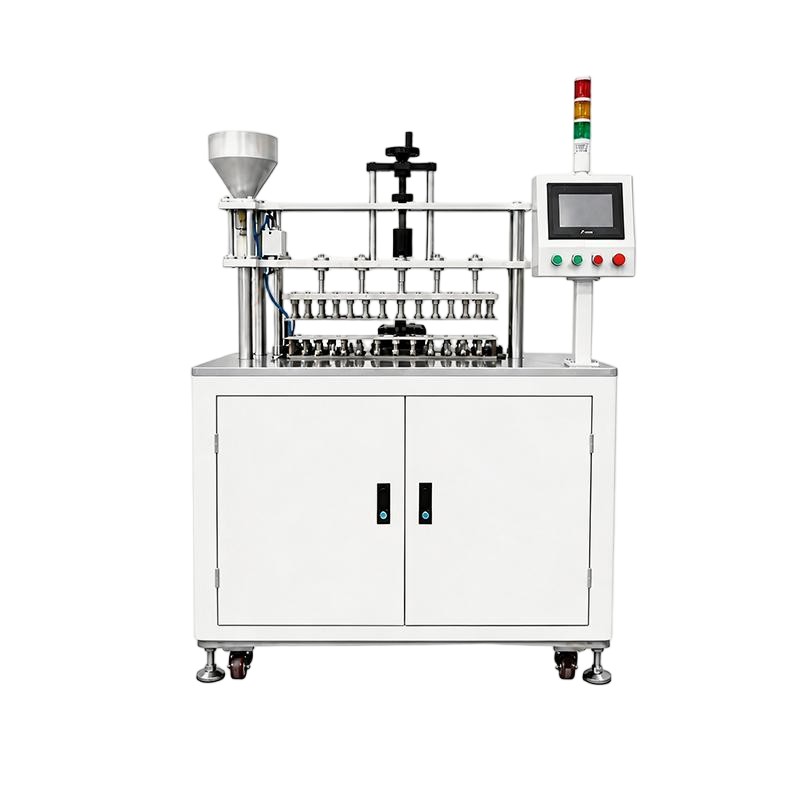
Heat Pipe Equipment Production Line: Selection Guide
1. What Is a Heat Pipe Equipment Production Line?
A Heat Pipe Equipment Production Line combines specialized machines for manufacturing heat pipes. Each machine performs a specific operation within the production process.
Heat pipes provide efficient thermal transfer through evaporation and condensation. Manufacturers use them in electronics, telecommunications, automotive systems, and industrial cooling.
However, manufacturing these components requires precise process control. Equipment must support tube preparation, wick processing, vacuum treatment, filling, and sealing.
A typical equipment configuration may include:
- Copper tube cutting machines
- Tube necking and forming machines
- Powder filling machines
- Vacuum sintering furnaces
- Cleaning and drying equipment
- Vacuum degassing machines
- Working-fluid filling systems
- Welding and sealing machines
- Dry-out testing equipment
- Thermal performance testers
However, equipment requirements vary between product designs. Therefore, manufacturers should select machines according to their actual production needs.
A coordinated equipment system can reduce unnecessary handling. Furthermore, it supports consistent manufacturing and more organized production management.
2. Why Equipment Configuration Matters
A heat pipe factory needs compatible machines. Individual machine performance alone cannot guarantee efficient production.
For example, inaccurate tube preparation can affect later forming operations. Similarly, inconsistent powder filling can influence wick structure quality.
Therefore, manufacturers should evaluate equipment as one connected system.
2.1 Improve Process Consistency
Specialized machines provide more controlled operating conditions. Consequently, they help reduce unnecessary variation between production batches.
Consistent processing also simplifies quality management. Operators can follow established machine settings and inspection procedures.
2.2 Reduce Production Bottlenecks
Different machines have different operating cycles. If one machine works more slowly, it may restrict overall output.
Therefore, manufacturers should balance equipment capacity. This approach helps reduce waiting time between manufacturing stages.
2.3 Support Multiple Product Specifications
Heat pipes vary in diameter, length, and internal structure. Different products may also require different wick materials.
A suitable equipment configuration should match the target product range. Furthermore, flexible tooling can simplify product changes.
2.4 Improve Equipment Utilization
Compatible machines help factories coordinate production more effectively. They also reduce unnecessary equipment adjustments.
Moreover, clear process arrangements simplify operator responsibilities. This supports more efficient factory management.
3. Essential Machines for Heat Pipe Manufacturing
A complete Heat Pipe Equipment Production Line includes several equipment categories. Each category supports specific manufacturing operations.
3.1 Copper Tube Cutting Machine
The cutting machine prepares metal tubes according to product dimensions. Accurate cutting establishes consistent workpiece lengths.
Furthermore, clean cutting edges support subsequent forming operations. They also reduce unwanted burrs and material contamination.
Important selection factors include:
- Compatible tube materials
- Tube diameter range
- Cutting length range
- Cutting accuracy
- Feeding method
- Production speed
- Maintenance requirements
Manufacturers should confirm tube specifications before purchasing cutting equipment.
3.2 Heat Pipe Necking Machine
A necking machine reduces tube diameter at selected positions. This operation supports specific product structures and connection requirements.
However, forming conditions depend on material properties and tube dimensions. Therefore, manufacturers should confirm the machine’s supported range.
Suitable tooling helps maintain repeatable forming results. It also supports consistent downstream processing.
Internal link opportunity: Heat Pipe Necking Machine
3.3 Heat Pipe Powder Filling Machine
Powder filling equipment introduces wick material into prepared tubes. Copper powder commonly supports sintered wick structures.
The filling process requires consistent material distribution. Uneven filling may influence wick formation and thermal performance.
Manufacturers should evaluate several factors:
- Powder material compatibility
- Filling quantity control
- Tube positioning
- Material feeding method
- Filling consistency
- Cleaning requirements
Furthermore, different wick designs require different filling methods. Manufacturers should confirm the required process before selecting equipment.
Internal link opportunity: Heat Pipe Powder Filling Machine
3.4 Vacuum Sintering Furnace
A vacuum sintering furnace processes powder-filled tubes under controlled conditions. It helps form the porous wick structure.
Temperature control influences the sintering process. Vacuum conditions and heating arrangements also require careful consideration.
Important selection factors include:
- Heating zone dimensions
- Temperature control
- Vacuum system configuration
- Loading capacity
- Heating program
- Cooling arrangement
- Process repeatability
However, suitable parameters depend on materials and product design. Manufacturers should validate process conditions before mass production.
Internal link opportunity: Vacuum Sintering Furnace
3.5 Heat Pipe Cleaning and Drying Equipment
Cleaning equipment removes surface contaminants from prepared components. Drying equipment helps remove residual moisture.
These operations support suitable internal conditions. They also prepare products for subsequent vacuum processing.
Manufacturers should select suitable cleaning methods. Process arrangements must also match material requirements.
3.6 Heat Pipe Degassing Machine
Degassing equipment removes unwanted gases from the heat pipe. This operation helps establish suitable internal conditions.
Non-condensable gases can influence heat transfer behavior. Therefore, manufacturers should control the vacuum process carefully.
A system may include vacuum pumps and process monitoring components. The configuration depends on manufacturing methods and product requirements.
Internal link opportunity: Heat Pipe Degassing Machine
3.7 Heat Pipe Filling and Welding Machine
Filling equipment introduces the working fluid into the prepared tube. Welding equipment then seals the filling section.
Accurate fluid charging supports the intended thermal characteristics. Reliable sealing helps maintain internal operating conditions.
Manufacturers should evaluate filling control and welding consistency. Suitable fixtures also support stable product positioning.
Internal link opportunity: Heat Pipe Filling & Welding Machine
3.8 Heat Pipe Dry-Out Testing Equipment
Dry-out testing evaluates heat pipe behavior under defined operating conditions. It helps manufacturers examine product performance limitations.
A multi-station system may support several samples simultaneously. This arrangement can improve testing organization.
However, test parameters should match the intended product application. Manufacturers should define suitable evaluation procedures.
Internal link opportunity: Heat Pipe Multi-Station Dry-Out Tester
3.9 Thermal Performance Testing Equipment
Thermal performance testers evaluate heat transfer characteristics. They help manufacturers compare finished products against established requirements.
Testing conditions may include heating power and cooling arrangements. Product orientation may also influence the results.
Therefore, manufacturers should establish repeatable testing procedures. They should also maintain inspection records.
Internal link opportunity: Heat Pipe Thermal Performance Tester
4. Matching Equipment with Different Manufacturing Processes
Different wick structures require different manufacturing methods. Consequently, equipment configurations should reflect the target product.
4.1 Sintered Powder Wick Heat Pipes
Sintered powder wick heat pipes use porous metal structures. Copper powder commonly serves as the wick material.
A typical equipment configuration includes:
- Tube cutting machine
- Powder filling machine
- Vacuum sintering furnace
- Cleaning and drying equipment
- Degassing machine
- Filling and welding machine
- Thermal testing equipment
Furthermore, powder properties influence the manufacturing process. Manufacturers should establish suitable filling and sintering conditions.
4.2 Mesh Wick Heat Pipes
Mesh wick heat pipes use metal mesh inside the tube. Their production requires suitable mesh preparation and insertion.
Therefore, manufacturers may need additional positioning fixtures. Equipment selection should consider mesh dimensions and internal assembly requirements.
4.3 Grooved Wick Heat Pipes
Grooved wick structures use internal channels for liquid circulation. Their production requirements differ from powder-based products.
Manufacturers should evaluate the tube processing method. They should also consider internal structure inspection.
4.4 Ultra-Thin Heat Pipes
Ultra-thin heat pipes support compact electronic cooling applications. Their small dimensions create additional manufacturing challenges.
For example, forming accuracy becomes particularly important. Meanwhile, internal structure consistency requires suitable process control.
Manufacturers should confirm tooling compatibility. They should also evaluate specialized handling and inspection equipment.
5. How to Configure a Complete Equipment System
A suitable equipment configuration begins with product specifications. Manufacturers should define the manufacturing process before purchasing machines.
5.1 Prepare Product Drawings
First, prepare detailed product drawings. Include tube dimensions, material specifications, and internal wick structures.
Also, identify special forming and sealing requirements. These details help suppliers evaluate equipment compatibility.
5.2 Establish the Manufacturing Sequence
Next, define the required production operations. Arrange machines according to their manufacturing functions.
A typical sequence includes:
- Tube cutting and preparation
- Tube forming and cleaning
- Wick structure processing
- Powder filling and sintering, where applicable
- Drying and vacuum degassing
- Working-fluid charging
- Welding and sealing
- Final inspection and thermal testing
However, some products require different arrangements. Therefore, manufacturers should confirm the complete sequence with equipment specialists.
5.3 Match Machine Capacity
Each workstation should support the planned production volume. Otherwise, slow operations may restrict overall output.
Calculate machine cycle times before finalizing the configuration. Also, consider product changeovers and maintenance requirements.
5.4 Confirm Equipment Compatibility
Check the dimensions and operating requirements of connected machines. Confirm that workpieces can move smoothly between operations.
Furthermore, review fixtures and material transfer methods. These details can influence overall production efficiency.
5.5 Consider Future Expansion
Production requirements may increase over time. Therefore, manufacturers should consider additional equipment and future product models.
Modular equipment may simplify expansion. However, investment plans should reflect realistic demand.
6. Automation and Production Integration
Automation can improve equipment coordination. However, the appropriate level depends on production volume and product variety.
6.1 Semi-Automatic Equipment Systems
Semi-automatic systems combine specialized machines with manual operations. They can support flexible production arrangements.
For example, operators may transfer workpieces between machines. Meanwhile, specialized equipment performs controlled manufacturing operations.
This configuration may suit factories with varied product specifications. It can also simplify initial equipment planning.
6.2 Fully Automatic Equipment Systems
Fully automatic systems connect multiple manufacturing operations. They may include automatic feeding, positioning, transfer, and unloading.
Consequently, they can reduce repeated manual handling. However, manufacturers need suitable process integration and maintenance planning.
6.3 Production Monitoring
Monitoring systems help operators understand equipment conditions. They can record selected manufacturing parameters.
Examples include temperature, vacuum conditions, and filling settings. Production records can also support process analysis.
6.4 Flexible Production Changeovers
Some factories manufacture multiple heat pipe models. Therefore, they need practical changeover procedures.
Standardized fixtures may reduce adjustment time. Clear operating instructions also support consistent production.
7. Equipment Capacity and Investment Planning
Equipment investment requires careful technical and financial evaluation. Manufacturers should consider the complete manufacturing system.
7.1 Calculate Required Production Capacity
First, estimate daily and monthly production targets. Then, calculate the expected operating time for each machine.
The slowest process may become the production bottleneck. Therefore, manufacturers should balance machine capacities.
7.2 Evaluate Automation Costs
Automation can reduce some manual operations. However, automated systems may require additional integration and maintenance.
Manufacturers should compare different configurations. They should also consider actual labor and production requirements.
7.3 Consider Operating Costs
Equipment investment includes more than the purchase price. Energy consumption and maintenance also influence operating costs.
Furthermore, consumables and replacement components require consideration. A complete cost assessment supports better purchasing decisions.
7.4 Plan Installation and Commissioning
Equipment installation requires suitable factory conditions. Utilities, layout, and safety arrangements should receive attention.
Commissioning helps verify machine operation. Operator training also supports stable production.
7.5 Evaluate Long-Term Flexibility
Product specifications may change as market demand develops. Therefore, manufacturers should consider future equipment requirements.
A flexible configuration can support product development. It may also reduce the need for major equipment replacement.
8. Quality Control and Equipment Performance
Equipment performance directly influences manufacturing consistency. Therefore, quality control should cover every major process.
8.1 Dimensional Inspection
Check tube length, diameter, and forming accuracy. Consistent dimensions support stable downstream operations.
8.2 Wick Structure Inspection
Monitor powder filling and sintering conditions. For other wick types, inspect material positioning and structural consistency.
8.3 Vacuum Process Monitoring
Monitor vacuum conditions during relevant manufacturing operations. Regular equipment maintenance also supports stable performance.
8.4 Welding and Leakage Inspection
Inspect weld appearance and sealing quality. Suitable leakage inspection helps identify potential defects.
8.5 Thermal Performance Evaluation
Test finished heat pipes under defined conditions. Compare results against product requirements.
Furthermore, maintain production and inspection records. These records support traceability and process improvement.
9. How to Select a Reliable Equipment Supplier
Selecting an equipment supplier requires technical evaluation. Manufacturers should compare complete solutions rather than isolated machines.
Consider these important factors:
- Experience with heat pipe manufacturing equipment
- Understanding of different wick structures
- Supported tube dimensions
- Equipment configuration capabilities
- Automation options
- Customization services
- Technical documentation
- Installation and commissioning
- Operator training
- Spare parts and after-sales support
Furthermore, provide detailed product information before requesting quotations. This helps suppliers understand the actual manufacturing requirements.
Ask suppliers to explain the proposed process sequence. Also, confirm machine compatibility and technical responsibilities.
Finally, evaluate the complete service scope. Long-term technical support matters throughout equipment operation.
10. Common Equipment Purchasing Mistakes
Equipment purchasing decisions can influence long-term manufacturing costs. Therefore, manufacturers should avoid several common mistakes.
10.1 Selecting Machines Before Defining the Process
Individual machines may not support the same production requirements. This can create integration problems.
Define the manufacturing sequence first. Then, select suitable equipment for each operation.
10.2 Ignoring Product Variations
Different product dimensions may require different tooling. A machine may not support every required specification.
Therefore, confirm the supported product range. Provide drawings for all important product models.
10.3 Overlooking Testing Equipment
Some factories focus only on production machinery. However, testing equipment supports quality verification.
Include inspection requirements during initial planning. This helps prevent later equipment shortages.
10.4 Choosing Automation Without Capacity Analysis
High automation does not automatically guarantee better production results. Complex systems may increase maintenance requirements.
Evaluate production volume and product variety first. Then, select a suitable automation level.
10.5 Comparing Only Purchase Prices
Low equipment prices may involve differences in configuration. They may also exclude important services.
Compare machine functions and technical specifications. Consider installation, training, maintenance, and operating costs.
11. Why Choose cncooling-thermal?
cncooling-thermal focuses on industrial thermal manufacturing equipment and production solutions. The company supports manufacturers exploring heat pipe equipment configurations.
A suitable equipment system starts with product requirements. Therefore, manufacturers should discuss technical details before selecting machinery.
When evaluating a Heat Pipe Equipment Production Line, consider:
- Product dimensions and material specifications
- Wick structure requirements
- Manufacturing process sequence
- Required production capacity
- Automation preferences
- Testing and inspection requirements
- Factory installation conditions
- Future expansion plans
Furthermore, detailed technical communication helps clarify equipment requirements. It also supports more practical production planning.
Manufacturers can visit the official website for company and equipment information.
Official Website: https://cncooling-thermal.com/
For technical discussions, prepare product drawings and expected production targets. These details help establish a more suitable equipment proposal.
12. Frequently Asked Questions
Q1. What machines are included in a Heat Pipe Equipment Production Line?
A typical configuration includes tube cutting and forming machines. It may also include powder filling, sintering, degassing, filling, welding, and testing equipment.
The exact configuration depends on product design.
Q2. What is the most important machine in heat pipe manufacturing?
No single machine determines the entire production result. Tube preparation, wick processing, vacuum treatment, and sealing all matter.
Manufacturers should evaluate the complete process.
Q3. Does every heat pipe require a vacuum sintering furnace?
No. Vacuum sintering mainly supports sintered powder wick structures.
Mesh and grooved wick products may require different manufacturing methods.
Q4. Can one equipment system manufacture different heat pipe sizes?
Some systems support multiple product dimensions. However, machine design and tooling determine the available range.
Manufacturers should confirm compatibility before purchasing.
Q5. How should manufacturers choose equipment capacity?
Calculate the required output for each manufacturing stage. Then, compare machine cycle times and identify potential bottlenecks.
Consider product changes and maintenance schedules as well.
Q6. Is a fully automatic system necessary?
Not every factory needs full automation. Semi-automatic equipment may suit smaller batches and varied products.
Larger production volumes may justify integrated automation.
Q7. Why is a heat pipe degassing machine important?
Degassing equipment removes unwanted gases from the internal space. This helps establish suitable conditions before final sealing.
Q8. What information should manufacturers provide when requesting a quotation?
Provide product drawings and material specifications. Also, include wick structure, expected output, and automation requirements.
These details help suppliers evaluate suitable configurations.
Q9. What testing equipment does a heat pipe factory need?
Testing requirements depend on product applications. Common equipment includes leakage inspection systems and thermal performance testers.
Some manufacturers also require dry-out testing equipment.
Q10. Where can manufacturers find heat pipe manufacturing equipment information?
Manufacturers can visit cncooling-thermal’s official website.
Website: https://cncooling-thermal.com/
Conclusion
A suitable Heat Pipe Equipment Production Line combines compatible machines and controlled manufacturing processes. Equipment selection should reflect product specifications and factory requirements.
Furthermore, balanced capacity supports efficient production coordination. Suitable automation can also reduce unnecessary manual handling.
Meanwhile, testing equipment helps manufacturers evaluate finished product quality. Regular maintenance supports reliable equipment operation.
Before purchasing machinery, manufacturers should evaluate the complete configuration. This approach helps create a practical manufacturing solution.
For heat pipe equipment information and production solutions, visit cncooling-thermal.