
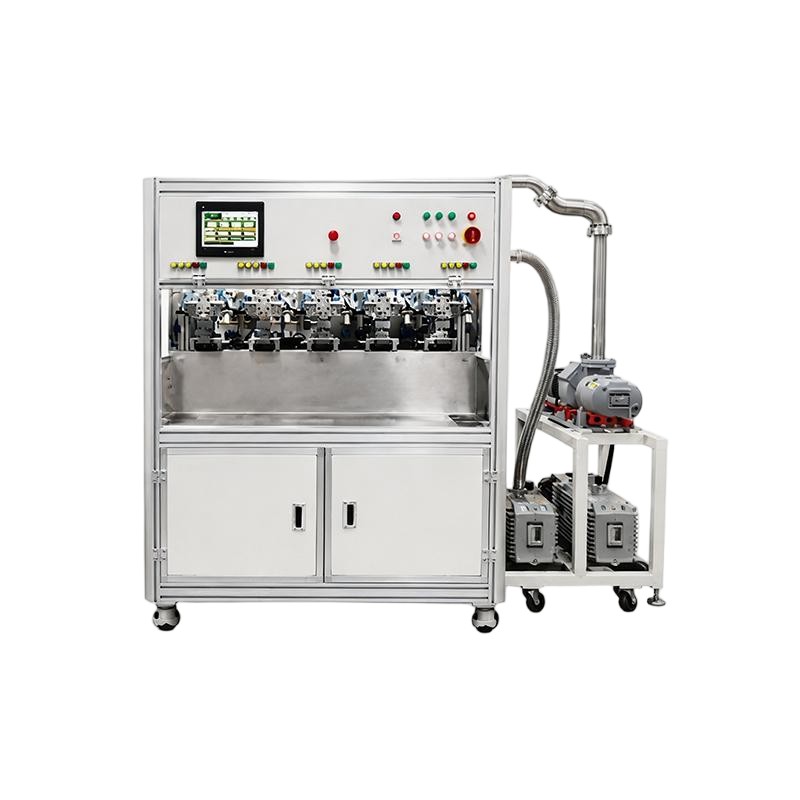
Automatic Heat Pipe Heating Degasser Machine Guide
1. What Is an Automatic Heat Pipe Heating Degasser Machine?
An Automatic Heat Pipe Heating Degasser Machine is specialized equipment used during heat pipe manufacturing. It combines controlled heating and vacuum-related processing to help remove unwanted gases and moisture from heat pipe interiors.
Heat pipes rely on a sealed internal environment. Their performance depends on the tube structure, wick design, and working fluid.
However, residual moisture and non-condensable gases can affect internal heat transfer behavior. Therefore, manufacturers need suitable preparation procedures before final filling and sealing.
An automatic heating degasser machine helps standardize this important manufacturing stage.
Depending on its configuration, the equipment may support:
- Controlled heating operations.
- Vacuum processing.
- Multiple tube processing.
- Automatic operating sequences.
- Process parameter monitoring.
- Repeatable degassing procedures.
- Integration with downstream filling equipment.
The exact functions depend on the machine design and customer requirements.
For heat pipe manufacturers, this equipment can support more consistent internal preparation and improve production process coordination.
2. Why Is Heating and Degassing Important?
Heat pipes transfer thermal energy through evaporation and condensation. Their internal working environment plays an important role in this process.
Unwanted gases and moisture may interfere with normal operation. Therefore, manufacturers should establish suitable internal preparation procedures.
2.1 Remove Residual Moisture
Moisture may remain inside tubes after cleaning or other manufacturing operations.
Heating under suitable process conditions helps remove residual moisture.
However, the required temperature and processing time depend on the product structure and manufacturing method.
2.2 Reduce Non-Condensable Gases
Non-condensable gases can accumulate inside a heat pipe.
These gases may occupy areas that should support vapor movement and condensation.
Consequently, they can reduce effective heat transfer performance.
A suitable vacuum and degassing process helps manufacturers control this risk.
2.3 Prepare Tubes for Working Fluid Filling
Internal preparation takes place before working fluid charging and final sealing.
The degassing process helps establish suitable conditions for subsequent manufacturing stages.
Therefore, equipment coordination is important.
2.4 Improve Manufacturing Consistency
Manual processing may introduce differences between production batches.
Automatic heating and degassing equipment can help standardize operating sequences.
Furthermore, process monitoring can support better production records.
3. How Does an Automatic Heat Pipe Heating Degasser Machine Work?
The operating process depends on equipment configuration. However, a typical heating and degassing workflow includes several stages.
3.1 Tube Loading
Operators or automated handling systems place prepared heat pipe tubes into the equipment.
The loading method depends on machine design and tube dimensions.
Manufacturers should confirm fixture compatibility before equipment installation.
3.2 Heating Preparation
The machine applies controlled heating according to the selected process settings.
Heating helps release moisture and other volatile substances from internal surfaces and materials.
Suitable temperature control is important for protecting product materials and supporting process consistency.
3.3 Vacuum Processing
The vacuum system reduces internal pressure during the degassing process.
This helps remove released gases and volatile substances from the processing chamber or connected tube system.
The actual vacuum arrangement depends on equipment design.
3.4 Automatic Process Control
The control system manages the programmed operating sequence.
Depending on the configuration, operators may set heating conditions, processing duration, and vacuum-related parameters.
Automatic operation helps reduce repetitive manual adjustments.
3.5 Process Completion
After the programmed cycle finishes, the equipment follows its configured release and unloading procedure.
Operators can then transfer prepared tubes to the next manufacturing stage.
The following operation may include working fluid filling and sealing.
3.6 Process Inspection
Manufacturers should monitor relevant process records and verify equipment operation.
Suitable inspection methods depend on product specifications and internal quality requirements.
4. Main Features of Automatic Heating Degasser Equipment
Different machines provide different technical configurations. Buyers should evaluate features according to their production requirements.
4.1 Automatic Operating Sequence
Automatic control helps coordinate heating and vacuum processing.
It can reduce repetitive operator intervention during normal operation.
Furthermore, programmed sequences support standardized production procedures.
4.2 Controlled Heating System
The heating system provides the thermal conditions required for degassing.
Temperature control helps manufacturers manage the process according to product requirements.
Important considerations include heating range, temperature uniformity, and control accuracy.
4.3 Vacuum System Configuration
The vacuum system supports the removal of unwanted gases.
Its configuration should match the processing chamber, tube arrangement, and required operating conditions.
Manufacturers should confirm relevant vacuum specifications with the equipment supplier.
4.4 Multiple Processing Stations
Some automatic machines support several processing positions.
This arrangement may allow operators to process multiple tubes within one operating cycle.
However, the actual number of stations and production capacity depend on machine design.
4.5 Process Monitoring
A suitable control system can display operating conditions.
Depending on configuration, monitoring functions may include temperature, vacuum pressure, cycle time, and operating status.
These records help manufacturers review production conditions.
4.6 Production Line Compatibility
The machine should connect logically with upstream and downstream equipment.
For example, it may receive prepared tubes from previous processes and transfer them to filling equipment.
Suitable interfaces help reduce unnecessary handling.
5. Applications in Heat Pipe Manufacturing
Automatic heating degasser equipment supports different heat pipe manufacturing projects.
Its suitability depends on product structure and internal preparation requirements.
5.1 Copper Heat Pipe Manufacturing
Copper heat pipes are widely used in electronic cooling and thermal management applications.
Their manufacturing processes may include tube preparation, wick formation, cleaning, heating, degassing, filling, and sealing.
A suitable degasser machine supports the internal preparation stage.
5.2 Sintered Powder Wick Heat Pipes
Sintered powder wick structures require controlled material preparation and processing.
After wick formation, manufacturers may need suitable drying and degassing operations.
The machine configuration should accommodate the tube dimensions and process requirements.
Related internal link: Heat Pipe Powder Filling Machine.
5.3 Screen Mesh Wick Heat Pipes
Screen mesh wick structures use metallic mesh materials to support working fluid circulation.
Manufacturers should consider mesh installation, cleaning, and internal preparation requirements.
A suitable heating degasser may support the preparation process before filling.
5.4 Customized Heat Pipe Products
Different customers may require different tube dimensions and product structures.
Therefore, equipment flexibility matters when manufacturers produce multiple product categories.
Before purchasing, buyers should provide representative drawings and process requirements.
6. Benefits of Automatic Degassing Technology
Automatic heating degassing equipment can improve production organization when correctly configured.
6.1 More Consistent Processing
Automatic sequences help standardize heating and vacuum operations.
This can reduce differences caused by repeated manual adjustments.
6.2 Reduced Manual Intervention
Operators do not need to control every process step manually.
Instead, they can focus on loading, unloading, inspection, and production supervision.
6.3 Improved Process Monitoring
A suitable control system helps operators review operating conditions.
Production records can also support process analysis and troubleshooting.
6.4 Better Production Coordination
Automatic equipment can connect with other manufacturing machines.
This helps organize material flow between preparation and filling processes.
6.5 Support for Production Expansion
Manufacturers may select different station configurations according to their output requirements.
A suitable equipment design can support future production planning.
However, buyers should confirm actual processing capacity before making investment decisions.
7. How to Select the Right Heating Degasser Machine
Choosing an appropriate machine requires a clear understanding of product specifications and manufacturing conditions.
7.1 Confirm Heat Pipe Dimensions
Provide the supplier with tube diameter, length, and material information.
These details influence fixture design and machine configuration.
7.2 Identify Process Requirements
Explain the required heating and degassing procedures.
Where available, provide process parameters and existing production records.
This information helps suppliers evaluate equipment suitability.
7.3 Evaluate Heating Performance
Check the heating range and temperature control functions.
Also, discuss temperature uniformity and the suitability of the heating method.
7.4 Check Vacuum System Specifications
Review the vacuum system configuration and relevant performance specifications.
The required vacuum conditions depend on product design and manufacturing procedures.
Avoid selecting equipment based only on a single vacuum rating.
7.5 Consider Station Configuration
Determine the number of tubes processed per cycle.
Also, evaluate loading methods and expected operating schedules.
These factors help estimate practical production capacity.
7.6 Review Automation Functions
Check the control interface, operating sequence, parameter settings, and monitoring functions.
Manufacturers should select automation features that solve actual production problems.
7.7 Confirm Maintenance and Technical Support
Ask about vacuum pump maintenance, heating components, spare parts, and technical assistance.
Clear maintenance arrangements help support long-term equipment operation.
8. Integration with a Heat Pipe Production Line
An Automatic Heat Pipe Heating Degasser Machine should work as part of a complete manufacturing process.
Its position depends on the selected production method.
A typical process may include:
- Copper tube cutting and preparation.
- Tube cleaning.
- Wick structure preparation.
- Powder filling, when applicable.
- Sintering, when applicable.
- Tube forming and processing.
- Heating and degassing.
- Working fluid filling.
- Sealing and welding.
- Final inspection and testing.
Not every heat pipe requires identical processing steps.
Therefore, manufacturers should define the workflow before selecting equipment.
8.1 Connection with Dry-Out Equipment
Dry-out and degassing processes have related but distinct purposes.
Dry-out focuses on moisture removal. Degassing focuses on removing unwanted gases.
Some manufacturing systems combine related functions. Others use separate equipment.
Manufacturers should clarify the process requirements before deciding on the machine configuration.
Related internal link: Heat Pipe Multi-Station Dry-Out Tester.
8.2 Connection with Filling Equipment
Degassing generally takes place before working fluid filling.
The transfer process should minimize unnecessary exposure to unsuitable environmental conditions.
Manufacturers should discuss handling procedures and equipment interfaces.
Related internal link: Heat Pipe Filling & Welding Machine.
8.3 Connection with Production Automation
Automatic material handling can reduce manual transfer between machines.
However, automation requires compatible fixtures, control interfaces, and process timing.
A complete integration plan helps avoid unnecessary production interruptions.
9. Common Operating Problems and Solutions
Manufacturers may encounter several problems when using heating degasser equipment.
Understanding these issues helps improve equipment management.
9.1 Unstable Vacuum Conditions
Possible causes include leakage, pump problems, or unsuitable connections.
Manufacturers should inspect seals, pipelines, valves, and vacuum system components.
9.2 Uneven Heating
Uneven temperature distribution may affect process consistency.
Check heating elements, temperature sensors, loading arrangements, and control settings.
The inspection procedure should follow the equipment manufacturer’s guidance.
9.3 Inconsistent Processing Results
Different loading conditions or process settings may create variation.
Manufacturers should standardize operating procedures and maintain process records.
9.4 Long Processing Cycles
Excessive cycle times can reduce production efficiency.
Review heating conditions, vacuum performance, loading methods, and actual process requirements.
Do not shorten processing time without verifying product quality.
9.5 Equipment Downtime
Unexpected equipment failures can interrupt production.
Preventive maintenance helps identify potential problems earlier.
Manufacturers should establish inspection schedules for pumps, valves, heating elements, and electrical components.
10. Why Choose cncooling-thermal?
cncooling-thermal focuses on thermal manufacturing equipment and related production solutions.
For heat pipe manufacturers, heating and degassing equipment supports an important internal preparation stage.
A suitable machine should match tube dimensions, process requirements, automation needs, and production targets.
Related equipment categories may include:
- Automatic Heat Pipe Heating Degasser Machine.
- Heat Pipe Degassing Machine.
- Heat Pipe Multi-Station Dry-Out Tester.
- Heat Pipe Powder Filling Machine.
- Vacuum Sintering Furnace.
- Heat Pipe Filling & Welding Machine.
- Heat Pipe Thermal Performance Testing Equipment.
These machines support different manufacturing operations.
Therefore, manufacturers should evaluate the complete process rather than selecting equipment independently.
cncooling-thermal can help customers discuss suitable equipment configurations for different heat pipe manufacturing projects.
Visit cncooling-thermal.com to explore thermal manufacturing equipment and discuss your production requirements.
11. Frequently Asked Questions
Q1. What is an Automatic Heat Pipe Heating Degasser Machine?
It is specialized equipment that combines controlled heating and vacuum-related processing to help remove unwanted gases and moisture during heat pipe manufacturing.
Q2. Why do heat pipes need degassing?
Unwanted gases can interfere with internal vapor movement and condensation.
A suitable degassing process helps prepare the internal environment before working fluid filling and sealing.
Q3. What is the difference between heating and degassing?
Heating helps release moisture and volatile substances from internal surfaces and materials.
Degassing focuses on removing unwanted gases through a suitable vacuum process.
Q4. Is a heating degasser machine the same as a dry-out machine?
Not necessarily.
Dry-out mainly addresses moisture removal, while degassing focuses on unwanted gases. Some machines combine these functions, depending on their design.
Q5. Can the machine process different heat pipe sizes?
This depends on the fixture design and supported processing range.
Buyers should provide tube dimensions and product drawings before equipment selection.
Q6. Does automatic operation improve production consistency?
Automatic operation can standardize process sequences and reduce repetitive manual adjustments.
However, results also depend on equipment condition, process settings, and material consistency.
Q7. What should buyers check when selecting a heating degasser?
Important factors include heating range, temperature control, vacuum system configuration, station quantity, automation functions, and maintenance requirements.
Q8. Where is degassing equipment installed in a heat pipe production line?
It generally operates during internal preparation, before working fluid filling and final sealing.
The exact position depends on the manufacturing workflow.
Q9. What maintenance does heating degasser equipment require?
Maintenance may include vacuum pump inspection, seal replacement, heating element checks, sensor verification, and electrical system inspection.
Follow the supplier’s maintenance recommendations.
Q10. Can cncooling-thermal provide customized heating degasser equipment?
Equipment configuration should be evaluated according to product dimensions, process requirements, and production targets.
Contact cncooling-thermal with product drawings and technical requirements to discuss a suitable solution.