
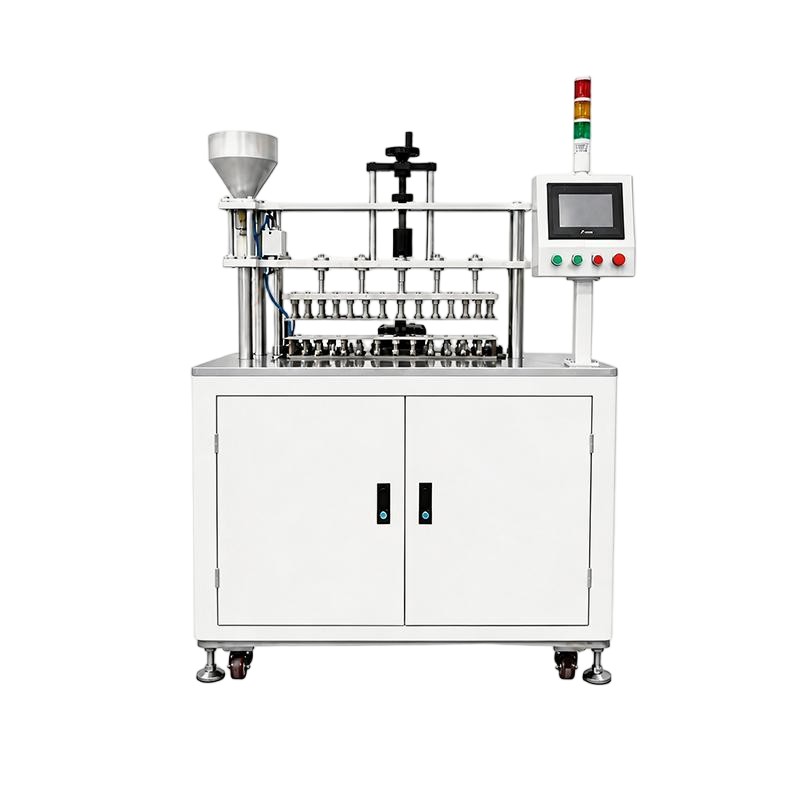
Heat Pipe Production Line: Efficiency and Process Control
1. Understanding Modern Heat Pipe Manufacturing
A Heat Pipe Production Line connects specialized manufacturing operations into a coordinated production system. It transforms metal tubes and internal materials into sealed heat transfer components.
Heat pipes support thermal management in electronics, telecommunications, automotive systems, and industrial equipment. Their performance depends on internal structures and manufacturing consistency.
Therefore, manufacturers must manage more than individual machine operations. They also need to coordinate material preparation, wick formation, vacuum treatment, fluid charging, and final inspection.
A well-organized production line provides several operational advantages:
- Consistent manufacturing procedures.
- Better coordination between equipment stations.
- Reduced unnecessary material handling.
- More predictable production schedules.
- Improved process traceability.
- Better control over manufacturing costs.
- Greater flexibility for product changes.
However, these benefits require proper planning. Manufacturers should consider product specifications, equipment compatibility, and production targets together.
2. How a Heat Pipe Production Line Works
A heat pipe transfers thermal energy through the evaporation and condensation of an internal working fluid. Its structure usually includes a sealed metal tube, working fluid, and wick structure.
Manufacturing processes vary according to product design. Nevertheless, conventional copper heat pipe production often follows several major stages.
2.1 Tube Preparation
Manufacturers begin by preparing metal tubes according to product drawings.
Cutting, cleaning, bending, and forming may take place during this stage. The exact operations depend on the final product shape.
Accurate preparation helps maintain dimensional consistency. It also supports reliable downstream processing.
2.2 Internal Wick Preparation
The wick structure supports the return of condensed working fluid.
Common designs include sintered powder, screen mesh, and grooved structures. Each design requires different preparation methods.
For sintered powder products, manufacturers need controlled powder filling. They also need suitable sintering conditions.
For screen mesh products, manufacturers focus on mesh preparation and installation.
2.3 Sintering Process
Sintering connects metal powder particles and forms a porous structure.
A suitable vacuum sintering process helps manufacturers control this stage. However, actual parameters depend on powder characteristics and product requirements.
Related internal link: Vacuum Sintering Furnace.
2.4 Dry-Out and Vacuum Treatment
Internal moisture and unwanted gases can affect manufacturing quality.
Therefore, manufacturers establish suitable heating, drying, and evacuation procedures.
The required treatment depends on tube dimensions, wick structure, and process design.
Related internal link: Heat Pipe Multi-Station Dry-Out Tester.
2.5 Working Fluid Filling
Manufacturers introduce the specified working fluid after internal preparation.
The filling quantity must match the product design. Consequently, manufacturers need repeatable filling procedures.
Related internal link: Heat Pipe Filling & Welding Machine.
2.6 Sealing and Inspection
The final process closes the tube and protects the internal working environment.
Manufacturers select suitable welding and sealing methods according to product construction.
Afterward, inspection verifies dimensions, sealing integrity, appearance, and thermal performance where required.
3. Building a Stable Manufacturing Process
A stable process begins with clear manufacturing requirements.
Manufacturers should establish standard procedures before increasing production volume.
3.1 Define Product Families
Start by grouping products according to their manufacturing characteristics.
For example, manufacturers can classify products by:
- Tube diameter.
- Tube length.
- Wick structure.
- Working fluid.
- Tube material.
- Final geometry.
- Application requirements.
This classification helps determine which products can share equipment and tooling.
3.2 Establish Standard Operating Procedures
Each manufacturing stage should have documented operating instructions.
These instructions should explain material requirements, machine settings, inspection points, and handling procedures.
Furthermore, operators should understand how each process affects the next stage.
3.3 Control Critical Process Parameters
Different manufacturing stages require different control priorities.
For example, powder filling requires suitable material distribution. Sintering requires controlled heating conditions.
Similarly, vacuum treatment and working fluid filling require repeatable procedures.
Manufacturers should identify critical parameters for each product family.
3.4 Maintain Process Records
Production records help manufacturers investigate quality issues.
Useful records include material batches, machine settings, operating conditions, inspection results, and maintenance activities.
Consequently, manufacturers can identify recurring problems more effectively.
4. Equipment Coordination and Production Balance
Equipment coordination plays a major role in production efficiency.
A machine may perform well independently but still create problems within an unbalanced production system.
4.1 Identify Production Bottlenecks
A bottleneck occurs when one process cannot support the required production flow.
For example, slow powder filling may delay the sintering process. Similarly, limited filling capacity may interrupt downstream production.
Manufacturers should compare processing times across all major stages.
4.2 Match Equipment Capacity
Equipment capacity should reflect actual production requirements.
Consider the following factors:
- Processing time per product.
- Batch size.
- Loading and unloading time.
- Equipment availability.
- Changeover requirements.
- Maintenance schedules.
These factors provide a more realistic capacity assessment than machine speed alone.
4.3 Improve Material Transfer
Unnecessary material movement increases handling time.
A logical equipment arrangement can reduce repeated transportation. It can also improve production supervision.
Manufacturers should arrange machines according to the process sequence whenever practical.
4.4 Coordinate Supporting Equipment
Supporting systems also influence manufacturing stability.
Depending on the equipment configuration, these systems may include vacuum pumps, cooling units, compressed air, electrical control systems, and material handling equipment.
Manufacturers should evaluate these requirements before installation.
5. Improving Production Efficiency
Production efficiency depends on equipment performance, process consistency, and operational management.
Manufacturers can improve results through several practical measures.
5.1 Reduce Unnecessary Waiting Time
Waiting between manufacturing stages can reduce overall output.
A balanced production schedule helps coordinate material availability and machine operation.
Manufacturers should monitor unfinished products between process stations.
5.2 Standardize Changeover Procedures
Different heat pipe products may require different tooling and machine settings.
Unstructured changeovers can increase downtime.
Therefore, manufacturers should prepare standard changeover instructions and suitable tooling arrangements.
5.3 Improve Machine Availability
Unexpected downtime interrupts production schedules.
Preventive maintenance helps manufacturers identify equipment problems earlier.
Operators should inspect critical components and follow recommended maintenance intervals.
5.4 Optimize Operator Workflows
Clear operating procedures help reduce unnecessary movement and repeated adjustments.
Manufacturers should organize workstations according to actual operator responsibilities.
In addition, practical training helps operators understand equipment functions and process requirements.
5.5 Use Production Data
Production data can reveal recurring inefficiencies.
Useful indicators include equipment availability, production quantities, downtime, defect rates, and process completion times.
Manufacturers can use these records to identify improvement opportunities.
6. Manufacturing Cost Control
A Heat Pipe Production Line involves several cost categories.
Manufacturers should evaluate total manufacturing costs instead of focusing only on equipment purchase prices.
6.1 Equipment Investment
Initial investment may include production machines, auxiliary systems, tooling, installation, and commissioning.
The required configuration depends on product design and expected output.
A clear equipment list helps manufacturers compare different proposals.
6.2 Material Consumption
Material costs include metal tubes, wick materials, working fluids, and other production supplies.
Poor process control may increase material waste.
Therefore, manufacturers should monitor material usage and production yield.
6.3 Energy Consumption
Heating, vacuum processing, and other equipment operations consume energy.
Energy requirements vary according to equipment design and operating conditions.
Manufacturers should evaluate energy consumption when comparing alternative configurations.
6.4 Labor and Maintenance
Labor costs depend on automation level and production organization.
Maintenance costs depend on equipment design, operating conditions, and service requirements.
A practical production system should balance automation investment with actual labor needs.
6.5 Cost per Finished Product
Manufacturers can estimate unit manufacturing costs by considering total operating expenses and qualified output.
This calculation helps evaluate production efficiency.
However, cost comparisons should use consistent product specifications and production conditions.
7. Quality Management and Process Verification
Quality management should cover every major manufacturing stage.
A final inspection cannot replace process control.
7.1 Incoming Material Inspection
Check metal tubes and other materials against approved specifications.
Relevant inspection items may include dimensions, material condition, and powder characteristics.
Suitable incoming inspection helps reduce material-related problems.
7.2 Wick Structure Verification
Wick structure influences internal liquid circulation.
Manufacturers should monitor preparation consistency and relevant process conditions.
The verification method depends on the selected wick design.
7.3 Sintering Process Control
Sintering conditions influence the resulting porous structure.
Manufacturers should establish suitable procedures for heating and vacuum control.
They should also maintain records for process verification.
7.4 Vacuum and Filling Control
Internal preparation and working fluid filling require repeatable procedures.
Manufacturers should monitor relevant equipment parameters and verify process consistency.
This approach helps reduce manufacturing variation.
7.5 Leak Testing
Sealing integrity is important for a sealed heat pipe.
Manufacturers should select suitable leak-testing methods according to product specifications.
Testing requirements may vary between product categories.
7.6 Thermal Performance Evaluation
Thermal performance testing helps evaluate finished heat pipes under defined conditions.
Manufacturers should establish test procedures that reflect the intended application.
Related internal link: Heat Pipe Thermal Performance Tester.
8. Flexible Production for Different Heat Pipe Designs
Manufacturers often serve customers with different thermal management requirements.
Consequently, production flexibility can become an important competitive factor.
8.1 Different Tube Dimensions
Different applications require different tube lengths and diameters.
Manufacturers should confirm equipment adjustment ranges and tooling compatibility.
8.2 Different Wick Structures
Powder, mesh, and grooved wick structures require different manufacturing processes.
A production line designed for one structure may not support another without additional equipment.
Therefore, manufacturers should define product requirements before equipment procurement.
8.3 Different Product Geometries
Some heat pipes require bending, flattening, or customized shapes.
These operations may influence the manufacturing sequence.
Manufacturers should evaluate forming requirements and tooling options.
8.4 Small-Batch and Large-Batch Production
Small-batch manufacturing often requires greater flexibility.
Large-batch manufacturing places greater emphasis on repeatability and equipment utilization.
The production line should reflect the factory’s actual business model.
9. Production Line Upgrades and Expansion
Manufacturing requirements may change as customer demand grows.
Therefore, manufacturers should consider future upgrades during initial production planning.
9.1 Replace Inefficient Equipment
Older machines may create maintenance difficulties or process limitations.
Manufacturers should evaluate whether equipment replacement can improve process stability.
However, replacement decisions should consider integration costs.
9.2 Automate Critical Processes
Some processes may benefit more from automation than others.
For example, powder filling and working fluid filling may offer opportunities for improved repeatability.
Manufacturers should identify specific operational problems before choosing automation systems.
9.3 Add Production Capacity
Additional machines can increase processing capacity when demand justifies expansion.
However, manufacturers should also evaluate downstream capacity and factory utilities.
Adding one machine cannot solve every production bottleneck.
9.4 Improve Production Monitoring
Digital monitoring can provide better visibility into equipment conditions.
Manufacturers may record production quantities, process parameters, and equipment downtime.
These records support maintenance planning and process optimization.
9.5 Plan Modular Expansion
A modular production layout can simplify future upgrades.
Manufacturers should reserve space and consider equipment interfaces during initial factory planning.
This strategy may reduce the complexity of later expansion projects.
10. Selecting a Manufacturing Solution
Selecting a suitable manufacturing solution requires technical and operational evaluation.
Manufacturers should provide detailed project information before requesting equipment proposals.
10.1 Prepare Product Drawings
Product drawings help suppliers understand dimensions and structural requirements.
Include tube specifications, wick structures, and relevant manufacturing details.
10.2 Define Production Targets
Explain expected output, working schedules, and product variety.
These details help suppliers evaluate equipment capacity.
10.3 Review the Process Flow
Ask suppliers to explain the complete manufacturing sequence.
Check whether the proposed equipment supports every required operation.
10.4 Compare Technical Proposals
Compare equipment functions, operating ranges, tooling, and supporting systems.
Do not rely only on headline specifications or purchase prices.
10.5 Confirm Installation Requirements
Review factory utilities, machine dimensions, transportation, and installation conditions.
Also, clarify commissioning and operator training responsibilities.
10.6 Evaluate Long-Term Support
Ask about spare parts, maintenance guidance, and technical assistance.
Long-term support can influence equipment availability and production continuity.
11. Why Work with cncooling-thermal?
cncooling-thermal focuses on thermal manufacturing equipment and related production solutions.
Manufacturers planning a new heat pipe factory need equipment that matches their product requirements.
They also need to consider process coordination and future production development.
Relevant equipment categories include:
- Heat Pipe Powder Filling Machine.
- Vacuum Sintering Furnace.
- Heat Pipe Necking Machine.
- Heat Pipe Degassing Machine.
- Heat Pipe Multi-Station Dry-Out Tester.
- Heat Pipe Filling & Welding Machine.
- Heat Pipe Thermal Performance Testing Equipment.
Each equipment category supports a different manufacturing operation.
Therefore, manufacturers should begin equipment selection with product drawings and process requirements.
cncooling-thermal can help customers discuss equipment configurations for different heat pipe manufacturing projects.
Visit cncooling-thermal.com to explore available thermal manufacturing equipment and discuss project requirements.
12. Frequently Asked Questions
Q1. What does a Heat Pipe Production Line include?
A typical line includes tube preparation, wick processing, vacuum treatment, working fluid filling, sealing, and inspection equipment.
The exact configuration depends on product design and manufacturing methods.
Q2. What is the most important process in heat pipe manufacturing?
Every process contributes to final product quality.
Wick formation, internal preparation, working fluid filling, and sealing deserve particular attention because they influence internal heat transfer conditions.
Q3. Can one production line manufacture different heat pipe products?
Yes, some production lines can support multiple product designs.
However, manufacturers must confirm equipment ranges, tooling compatibility, and process adjustments.
Q4. How can manufacturers reduce production bottlenecks?
They should compare equipment cycle times and identify processes with insufficient capacity.
Improving equipment balance and material transfer can reduce unnecessary waiting.
Q5. Why is vacuum processing important?
Vacuum processing helps establish suitable internal conditions before working fluid filling.
The specific requirements depend on product design and manufacturing procedures.
Q6. What affects the cost of a heat pipe production line?
Major factors include equipment configuration, automation level, production capacity, tooling, installation, and factory preparation.
Operating expenses also influence long-term manufacturing costs.
Q7. Should manufacturers choose a fully automated production line?
Not necessarily.
The appropriate automation level depends on production volume, product variety, labor requirements, and investment plans.
Q8. How can manufacturers improve heat pipe product consistency?
They should standardize operating procedures, control critical parameters, maintain equipment, and verify finished products.
Production records also help identify recurring problems.
Q9. What information should buyers prepare before requesting a quotation?
Prepare product drawings, tube dimensions, wick structure details, expected output, and factory conditions.
These details help suppliers recommend suitable equipment.
Q10. How often should manufacturers upgrade production equipment?
Upgrade timing depends on equipment condition, production demand, maintenance costs, and product changes.
Manufacturers should evaluate equipment performance regularly.