
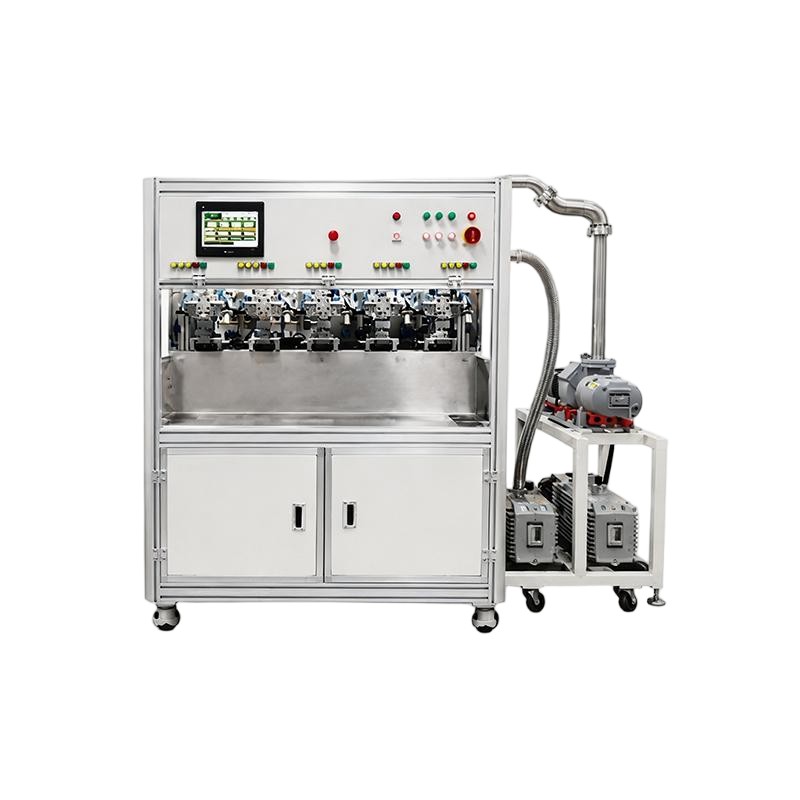
Heat Pipe Production Line: Process and Factory Planning
1. What Is a Heat Pipe Production Line?
A Heat Pipe Production Line is an integrated manufacturing system for producing heat pipes. It connects multiple production processes into one coordinated workflow.
Heat pipes transfer heat efficiently through evaporation and condensation. Therefore, manufacturers must control internal structures and working fluids carefully.
A complete production line covers several important stages. These include tube preparation, cleaning, wick installation, powder processing, sintering, evacuation, filling, and sealing.
Moreover, each process affects the final thermal performance. Poor coordination can increase production defects and operating costs.
A well-planned heat pipe production line helps manufacturers achieve:
- Stable manufacturing processes.
- Consistent product quality.
- Improved production efficiency.
- Better equipment coordination.
- Reduced material waste.
- More reliable production planning.
- Flexible manufacturing for different product designs.
For manufacturers serving electronics, telecommunications, automotive, and industrial cooling markets, production consistency matters.
Therefore, production line design should consider the complete manufacturing process rather than individual machines alone.
2. Why Does Production Line Planning Matter?
A heat pipe contains several functional components. These include a sealed metal tube, working fluid, and internal wick structure.
Each component must meet specific manufacturing requirements. Consequently, every production stage needs suitable process control.
2.1 Improve Manufacturing Consistency
A coordinated production line reduces unnecessary differences between production batches.
For example, consistent powder filling supports more predictable wick structures. Similarly, controlled sintering helps establish the required porous structure.
Furthermore, stable evacuation and filling processes help manufacturers control internal conditions.
2.2 Reduce Production Bottlenecks
An unbalanced factory layout can create unnecessary waiting time. Some machines may remain idle while other processes accumulate unfinished products.
Production planning helps match equipment capacity across different stages.
As a result, manufacturers can improve material flow and reduce production interruptions.
2.3 Support Different Heat Pipe Designs
Different applications require different heat pipe dimensions and structures.
For instance, electronics cooling may require compact and thin heat pipes. Industrial applications may require larger dimensions or customized configurations.
Therefore, a flexible Heat Pipe Production Line should accommodate suitable process adjustments.
2.4 Improve Long-Term Production Management
Production line planning also supports maintenance and quality management.
Manufacturers can establish standard operating procedures for each process. In addition, they can monitor production records and identify recurring problems.
This approach creates a stronger foundation for future production expansion.
3. Main Manufacturing Processes of Heat Pipes
The manufacturing process depends on heat pipe design, material, dimensions, and wick structure.
However, most conventional copper heat pipe manufacturing projects include several common stages.
3.1 Copper Tube Preparation
The process starts with copper tube preparation.
Manufacturers select suitable tube materials and dimensions according to product requirements. Then, operators perform cutting, forming, and other preparation operations.
Accurate tube dimensions help maintain consistency throughout later processes.
Related internal link opportunity: Heat Pipe Tube Processing Equipment.
3.2 Tube Cleaning
Clean internal surfaces are important for reliable heat pipe manufacturing.
Contaminants can affect wick installation and internal cleanliness. Therefore, manufacturers should establish suitable cleaning procedures.
The cleaning method depends on tube material, product specifications, and manufacturing requirements.
3.3 Wick Structure Preparation
The wick structure helps return condensed working fluid toward the evaporation section.
Common wick structures include:
- Sintered powder wick.
- Screen mesh wick.
- Grooved wick.
- Composite wick structures.
Each design requires a suitable manufacturing approach.
For sintered powder structures, manufacturers need accurate powder preparation and filling.
Related internal link opportunity: Heat Pipe Powder Filling Machine.
3.4 Powder Filling and Sintering
Powder filling establishes the raw material distribution inside the tube.
A suitable filling process helps maintain consistency between products. After filling, the tube enters the sintering process.
Sintering creates connections between metal particles. It also helps establish the porous wick structure.
Process parameters depend on powder characteristics and product design.
Related internal link opportunities:
- Heat Pipe Powder Filling Machine
- Vacuum Sintering Furnace
3.5 Tube Forming and Necking
Some heat pipe designs require specific tube shapes and end configurations.
Manufacturers may use forming or necking processes to prepare the tube for subsequent operations.
Accurate forming helps improve dimensional consistency. It also supports reliable connections during filling and sealing.
Related internal link opportunity: Heat Pipe Necking Machine.
3.6 Dry-Out and Evacuation
Moisture and unwanted gases can affect internal heat pipe performance.
Therefore, manufacturers need suitable dry-out and evacuation procedures.
A controlled heating and vacuum process helps prepare the internal environment before working fluid filling.
The required process depends on tube dimensions, wick structure, and product specifications.
Related internal link opportunity: Heat Pipe Multi-Station Dry-Out Tester.
3.7 Working Fluid Filling
After internal preparation, manufacturers introduce the specified working fluid.
The filling quantity must match the product design and operating requirements.
Excessive or insufficient fluid can affect thermal performance. Therefore, manufacturers should establish repeatable filling procedures.
Related internal link opportunity: Heat Pipe Filling & Welding Machine.
3.8 Sealing and Welding
The final manufacturing stages include tube sealing and welding.
Manufacturers must select suitable joining methods according to tube material and product structure.
A reliable sealing process helps prevent working fluid leakage. In addition, consistent welding supports stable product quality.
3.9 Testing and Inspection
Finished heat pipes require appropriate inspection.
Manufacturers may evaluate dimensions, sealing integrity, appearance, and thermal performance.
Testing methods should match the product’s technical requirements and intended application.
A complete production workflow connects these stages into one manufacturing system.
4. How to Design an Efficient Heat Pipe Production Line
Designing a Heat Pipe Production Line requires more than selecting machines.
Manufacturers should first understand product requirements, production targets, and factory conditions.
4.1 Define Product Specifications
Start by identifying the heat pipe products that the factory will manufacture.
Important parameters include:
- Tube diameter and length.
- Tube material.
- Wick structure.
- Working fluid.
- Product shape.
- Application requirements.
- Expected production volume.
These details determine the necessary equipment and manufacturing processes.
4.2 Establish the Manufacturing Workflow
Next, arrange processes according to the actual manufacturing sequence.
A typical workflow may include:
- Tube cutting and preparation.
- Tube cleaning.
- Wick preparation.
- Powder filling, when applicable.
- Sintering, when applicable.
- Tube forming and necking.
- Dry-out and evacuation.
- Working fluid filling.
- Sealing and welding.
- Final inspection and testing.
Not every heat pipe requires identical processing steps. Therefore, manufacturers should customize the workflow.
4.3 Match Equipment Capacity
Every production stage should support the planned manufacturing volume.
For example, a high-capacity filling process cannot improve overall output when upstream preparation remains slow.
Manufacturers should compare cycle times and equipment availability. They should also consider changeover and maintenance requirements.
4.4 Consider Future Expansion
Production demand may increase as customer orders grow.
Therefore, factory planning should consider additional equipment and production space.
A modular production layout can make future expansion easier. It can also reduce unnecessary changes to existing processes.
5. Key Factors Affecting Production Efficiency
Production efficiency depends on equipment, process stability, material handling, and workforce management.
5.1 Equipment Compatibility
Machines must work together according to the manufacturing sequence.
Incompatible equipment can create delays and handling difficulties.
Therefore, manufacturers should evaluate equipment interfaces before purchasing a complete production system.
5.2 Process Stability
Stable process conditions help reduce manufacturing variation.
For example, powder filling consistency affects wick formation. Meanwhile, sintering conditions influence the resulting porous structure.
Similarly, evacuation and filling procedures influence internal product conditions.
5.3 Material Management
Copper tubes, metal powders, and working fluids require proper storage and handling.
Poor material management can cause contamination or unnecessary production delays.
A structured material management system helps maintain production continuity.
5.4 Operator Training
Even automated equipment requires suitable operating procedures.
Operators should understand machine functions, safety requirements, and process parameters.
In addition, regular training helps improve production consistency.
5.5 Preventive Maintenance
Unexpected equipment downtime can interrupt the entire manufacturing process.
Therefore, manufacturers should establish regular inspection and maintenance schedules.
They should also monitor consumable parts and critical machine components.
6. Quality Control Throughout Heat Pipe Manufacturing
Quality control should cover the entire production process.
Final inspection alone cannot identify every manufacturing problem. Instead, manufacturers should establish inspection points throughout production.
6.1 Raw Material Inspection
Check incoming materials against approved specifications.
Important inspection items may include tube dimensions, material condition, and powder characteristics.
6.2 Wick Structure Inspection
The wick structure plays an important role in fluid circulation.
Manufacturers should control powder distribution, filling consistency, and sintering conditions.
The inspection method should reflect the selected wick design.
6.3 Vacuum Process Monitoring
The evacuation process helps establish suitable internal conditions.
Manufacturers should monitor vacuum-related parameters and process stability.
Suitable monitoring methods depend on equipment design and product specifications.
6.4 Filling Accuracy
Working fluid quantity affects heat pipe operation.
Therefore, manufacturers should control filling procedures and verify relevant process parameters.
Repeatable filling conditions support more consistent production results.
6.5 Sealing Integrity
The sealed structure must prevent working fluid leakage.
Manufacturers should establish suitable welding inspection and leak-testing procedures.
Testing requirements depend on the product and applicable industry standards.
6.6 Thermal Performance Testing
Thermal performance testing evaluates how a finished heat pipe transfers heat.
Manufacturers can select testing methods according to product dimensions and application requirements.
For example, electronic cooling products may require evaluation under specified operating conditions.
Related internal link opportunity: Heat Pipe Thermal Performance Tester.
7. Automation and Smart Manufacturing
Automation can improve production consistency and reduce repetitive manual operations.
However, manufacturers should select automation according to actual production needs.
7.1 Automated Material Handling
Material handling systems can connect separate manufacturing processes.
They may reduce manual transfer and improve workflow organization.
However, the layout must accommodate product dimensions and equipment requirements.
7.2 Automatic Powder Filling
Automatic powder filling equipment can support repeatable material distribution.
This is especially useful for manufacturers producing similar heat pipe designs in larger quantities.
Nevertheless, different powder materials and tube dimensions may require different process settings.
7.3 Automated Vacuum and Filling Processes
Automated vacuum and working fluid filling systems can improve process repeatability.
They can also help standardize production procedures.
Manufacturers should evaluate control functions, operating ranges, and compatibility with product specifications.
7.4 Production Data Management
Digital production records help manufacturers monitor manufacturing performance.
Useful information may include:
- Production quantities.
- Equipment operating status.
- Process parameters.
- Inspection results.
- Maintenance records.
- Production downtime.
Furthermore, these records help identify process deviations and recurring issues.
7.5 Gradual Automation Upgrades
Not every factory needs a fully automated production line.
Some manufacturers may benefit from automating critical processes first.
For example, powder filling, vacuum processing, and working fluid filling may offer practical upgrade opportunities.
A gradual approach can help manage investment and implementation risks.
8. How to Plan Heat Pipe Factory Layout
Factory layout directly affects material flow and production coordination.
A suitable layout should minimize unnecessary transportation and provide sufficient maintenance space.
8.1 Arrange Equipment by Process Sequence
Place machines according to the manufacturing workflow.
This arrangement helps reduce repeated material handling.
It also makes production supervision easier.
8.2 Separate Different Operating Areas
Different processes may have different environmental and operational requirements.
For example, cleaning, powder handling, vacuum processing, and final inspection may need separate work areas.
Manufacturers should consider cleanliness, ventilation, utilities, and safety requirements.
8.3 Plan Utility Connections
Production equipment may require electricity, compressed air, cooling water, or vacuum-related connections.
Therefore, factory planning should consider utility requirements before installation.
Proper utility planning helps avoid costly modifications.
8.4 Reserve Maintenance Space
Machines need suitable access for inspection and maintenance.
Insufficient maintenance space can increase downtime.
Therefore, manufacturers should reserve adequate operating and service areas.
8.5 Prepare for Production Expansion
Future expansion should influence the original layout.
Manufacturers can reserve space for additional machines and material storage.
This approach supports more flexible factory development.
9. Common Challenges in Heat Pipe Production
Manufacturers may encounter several problems when establishing or operating a production line.
9.1 Unbalanced Production Capacity
Different machines may have significantly different processing speeds.
Consequently, unfinished products can accumulate between production stages.
Solution: Compare cycle times and adjust equipment configuration according to the actual workflow.
9.2 Inconsistent Wick Structures
Uneven powder distribution or unsuitable process conditions can affect wick consistency.
Solution: Establish clear filling procedures and monitor sintering parameters.
9.3 Unstable Internal Conditions
Insufficient drying or evacuation can affect the internal environment.
Solution: Develop suitable dry-out and vacuum procedures for each product category.
9.4 Inconsistent Filling Results
Different filling quantities can lead to product performance variation.
Solution: Standardize filling procedures and verify critical process parameters.
9.5 Difficult Equipment Integration
Machines from different suppliers may use different control systems and operating methods.
Solution: Evaluate equipment compatibility before finalizing procurement.
9.6 Limited Future Flexibility
A production line designed for only one product may become restrictive.
Solution: Consider product variations and future production plans during initial design.
10. How to Choose the Right Production Line Solution
Choosing the right manufacturing solution requires a systematic evaluation.
Manufacturers should compare equipment specifications, process compatibility, and supplier capabilities.
10.1 Evaluate Manufacturing Experience
Look for suppliers familiar with heat pipe manufacturing processes.
They should understand powder filling, sintering, evacuation, working fluid filling, and sealing requirements.
10.2 Review Equipment Configuration
Ask suppliers to explain the proposed manufacturing workflow.
Each machine should have a clear role within the complete production process.
10.3 Confirm Product Compatibility
Provide representative product drawings and technical requirements.
Then, discuss whether the proposed equipment can support the required dimensions and structures.
10.4 Check Customization Capabilities
Different manufacturers have different production goals.
Therefore, equipment configuration may require adjustments.
Discuss available customization options before confirming the final solution.
10.5 Evaluate Technical Support
Installation, commissioning, operator training, and maintenance support are important considerations.
Manufacturers should clarify the service scope before purchasing equipment.
10.6 Consider Total Ownership Costs
Purchase price is only one part of equipment investment.
Manufacturers should also evaluate installation, utilities, consumables, maintenance, and operating costs.
A suitable solution should balance production requirements and long-term operating needs.
11. Why Choose cncooling-thermal?
cncooling-thermal focuses on thermal manufacturing equipment and production solutions.
For manufacturers planning a new factory or upgrading existing operations, equipment coordination is an important consideration.
A suitable manufacturing solution should reflect the actual product structure and process requirements.
cncooling-thermal can help customers evaluate relevant equipment for heat pipe manufacturing projects.
Potential equipment requirements include:
- Heat pipe powder filling equipment.
- Vacuum sintering furnaces.
- Heat pipe necking machines.
- Heat pipe dry-out systems.
- Heat pipe filling and welding machines.
- Thermal performance testing equipment.
Rather than selecting machines independently, manufacturers should consider the complete production workflow.
This approach helps improve equipment compatibility and production planning.
Visit cncooling-thermal to explore thermal manufacturing equipment and discuss project requirements.
12. Frequently Asked Questions
Q1. What is a Heat Pipe Production Line?
A Heat Pipe Production Line is an integrated manufacturing system for producing heat pipes. It connects tube preparation, wick processing, sintering, evacuation, filling, sealing, and testing.
Q2. What machines are needed for heat pipe manufacturing?
Common equipment includes tube preparation machines, powder filling machines, vacuum sintering furnaces, dry-out systems, filling and welding machines, and testing equipment.
The exact configuration depends on product design and manufacturing processes.
Q3. How long does it take to establish a heat pipe production line?
The project timeline depends on equipment configuration, factory preparation, customization, installation, and commissioning.
Manufacturers should confirm the schedule with their equipment supplier.
Q4. Can one production line manufacture different heat pipe sizes?
Yes, some production lines can support multiple sizes.
However, manufacturers must confirm machine adjustment ranges and tooling compatibility before purchasing equipment.
Q5. Why is powder filling important in heat pipe manufacturing?
Powder filling helps establish the material distribution for sintered wick structures.
Consistent filling supports more predictable wick formation and manufacturing quality.
Q6. What is the function of a vacuum sintering furnace?
A vacuum sintering furnace supports the formation of porous metal wick structures.
It heats the filled metal powder under controlled conditions to create connections between particles.
Q7. Why do heat pipes require dry-out and evacuation?
Dry-out helps remove unwanted moisture. Evacuation helps establish suitable internal conditions before working fluid filling.
Both processes support reliable manufacturing.
Q8. How can manufacturers improve heat pipe production efficiency?
Manufacturers can improve efficiency through balanced equipment capacity, stable processes, suitable factory layouts, operator training, and preventive maintenance.
Automation can also improve consistency in selected processes.
Q9. What should manufacturers consider before purchasing a production line?
They should evaluate product specifications, production targets, equipment compatibility, factory utilities, customization options, and technical support.
Q10. Does cncooling-thermal provide complete heat pipe manufacturing equipment?
cncooling-thermal focuses on thermal manufacturing equipment and related production solutions.
Customers should discuss their product requirements and process needs to determine a suitable equipment configuration.