
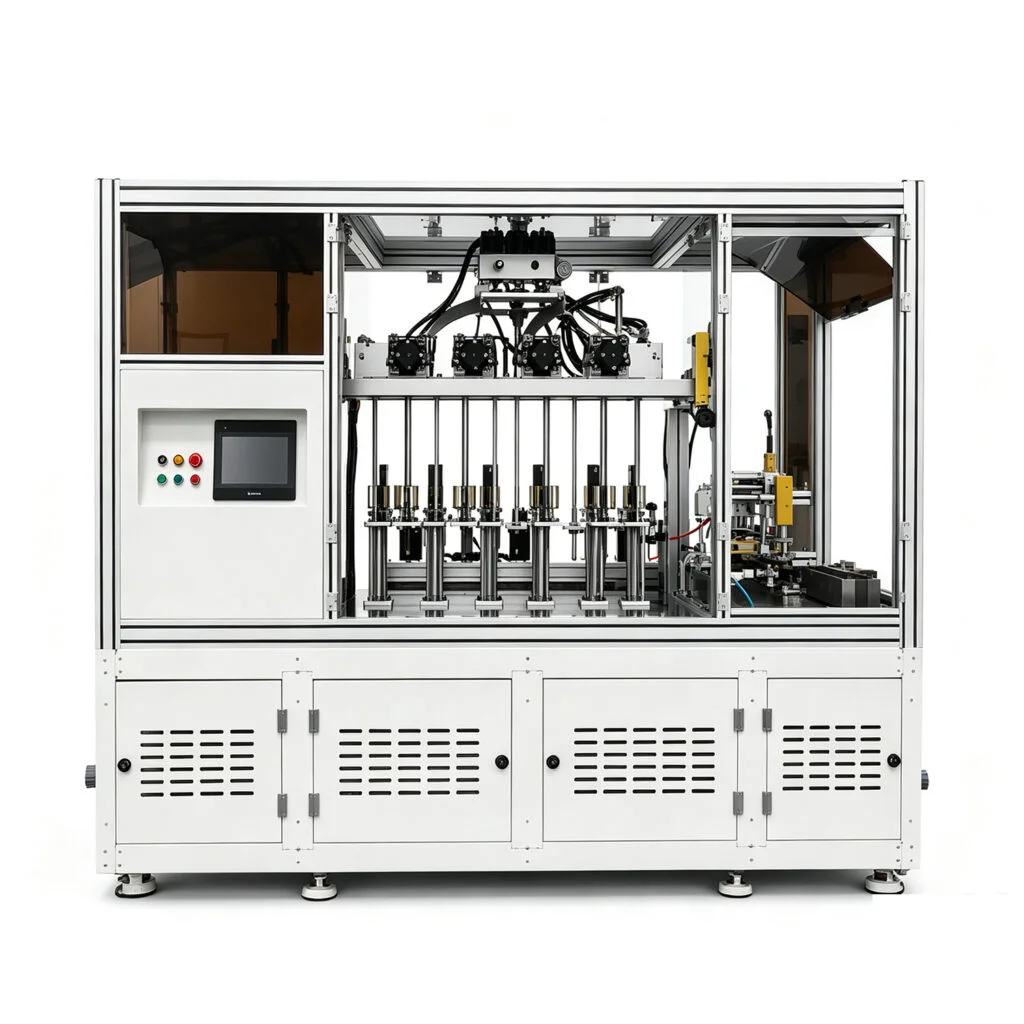
Heat Pipe Multi-station Dry-out Tester: Complete Guide
1. What Is a Heat Pipe Multi-station Dry-out Tester?
A Heat Pipe Multi-station Dry-out Tester is a specialized thermal testing system designed to evaluate heat pipe behavior as heat input increases. It typically provides multiple test stations for mounting samples, applying heat, measuring temperatures, and recording test data.
The main purpose is to identify the operating conditions where a heat pipe can no longer transport additional heat effectively. Depending on the equipment design, the tester may also support thermal resistance measurements and comparative performance evaluations.
A multi-station configuration allows engineers to test multiple samples during the same testing period. This approach can improve laboratory throughput and support comparisons between different heat pipe designs.
1.1 Main Functions
A multi-station dry-out tester may support the following functions:
Applying controlled heat input to heat pipe evaporator sections.
Measuring temperatures at selected locations.
Monitoring temperature changes as heat load increases.
Identifying potential dry-out behavior under defined conditions.
Comparing thermal performance across different samples.
Recording test parameters for engineering analysis.
Not every system provides all these functions. Therefore, buyers should confirm the supported test methods and measurement channels before selecting equipment.
1.2 Why Use Multiple Test Stations?
Testing several samples in one system can reduce repetitive setup work. It also helps engineers compare products under similar test conditions.
For example, a manufacturer may compare different wick structures, working-fluid charges, tube dimensions, or production batches. Multiple stations can support these evaluations more efficiently than a single-sample setup.
However, simultaneous testing only provides a fair comparison when each station maintains suitable and consistent conditions. Fixture design, sensor placement, heating control, and data acquisition all affect result quality.
2. What Is Heat Pipe Dry-Out?
Heat pipe dry-out occurs when the evaporator region cannot maintain sufficient liquid supply to support the applied heat load. As a result, the local temperature may rise sharply.
A heat pipe normally transfers heat through a phase-change cycle. The working fluid absorbs heat at the evaporator and vaporizes. The vapor moves toward the condenser, where it releases heat and condenses. The wick structure then returns liquid toward the evaporator through capillary action.
When the liquid return process cannot keep pace with evaporation, the evaporator may become partially or extensively depleted of liquid. This can lead to dry-out behavior.
2.1 The Role of Capillary Action
Many heat pipes use a wick structure to return condensed liquid. The wick generates capillary pressure, which helps move liquid from the condenser toward the evaporator.
However, the wick has finite liquid transport capability. Its pore structure, permeability, geometry, and material properties affect liquid return.
If the required liquid flow exceeds the wick’s capability, the evaporator may not receive enough working fluid. Therefore, wick design can strongly influence dry-out performance.
2.2 The Influence of Heat Input
Heat input affects evaporation and vapor movement. As the applied heat load increases, the heat pipe must transport more energy from the evaporator to the condenser.
At a certain operating condition, the heat pipe may reach a transport limit. Dry-out testing helps engineers investigate this limit under defined boundary conditions.
Nevertheless, dry-out does not always occur at the same heat load. Orientation, condenser cooling, working-fluid charge, and operating temperature can all influence the observed result.
2.3 Dry-Out and Other Heat Pipe Limits
Dry-out is one possible heat pipe performance limit. It should not be confused with every other limit that restricts heat transport.
Depending on the design and operating conditions, heat pipes may also encounter capillary, sonic, entrainment, or boiling limits. These mechanisms have different causes and may produce different temperature responses.
A dry-out tester should therefore use a defined test method. Engineers should interpret results in the context of the heat pipe design and operating conditions.
3. Why Dry-Out Testing Matters
Dry-out testing provides useful information for heat pipe development, production quality control, and thermal design verification.
3.1 Evaluate Maximum Heat Transport Capability
Engineers need to understand how much heat a heat pipe can transport under specified conditions. A dry-out test can help identify the heat input associated with a significant loss of evaporator temperature control.
This information supports product selection and thermal system design. However, the measured limit applies to the tested conditions and configuration. It should not automatically represent every real-world application.
3.2 Compare Wick Structures
Different wick structures offer different capillary and permeability characteristics. A multi-station tester can help engineers compare candidate designs using a consistent test procedure.
For instance, engineers may evaluate sintered powder wicks, mesh structures, or grooved designs. They can then compare temperature trends and dry-out behavior.
The results help guide product development. Still, engineers should consider the complete heat pipe geometry and working-fluid system when interpreting differences.
3.3 Support Production Quality Control
Manufacturers may use thermal testing to identify variation between production batches. Changes in wick quality, working-fluid quantity, internal cleanliness, or sealing can influence performance.
A structured testing program helps teams investigate these variations. However, a dry-out tester does not replace leak testing, dimensional inspection, or other required quality checks.
3.4 Improve Thermal Design Decisions
Dry-out data can inform the selection of heat pipes for electronics cooling and industrial thermal management.
Designers can compare tested products against expected heat loads and cooling conditions. They should also consider an appropriate safety margin and validate performance in the intended application.
4. How a Multi-Station Dry-Out Tester Works
The exact test procedure depends on the equipment design and the manufacturer’s test method. However, a typical workflow includes sample preparation, fixture installation, sensor placement, controlled heating, temperature monitoring, and result analysis.
4.1 Step 1: Prepare the Heat Pipe Samples
First, select representative heat pipes for testing. Record their dimensions, materials, wick design, working-fluid specification, and relevant production information.
Samples should meet the preparation requirements of the test method. Differences in product condition can affect the results and complicate comparisons.
4.2 Step 2: Install Samples at the Test Stations
Mount each heat pipe in its assigned fixture. The fixture should provide repeatable contact and suitable support without introducing unwanted mechanical stress.
Correct positioning matters because poor thermal contact can create misleading temperature measurements. Engineers should also confirm the intended orientation for each test.
4.3 Step 3: Install Temperature Sensors
Place temperature sensors at the required measurement points. Typical locations may include the evaporator, adiabatic section, and condenser, depending on the test design.
Sensor attachment and placement should remain consistent across samples. Engineers should verify sensor calibration and account for measurement uncertainty.
4.4 Step 4: Establish Initial Conditions
Before applying the test load, allow the system to reach the required initial conditions. These may include a stable starting temperature, defined cooling conditions, and the specified heat pipe orientation.
Consistent initial conditions improve repeatability. Engineers should document relevant environmental and equipment settings.
4.5 Step 5: Apply Controlled Heat Input
The tester applies heat to the evaporator section. Depending on the system, it may increase heat input in predefined steps or follow a programmed heating profile.
The heating method should suit the heat pipe dimensions and intended test procedure. Engineers should avoid excessive temperature changes that could damage the sample or compromise the test.
4.6 Step 6: Monitor Temperature Response
The system records temperature changes as heat input increases. Engineers examine evaporator temperature, condenser behavior, and the temperature difference between measurement points.
A sudden evaporator temperature increase may indicate dry-out. However, engineers should rule out poor contact, sensor faults, unstable heating, or inadequate condenser cooling before confirming the result.
4.7 Step 7: Determine the Test Result
The engineer identifies the heat input and operating conditions associated with the defined dry-out criterion. The test report should include the measurement method and relevant boundary conditions.
Because dry-out criteria can vary, manufacturers should establish a consistent definition before testing. They should also record how the system determines the reported limit.
4.8 Step 8: Review and Compare Data
Finally, compare results across samples, stations, and production batches. Look for consistent trends and investigate significant deviations.
Data analysis can help identify promising designs and potential process problems. Nevertheless, engineers should interpret results alongside other quality and thermal performance measurements.
5. Main Components of the Testing System
The design of a Heat Pipe Multi-station Dry-out Tester depends on the number of samples and the required test methods. Several components commonly determine the system’s performance.
5.1 Multi-Station Test Fixtures
Fixtures hold the heat pipe samples in the required position. Their design affects contact resistance, mechanical stability, and measurement consistency.
Each station should support the intended sample dimensions. For products with different geometries, interchangeable fixtures may improve flexibility.
5.2 Controlled Heating Units
Heating units supply energy to the evaporator sections. The system should control heat input in a repeatable manner.
The suitable heater design depends on the sample geometry and required power range. Manufacturers should confirm the supported heat input and control resolution for their applications.
5.3 Condenser Cooling System
The condenser must release heat during testing. Depending on the system, cooling may use controlled air or another suitable cooling arrangement.
Unstable cooling can influence the observed dry-out condition. Therefore, engineers should monitor or control condenser boundary conditions when the test method requires it.
5.4 Temperature Measurement System
Temperature sensors measure thermal response at selected locations. The system may use thermocouples, resistance temperature detectors, or other compatible sensors.
Sensor selection depends on the required temperature range, accuracy, response time, and mounting method. Calibration and repeatable attachment remain essential.
5.5 Data Acquisition and Control
The data acquisition system records temperature and other relevant parameters. A controller may coordinate heating, timing, alarms, and test sequences.
Multi-channel recording helps engineers compare samples. Software may also display temperature curves and export results for further analysis.
Buyers should confirm the number of channels, sampling rate, supported data formats, and software functions before ordering.
5.6 Safety and Overtemperature Protection
Testing equipment should include appropriate safeguards for its heating and electrical systems. Depending on the design, these may include overtemperature protection, emergency stops, and electrical interlocks.
The required safety features depend on the equipment configuration and applicable workplace requirements. Operators should follow the supplier’s operating procedures and training recommendations.
6. Key Parameters in Heat Pipe Dry-Out Testing
Reliable results require controlled test conditions and clear reporting.
6.1 Heat Input
Heat input is one of the most important test parameters. Engineers increase the load according to a defined procedure and observe the resulting temperature response.
The test should use calibrated or verified measurement methods. Actual heater power may not equal the heat transferred into the heat pipe because some energy can escape through the fixture or surrounding environment.
Therefore, the test method should explain how it defines and measures heat input.
6.2 Temperature Measurement Points
Sensor locations determine which parts of the heat pipe the system observes. At minimum, the test design should identify the measurement points needed to interpret evaporator and condenser behavior.
Consistent placement improves comparisons between samples. Engineers should also consider sensor contact quality and measurement uncertainty.
6.3 Orientation
Heat pipe performance can change with orientation because gravity may assist or oppose liquid return. This effect depends on the wick structure and product design.
Manufacturers should test the orientations relevant to the intended application. They should not assume that a result from one orientation applies universally.
6.4 Condenser Cooling Conditions
The condenser’s ability to reject heat affects the operating condition of the entire heat pipe. Poor or unstable cooling may cause misleading results.
The test procedure should specify cooling conditions and monitor them when necessary. Consistency is especially important when comparing different samples.
6.5 Heating Rate and Stabilization Time
A rapid increase in heat input may produce a different temperature response from a gradual increase. Stabilization time also affects the interpretation of measurements.
Manufacturers should define the heating increments and measurement intervals. A consistent procedure helps distinguish genuine dry-out behavior from transient effects.
6.6 Dry-Out Acceptance Criteria
Engineers should establish a clear criterion for identifying dry-out. This may involve a defined temperature rise, a change in temperature response, or another validated method.
The criterion should match the product’s engineering requirements. Reports should state the method instead of presenting a heat load without context.
7. Applications Across Thermal Management Industries
A multi-station dry-out tester can support heat pipe development and manufacturing in several industries.
7.1 Consumer Electronics
Heat pipes appear in laptops, desktop computers, gaming systems, and other compact electronic devices. These products require efficient heat spreading within limited space.
Dry-out testing helps engineers evaluate whether a heat pipe can handle the intended heat load under specified conditions. The results can guide wick selection, geometry optimization, and product validation.
7.2 CPU and GPU Cooling
Processors and graphics chips can generate concentrated heat. Cooling assemblies must transfer that heat away from critical components.
Engineers can use dry-out testing to compare heat pipe designs and identify operating limits. They should then validate the complete cooling assembly under realistic airflow, mounting, and thermal load conditions.
7.3 Telecommunications Equipment
Telecommunications hardware may operate for long periods under demanding conditions. Heat pipes can support thermal management where conventional cooling layouts face space constraints.
Manufacturers can use repeatable thermal testing to compare product designs and monitor production consistency.
7.4 Industrial Electronics
Power supplies, converters, control systems, and industrial equipment may use heat pipes to improve heat spreading.
Dry-out testing provides useful information about performance limits. However, the final design must also account for environmental conditions, installation orientation, and the complete thermal resistance path.
7.5 Research and Product Development
Research teams may use multi-station equipment to compare working fluids, wick structures, tube dimensions, and manufacturing methods.
Testing several samples under consistent conditions can speed up design comparisons. Still, engineers should confirm that each station provides sufficiently comparable boundary conditions.
8. How to Choose a Heat Pipe Multi-station Dry-out Tester
Selecting the right tester requires more than choosing the largest number of stations. Buyers should evaluate the required test methods, sample range, measurement capability, and expected workload.
8.1 Define the Number of Test Stations
Start by estimating how many samples the laboratory needs to test within a given period. Consider sample preparation, stabilization time, and the duration of each test.
More stations may increase throughput, but they also require suitable heating, cooling, fixtures, and measurement channels.
8.2 Confirm the Supported Heat Pipe Range
Provide drawings and specifications for representative samples. Include dimensions, material, wick design, and intended operating range.
The supplier can then evaluate fixture compatibility and heating requirements. If the product range includes significantly different geometries, ask about interchangeable tooling.
8.3 Evaluate Heating and Measurement Capability
Confirm the available heat input range and its control method. Also review temperature sensor compatibility, measurement accuracy, data acquisition, and channel count.
Request technical specifications for the actual proposed configuration. Avoid relying on generic claims that do not describe measurable performance.
8.4 Review Independent or Shared Station Control
Some systems may provide individual station control, while others share selected functions. The distinction affects testing flexibility.
Independent control may help when samples require different heat input profiles. Shared control may suit comparative tests with identical conditions.
Buyers should confirm the architecture and understand how the system handles differences between stations.
8.5 Check Data Recording and Reporting
The software should record the parameters needed for analysis. Useful functions may include real-time temperature curves, data export, test identification, and report generation.
For quality-control applications, consider how the system stores sample IDs and batch information. Traceability can help investigate unusual results.
8.6 Assess Calibration and Verification
Ask how the supplier verifies temperature measurement and heat input. Clarify whether calibration certificates are available and which components they cover.
Also discuss maintenance requirements and recommended verification intervals. These details support reliable long-term measurements.
8.7 Request a Representative Sample Test
Whenever practical, provide sample heat pipes for a demonstration or acceptance test. Define the required test method and expected report contents beforehand.
A representative test can reveal fixture limitations and workflow issues. It also helps confirm that the proposed configuration matches the intended application.
9. Common Testing Problems and Solutions
9.1 Inconsistent Results Between Stations
Different results may arise from variations in fixture contact, sensor placement, heating control, or condenser cooling.
Inspect each station and compare its setup with the approved procedure. Then verify sensors and heating measurements before drawing conclusions about the samples.
9.2 Sudden Temperature Spikes
A rapid temperature increase may indicate dry-out, but it can also result from poor sensor contact or unstable heating.
Review the temperature curve alongside the heater output and other measurement channels. Repeat the test when necessary to distinguish a sample-related event from an equipment issue.
9.3 Unstable Temperature Readings
Temperature fluctuations can arise from sensor attachment, electrical noise, changing cooling conditions, or unstable heat input.
Check sensor installation and wiring. Then verify the control system and stabilize the test environment.
9.4 Poor Repeatability
Repeatability problems may reflect inconsistent initial conditions, different sample orientations, or variations in the test sequence.
Standardize sample mounting, sensor locations, heating increments, and stabilization criteria. Record these conditions in the test procedure.
9.5 Long Testing Cycles
Long cycles may result from slow stabilization, insufficient heating capability, or inefficient sample handling.
Review the test objective and identify which stages determine cycle time. Any optimization should preserve the required measurement quality and the validity of the dry-out criterion.
10. Maintenance and Testing Process Optimization
Routine maintenance helps preserve measurement reliability and reduce equipment downtime.
10.1 Check Temperature Sensors
Inspect sensor condition and attachment methods regularly. Verify measurement performance according to the laboratory’s quality procedures.
Replace damaged sensors and document calibration or verification activities.
10.2 Inspect Heating Fixtures
Check heater contact surfaces, clamps, and fixtures for wear or damage. Poor contact can change the heat transferred into the sample.
Maintain consistent installation procedures and replace worn components when needed.
10.3 Maintain the Cooling System
Inspect cooling components and verify stable operating conditions. Follow the equipment manufacturer’s maintenance recommendations.
Unstable cooling can affect test results, so investigate unexpected changes before adjusting the dry-out criterion.
10.4 Verify Data Acquisition
Check measurement channels, connectors, control software, and data storage. Confirm that recorded values correspond to the correct station and sample.
Periodic verification helps prevent errors in test reports and sample comparisons.
10.5 Standardize Test Procedures
Create documented procedures for sample preparation, mounting, sensor placement, heating increments, stabilization, and result interpretation.
Train operators to follow the same sequence. Standardization improves repeatability and makes data comparisons more meaningful.
11. Frequently Asked Questions
11.1 What Is a Heat Pipe Multi-station Dry-out Tester?
It is a thermal testing system that evaluates heat pipe behavior as heat input increases. Multiple stations allow engineers to test several samples within one setup, subject to the equipment’s configuration.
11.2 What Does Dry-Out Mean in a Heat Pipe?
Dry-out occurs when the evaporator cannot receive enough liquid to support the applied heat load. The evaporator temperature may then rise sharply, indicating a potential loss of effective heat transfer.
11.3 Why Use a Multi-Station Tester Instead of a Single-Station System?
A multi-station tester can increase sample throughput and simplify comparisons between designs or production batches. Its benefits depend on station control, measurement consistency, and the test workflow.
11.4 Which Parameters Should a Dry-Out Tester Measure?
Typical measurements include temperatures at selected heat pipe locations and the applied heat input. Depending on the test method, the system may also record time and cooling conditions.
11.5 Can a Dry-Out Tester Measure Thermal Resistance?
Some systems can support thermal resistance evaluation when they measure the required temperatures and heat input under defined conditions. Buyers should confirm the available functions and calculation methods with the supplier.
11.6 Does a Higher Dry-Out Heat Load Always Mean a Better Heat Pipe?
Not necessarily. The result depends on geometry, wick structure, working fluid, orientation, and test conditions. Engineers should compare products under equivalent conditions and consider the intended application.
11.7 Can the Tester Evaluate Different Heat Pipe Sizes?
It can support different sizes if its fixtures, heating units, and sensors accommodate them. Buyers should provide sample drawings and confirm any tooling requirements.
11.8 What Should Buyers Include in a Request for Quotation?
Provide the number of stations, sample dimensions, test method, heat input range, temperature measurement requirements, cooling conditions, data reporting needs, and expected workload.
12. Conclusion
A Heat Pipe Multi-station Dry-out Tester helps engineers evaluate heat pipe transport limits and investigate thermal performance under controlled conditions. Multiple test stations can improve laboratory efficiency and support comparisons across products and production batches.
Reliable results require suitable fixtures, controlled heat input, accurate temperature measurements, stable condenser conditions, and a clearly defined dry-out criterion. Therefore, buyers should assess the complete testing system rather than focus only on station count.
For manufacturers developing heat pipes or improving thermal quality control, the right testing equipment can support better engineering decisions and more consistent product evaluation.
Visit cncooling-thermal.com to explore available thermal manufacturing equipment information and identify relevant testing solutions.