
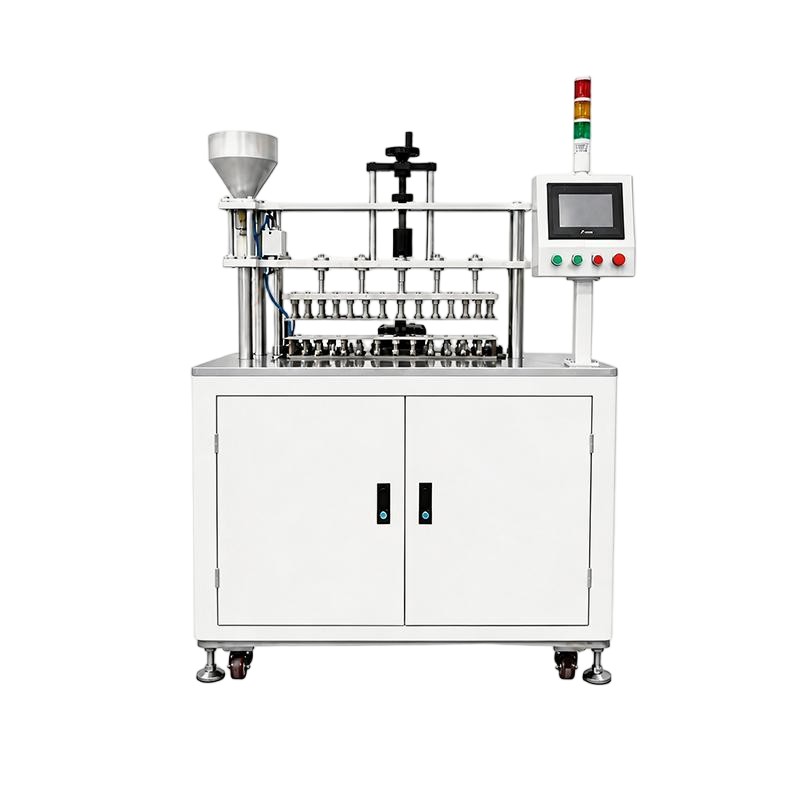
Heat Pipe Production Line: Design and Process Guide
1. What Is a Heat Pipe Production Line?
A Heat Pipe Production Line is a manufacturing system designed to produce heat pipes through coordinated processing operations. It connects material preparation, internal structure manufacturing, vacuum treatment, fluid filling, sealing, and inspection.
Heat pipes transfer thermal energy through phase changes. A working fluid evaporates in the heated section and condenses in the cooler section.
The liquid then returns through an internal wick structure. This cycle supports continuous heat transfer without mechanical pumping.
Heat pipes serve many thermal management applications. Common examples include computers, telecommunications equipment, industrial electronics, and power systems.
A complete manufacturing line may include:
- Metal tube cutting equipment
- Tube forming and necking machines
- Cleaning and drying systems
- Powder filling machines
- Vacuum sintering furnaces
- Vacuum degassing equipment
- Working fluid filling systems
- Welding and sealing machines
- Dry-out equipment
- Thermal performance testing systems
The actual configuration depends on the product design. Wick structure, tube dimensions, working fluid, and output requirements all influence production planning.
For manufacturers, a well-designed line connects every process. It also provides a framework for stable production and quality management.
2. Why Heat Pipe Production Line Design Matters
Production line design affects product quality and manufacturing efficiency. Poor process coordination can increase handling time and production costs.
A manufacturing system must balance several operations. Each operation should support the requirements of the next stage.
For example, tube preparation affects later forming operations. Wick manufacturing influences internal liquid return performance.
Vacuum treatment and fluid filling also require coordination. Sealing must protect the prepared internal environment.
A suitable production design provides several advantages:
- Clear manufacturing procedures
- Better coordination between machines
- More consistent processing conditions
- Reduced unnecessary material handling
- Easier production planning
- More structured quality inspection
- Greater flexibility for product changes
However, these benefits depend on correct process planning. Manufacturers should define product specifications before purchasing equipment.
3. Heat Pipe Manufacturing Process Explained
A Heat Pipe Production Line follows a sequence of manufacturing operations. The exact workflow depends on the heat pipe structure.
3.1 Raw Material Inspection
The process begins with metal tubes and other materials. Copper is widely used in many heat pipe applications.
Manufacturers should check material specifications before processing. Tube dimensions and surface conditions also require inspection.
Incoming inspection helps reduce production variation. It also provides better control over material quality.
3.2 Tube Cutting and Preparation
Tube cutting equipment prepares tubes according to product drawings. Accurate cutting supports consistent downstream processing.
Some designs also require bending or necking. These operations depend on the final product geometry.
Manufacturers should control tube length and forming dimensions. Proper preparation helps improve fixture compatibility.
Internal link opportunity: Heat Pipe Necking Machine
3.3 Internal Wick Structure Manufacturing
The wick structure returns liquid from the condenser to the evaporator. Its design directly influences heat pipe operation.
Common wick structures include:
- Sintered powder structures
- Grooved structures
- Mesh structures
- Composite structures
Each structure requires a suitable manufacturing method. Manufacturers should select equipment according to the product design.
Sintered structures require powder filling and sintering. Grooved structures use different internal processing methods.
Mesh structures require material preparation and positioning. Composite structures may involve several manufacturing operations.
3.4 Powder Filling
For sintered heat pipes, manufacturers introduce metal powder into prepared tubes. A powder filling machine supports this operation.
The powder quantity and distribution affect the resulting structure. Stable feeding helps maintain consistent processing.
Manufacturers should validate filling parameters. They should also check material compatibility and cleaning requirements.
Internal link opportunity: Heat Pipe Powder Filling Machine
3.5 Vacuum Sintering
The prepared tubes enter a sintering process. A vacuum sintering furnace supports controlled heating.
The process bonds powder particles into a porous structure. Suitable parameters depend on powder material and product design.
Temperature uniformity and vacuum conditions require attention. Manufacturers should validate the process before mass production.
Internal link opportunity: Vacuum Sintering Furnace
3.6 Cleaning and Drying
Cleaning removes unwanted contaminants from prepared components. Drying helps prepare products for subsequent vacuum processing.
Manufacturers should select cleaning methods carefully. The procedure must suit the tube material and production process.
Proper handling also helps prevent recontamination. A clear transfer procedure supports process consistency.
3.7 Vacuum Degassing
Vacuum degassing removes unwanted gases from the heat pipe. This operation prepares the internal environment before fluid filling.
A dedicated degassing machine supports controlled vacuum processing. Its capacity should match product dimensions and production requirements.
Manufacturers should establish suitable process parameters. Regular maintenance helps maintain equipment performance.
Internal link opportunity: Heat Pipe Degassing Machine
3.8 Working Fluid Filling
The working fluid supports heat transfer inside the sealed tube. Water is common in many copper heat pipe designs.
Other fluids may suit different operating temperatures. Selection depends on material compatibility and application requirements.
Filling equipment introduces the specified fluid quantity. Manufacturers should control filling conditions and process consistency.
3.9 Welding and Sealing
After filling, manufacturers seal the heat pipe. Welding creates a closed structure that maintains the internal environment.
The welding method depends on product design. Material compatibility and joint quality require validation.
A suitable filling and welding machine can coordinate these operations. It can also simplify production workflow.
Internal link opportunity: Heat Pipe Filling & Welding Machine
3.10 Dry-Out and Product Stabilization
Some production processes include a dry-out stage. This operation prepares products for later inspection or processing.
Multi-station equipment supports batch operations. Actual cycle time depends on product requirements and process settings.
Manufacturers should define the purpose of dry-out clearly. The procedure must follow validated technical requirements.
Internal link opportunity: Heat Pipe Multi-Station Dry-Out Tester
3.11 Final Inspection
Finished heat pipes require suitable quality checks. Inspection methods depend on product specifications and customer requirements.
Common checks include dimensional inspection and leakage testing. Thermal performance testing evaluates heat transfer characteristics.
Manufacturers should establish clear acceptance criteria. Standardized testing helps compare production batches.
4. Main Equipment Used in Heat Pipe Production
A complete Heat Pipe Production Line combines machines for different operations. Equipment selection should follow the manufacturing route.
4.1 Tube Cutting Equipment
Tube cutting equipment prepares raw materials for processing. It supports consistent tube dimensions.
Manufacturers should check the supported material and diameter range. Cutting accuracy and burr control also matter.
4.2 Powder Filling Machine
A powder filling machine introduces metal powder into prepared tubes. It supports sintered wick manufacturing.
The equipment should match powder characteristics. Filling control and tube positioning are important selection factors.
4.3 Vacuum Sintering Furnace
A vacuum sintering furnace forms porous wick structures. It provides controlled heating conditions.
Manufacturers should review furnace capacity and temperature uniformity. Vacuum performance also requires evaluation.
4.4 Vacuum Degassing Machine
A vacuum degassing machine removes unwanted gases. It prepares heat pipes for fluid filling and sealing.
Equipment selection should consider tube dimensions. Vacuum performance and batch processing requirements also matter.
4.5 Filling and Welding Machine
A filling and welding machine supports fluid filling and final sealing. It must match the product dimensions and welding method.
Manufacturers should evaluate filling control and sealing quality. Fixture design and operating safety also require attention.
4.6 Testing Equipment
Testing equipment evaluates product characteristics. It supports quality inspection and process improvement.
The required methods depend on product applications. Manufacturers should define test conditions and acceptance criteria.
5. Production Line Design for Different Heat Pipe Types
Different heat pipe structures require different manufacturing arrangements. Manufacturers should design the line around the actual product.
5.1 Sintered Heat Pipe Production
Sintered heat pipes use porous metal powder structures. Their manufacturing process requires powder filling and sintering.
A typical production route includes tube preparation and powder filling. Vacuum sintering follows these operations.
The process then continues with cleaning and degassing. Manufacturers complete fluid filling, sealing, and inspection.
5.2 Grooved Heat Pipe Production
Grooved heat pipes use internal channels for liquid return. Their production requires suitable groove processing methods.
The equipment configuration depends on groove geometry. Tube preparation and sealing equipment remain important.
Manufacturers should confirm the required internal machining method. They should also validate the resulting structure.
5.3 Mesh Wick Heat Pipe Production
Mesh wick heat pipes use metallic mesh inside the tube. The process requires suitable mesh preparation and positioning.
Manufacturers may need dedicated assembly fixtures. Cleaning, vacuum processing, filling, and sealing remain important stages.
The exact equipment depends on product dimensions. Process validation helps confirm manufacturing consistency.
5.4 Composite Wick Heat Pipe Production
Composite wick designs combine different internal structures. They may integrate powder, grooves, or mesh.
These designs can require more complex processing. Equipment selection should follow the detailed product drawings.
Manufacturers should confirm each process requirement. A complete workflow helps reduce integration problems.
6. How to Improve Manufacturing Efficiency
Manufacturing efficiency depends on process coordination. Faster individual machines do not always increase total output.
6.1 Balance Production Capacity
Each operation has its own processing time. A slow operation can limit the entire production line.
Manufacturers should compare cycle times. They can then identify equipment bottlenecks.
Capacity planning should cover the complete workflow. Adding machines may help when a specific operation restricts output.
6.2 Reduce Material Handling
Repeated material transfers consume production time. They may also increase the risk of product damage.
Arrange machines according to process sequence. Suitable handling systems can further simplify movement.
6.3 Standardize Operating Procedures
Different operators may use different working methods. This can create process variation.
Standard operating procedures provide clear instructions. They also support training and process control.
6.4 Improve Equipment Maintenance
Unplanned downtime affects production schedules. Regular maintenance helps reduce equipment interruptions.
Manufacturers should follow maintenance instructions. They should also record machine conditions and service activities.
6.5 Monitor Production Performance
Production data helps identify process problems. Useful indicators include output and downtime.
Manufacturers can also monitor defect rates. These records support continuous improvement.
7. Process Control and Product Quality
Quality control should cover the complete manufacturing process. Final inspection alone cannot prevent every defect.
7.1 Control Incoming Materials
Check tube dimensions and material specifications. Inspect powder and working fluids according to purchasing requirements.
Consistent materials support stable production. They also reduce unnecessary process adjustments.
7.2 Control Critical Process Parameters
Different manufacturing stages have different control requirements. Relevant parameters may include temperature and vacuum conditions.
Powder filling and welding also require suitable controls. Manufacturers should document validated settings.
7.3 Inspect Internal Structures
Wick structures influence heat pipe operation. Manufacturers should establish suitable inspection methods.
For sintered structures, material and process consistency matter. Representative sample evaluation can support validation.
7.4 Verify Sealing Quality
Sealing protects the internal environment. Manufacturers should inspect joints and verify leakage performance.
Testing procedures should match product requirements. Acceptance limits should be clearly defined.
7.5 Test Thermal Performance
Thermal performance testing evaluates heat transfer behavior. It helps manufacturers compare finished products.
Test conditions should reflect intended applications. Consistent measurement procedures improve result reliability.
Internal link opportunity: Thermal Performance Testing Equipment
7.6 Maintain Production Records
Production records support traceability. They connect finished products with process information.
Useful records include batch numbers and inspection results. Equipment parameters can also support quality investigations.
8. Factory Layout and Production Management
Factory layout influences production flow and operating efficiency. Manufacturers should plan the layout before equipment installation.
8.1 Organize Equipment by Process Sequence
Arrange machines according to manufacturing operations. This reduces unnecessary material movement.
Separate raw materials and finished products. Provide suitable space for work-in-process storage.
8.2 Reserve Operating and Maintenance Space
Operators need access to machine controls and loading areas. Maintenance teams also require service space.
A compact layout should not restrict access. Plan equipment spacing around actual operating requirements.
8.3 Plan Utility Connections
Production equipment may require electricity and compressed air. Vacuum and cooling systems may also need dedicated connections.
Confirm utility requirements before installation. Check factory capacity against supplier specifications.
8.4 Manage Work-in-Process Materials
Work-in-process materials connect different manufacturing stages. Poor storage can interrupt production.
Define transfer routes and storage locations. Use clear identification for different product models.
8.5 Establish Production Responsibilities
Each operation should have clear responsibilities. Operators should understand machine settings and inspection requirements.
Production supervisors can monitor workflow. Quality teams should manage inspection and nonconformance records.
9. Automation Trends in Heat Pipe Manufacturing
Automation can support consistent material handling and process coordination. Manufacturers should select automation according to real production needs.
9.1 Automatic Loading and Unloading
Automatic handling systems transfer tubes between operations. They can reduce repetitive manual tasks.
The design should match machine interfaces. It should also protect products during movement.
9.2 Automatic Powder Feeding
Automatic feeding systems deliver powder to filling machines. They support controlled material supply.
Powder properties influence feeding performance. Dust management and maintenance remain important.
9.3 Integrated Process Control
Connected machines can coordinate selected manufacturing operations. Centralized monitoring can improve production visibility.
Integration requires compatible control interfaces. Manufacturers should define communication requirements before purchasing.
9.4 Production Data Collection
Monitoring systems can record machine parameters. These records support production analysis and troubleshooting.
Manufacturers may track vacuum and temperature data. Filling and welding records can also support traceability.
9.5 Flexible Manufacturing
Manufacturers may produce several heat pipe models. Flexible tooling can simplify product changeovers.
The available range depends on machine design. Buyers should confirm supported dimensions and setup requirements.
10. How to Select a Complete Production Solution
Selecting a Heat Pipe Production Line requires technical and operational evaluation. Manufacturers should consider the complete manufacturing system.
10.1 Define Product Requirements
Prepare product drawings and technical specifications. Include dimensions, materials, and wick structures.
Working fluid and testing requirements also matter. These details form the basis of equipment planning.
10.2 Confirm the Manufacturing Route
Identify each operation required for the product. Determine which processes need dedicated machines.
A clear process flow helps suppliers prepare accurate proposals. It also reduces the risk of missing equipment.
10.3 Review Equipment Compatibility
Check machine working ranges and tooling requirements. Confirm compatibility across different production stages.
Equipment interfaces also require attention. Material transfer should match the planned layout.
10.4 Evaluate Capacity and Expansion
Estimate the required output for each product family. Consider current demand and possible future growth.
Review the capacity of every critical operation. Reserve space for potential equipment additions.
10.5 Review Technical Support
Equipment installation and commissioning require planning. Operator training also affects production readiness.
Ask about maintenance procedures and spare parts. Confirm technical support responsibilities before purchasing.
10.6 Compare Complete Project Costs
Consider equipment prices and installation costs. Include utilities and operating expenses in the evaluation.
Maintenance and spare parts also affect ownership costs. A complete comparison provides a clearer investment picture.
11. Common Problems in Heat Pipe Production
11.1 Inconsistent Tube Dimensions
Tube variation can affect forming and fixture positioning. It may also create downstream processing problems.
Control incoming material dimensions. Maintain suitable cutting and forming procedures.
11.2 Unstable Powder Filling
Powder characteristics can influence filling consistency. Feeding conditions also affect material distribution.
Validate the filling process for each product. Maintain equipment according to supplier instructions.
11.3 Sintering Process Variation
Temperature and vacuum conditions influence sintering results. Inconsistent processing may affect wick structures.
Establish validated operating parameters. Monitor equipment conditions and process records.
11.4 Vacuum Processing Problems
Unstable vacuum conditions may affect internal preparation. Equipment maintenance and process setup require attention.
Check vacuum systems regularly. Record relevant operating data.
11.5 Sealing Defects
Poor sealing can affect product integrity. Welding parameters and fixture positioning require validation.
Inspect sealing quality during production. Establish suitable leakage testing procedures.
11.6 Production Bottlenecks
Different machines may have different cycle times. This can create waiting periods and uneven output.
Analyze process capacity. Adjust equipment quantities and production scheduling where necessary.
12. Frequently Asked Questions
Q1. What is a heat pipe production line?
A heat pipe production line is an integrated manufacturing system. It connects tube preparation, wick processing, vacuum treatment, filling, sealing, and testing.
The configuration depends on product structure. Production requirements also influence equipment selection.
Q2. What equipment is required for heat pipe manufacturing?
Common equipment includes tube cutting and necking machines. Powder filling machines and vacuum sintering furnaces may also be required.
Degassing, filling, welding, and testing equipment complete many production configurations. The exact combination depends on the manufacturing process.
Q3. How are sintered heat pipes manufactured?
Manufacturers prepare metal tubes and introduce metal powder. A sintering process then forms the porous wick structure.
The process continues with cleaning and vacuum treatment. Fluid filling, sealing, and testing follow.
Q4. What is the purpose of a heat pipe wick structure?
The wick structure returns liquid to the evaporator section. It supports the continuous heat transfer cycle.
Different designs use different wick structures. Their manufacturing methods also differ.
Q5. Can one production line manufacture multiple heat pipe sizes?
Some production lines support several product dimensions. Machine working ranges and tooling determine compatibility.
Manufacturers should confirm supported sizes before purchasing. Changeover time also deserves attention.
Q6. How can manufacturers increase production efficiency?
Balance the cycle times of critical operations. Reduce unnecessary material movement and standardize procedures.
Regular maintenance helps reduce downtime. Production data can identify further improvement opportunities.
Q7. Is a fully automatic heat pipe production line necessary?
Not every factory requires full automation. Product variety and production volume influence this decision.
Manual and semi-automatic configurations may suit flexible manufacturing. Larger operations may benefit from automated handling.
Q8. How do manufacturers inspect finished heat pipes?
Inspection may include dimensional checks and leakage testing. Thermal performance testing evaluates heat transfer behavior.
The required methods depend on customer specifications. Manufacturers should define acceptance criteria clearly.
Q9. What information should buyers provide to equipment suppliers?
Buyers should provide product drawings and material specifications. Include tube dimensions and wick structure details.
Working fluid and output targets are also important. Testing requirements help suppliers prepare suitable proposals.
Q10. How should manufacturers plan a new production line?
Start with product requirements and process flow. Then evaluate equipment capacity and factory conditions.
Review automation and testing requirements. Confirm installation and commissioning plans before purchasing.
13. Conclusion
A Heat Pipe Production Line connects specialized manufacturing processes into one coordinated system. Its design should reflect product structure and production targets.
Manufacturers should define the process before selecting equipment. Capacity balance and factory layout also deserve careful attention.
Automation can improve coordination when processes are stable. Quality control must cover every critical production stage.
For manufacturers planning new facilities or upgrading existing operations, integrated process planning is essential. A properly designed production line supports consistent manufacturing and future development.
cncooling-thermal focuses on heat pipe and vapor chamber manufacturing equipment. Visit cncooling-thermal.com to explore related equipment and production solutions.