
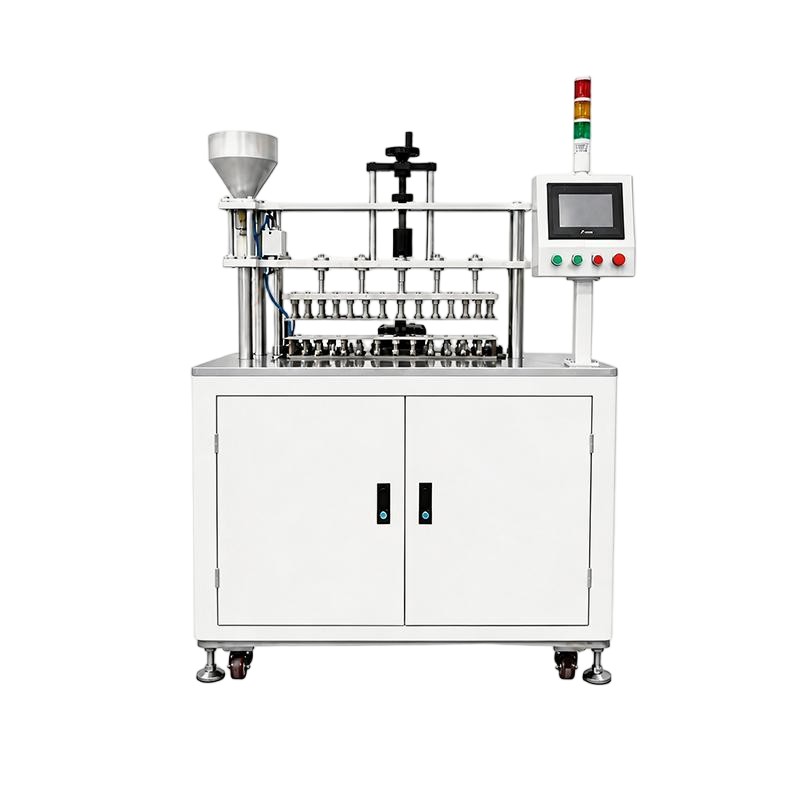
Heat Pipe Equipment Production Line: Complete Guide
1. What Is a Heat Pipe Equipment Production Line?
A Heat Pipe Equipment Production Line combines specialized machines for manufacturing heat pipes. It supports multiple production stages, from tube preparation to final inspection.
Heat pipes transfer heat efficiently through evaporation and condensation. Therefore, manufacturers use them in electronics, industrial cooling, telecommunications, and thermal management systems.
However, producing reliable heat pipes requires precise manufacturing processes. Each production stage affects thermal performance, sealing quality, and product consistency.
A complete production line may include cutting, cleaning, powder filling, sintering, degassing, working fluid filling, and welding equipment.
The exact configuration depends on product dimensions and manufacturing requirements.
For example, manufacturers producing copper heat pipes may need different equipment from those producing specialized aluminum components.
Meanwhile, high-volume factories often require automated material handling and integrated process control.
A professional equipment supplier should understand these differences before recommending a complete production solution.
2. How Does a Heat Pipe Manufacturing Line Work?
A typical heat pipe manufacturing process follows several connected stages. Each stage prepares the workpiece for the next operation.
The production sequence usually includes the following steps.
2.1 Tube Cutting and Preparation
First, manufacturers cut metal tubes to the required length. Cutting accuracy helps maintain consistent product dimensions.
The tube material, diameter, and wall thickness determine the appropriate cutting method.
After cutting, operators remove burrs and inspect the tube ends. Clean edges support subsequent processing.
2.2 Cleaning and Surface Preparation
Next, manufacturers remove oil, dust, metal particles, and other contaminants.
Clean internal surfaces help maintain reliable working fluid behavior. They also support consistent processing during later stages.
The cleaning method depends on tube materials and production requirements.
2.3 Powder Filling and Wick Formation
Many heat pipes use a porous metal wick structure. This structure transports working fluid through capillary action.
Manufacturers may introduce metal powder into the tube. They then use controlled processes to create the required porous structure.
The powder filling process requires consistent material distribution. Uneven filling can affect wick performance.
2.4 Sintering
Sintering bonds metal powder particles into a porous structure. Manufacturers typically use controlled heating under suitable atmospheric conditions.
Temperature, holding time, and atmosphere influence the final wick structure.
Therefore, a suitable Vacuum Sintering Furnace plays an important role in production.
2.5 Degassing
After wick formation, manufacturers remove unwanted gases and moisture.
This process helps prepare the internal cavity for working fluid filling.
A dedicated degassing machine can improve process consistency. Multi-station systems can also support higher production throughput.
2.6 Working Fluid Filling
Manufacturers introduce a specified quantity of working fluid into the heat pipe.
Water is common in many copper-water heat pipe applications. Other working fluids serve different temperature ranges and operating environments.
The filling quantity must match the product design. Accurate control helps reduce performance variation.
2.7 Sealing and Welding
After filling, manufacturers seal the heat pipe. Depending on the design, the process may involve resistance welding or another suitable welding method.
Reliable sealing prevents working fluid leakage. It also helps maintain stable internal operating conditions.
2.8 Final Inspection and Testing
Finally, manufacturers inspect dimensions, appearance, sealing quality, and thermal performance.
Testing requirements depend on the application and customer specifications.
A well-designed production line connects these processes into a controlled manufacturing workflow.
3. Key Machines in a Heat Pipe Equipment Production Line
A complete Heat Pipe Equipment Production Line may contain several specialized machines. Manufacturers select equipment according to product design and production capacity.
3.1 Heat Pipe Automatic Cutting Machine
The cutting machine prepares tubes with consistent lengths.
Automatic cutting helps reduce manual handling. It also supports repeatable production dimensions.
Important selection factors include:
- Compatible tube materials
- Supported tube diameters
- Cutting length range
- Cutting accuracy
- Production speed
- Loading and unloading methods
For mass production, automatic feeding can improve operating efficiency.
3.2 Heat Pipe Powder Filling Machine
The powder filling machine introduces metal powder into heat pipe tubes.
Filling consistency directly affects the wick structure. Therefore, manufacturers should evaluate filling accuracy and material compatibility.
An automatic powder filling machine can reduce manual operations. It can also improve process repeatability.
3.3 Vacuum Sintering Furnace
The vacuum sintering furnace creates the porous wick structure through controlled heating.
Its configuration depends on product dimensions and production requirements.
Important considerations include temperature uniformity, vacuum performance, process control, and furnace capacity.
3.4 Heat Pipe Degassing Machine
The degassing machine removes unwanted gases and moisture from heat pipes.
Different production volumes require different machine configurations.
For example, manufacturers may choose primary, secondary, or multi-station vacuum degassing systems.
A multi-station design can support continuous batch processing. However, the final configuration should match the required cycle time.
3.5 Heat Pipe Filling and Welding Machine
This machine performs working fluid filling and sealing operations.
Depending on its design, it may integrate vacuum treatment, fluid dosing, and welding functions.
The integration level varies between manufacturers and machine models.
Accurate fluid dosing and reliable sealing are essential. Both factors influence finished product quality.
3.6 Heat Pipe Necking Machine
A necking machine reduces the tube diameter at a selected section.
This operation prepares the tube for subsequent sealing or connection processes.
Manufacturers should select suitable tooling for each tube specification.
3.7 Heat Pipe Tail Cutting Machine
The tail cutting machine removes excess tube material after filling and sealing preparation.
Consistent cutting helps maintain the required final dimensions.
It also supports a cleaner appearance and more stable downstream processing.
3.8 Heat Pipe Multi-Station Dry-Out Tester
A dry-out tester evaluates heat pipe behavior under specified thermal conditions.
Multi-station equipment allows manufacturers to test several samples within one operating cycle.
Testing methods and acceptance criteria should follow product requirements.
3.9 Thermal Performance Testing Equipment
Thermal performance testing helps evaluate heat transfer behavior.
Manufacturers can use suitable test systems to compare product performance against design targets.
Testing conditions should remain consistent. Otherwise, results may not support meaningful comparisons.
4. Main Manufacturing Processes
The equipment configuration determines how manufacturers organize their production workflow.
However, most heat pipe manufacturing systems share several important process requirements.
4.1 Material Compatibility
Copper remains common in many heat pipe applications. Other materials may serve specialized thermal management designs.
Manufacturers must confirm material compatibility before selecting equipment.
Tube dimensions, powder characteristics, and working fluid requirements also affect machine selection.
4.2 Process Parameter Control
Each manufacturing stage requires suitable process parameters.
For example, sintering depends on temperature and atmosphere. Filling depends on fluid quantity and vacuum conditions.
Welding requires appropriate energy and process settings.
Therefore, manufacturers should establish repeatable operating procedures.
4.3 Equipment Coordination
Individual machines must work together efficiently.
Poor coordination can create unnecessary waiting time between production stages.
Automated transfer systems can reduce handling requirements. They also help improve production consistency.
4.4 Production Data Management
Modern manufacturing facilities increasingly use digital process records.
These records can include machine settings, production batches, inspection results, and maintenance history.
Such information helps manufacturers identify process deviations. It also supports quality traceability.
5. Types of Heat Pipe Production Equipment
Different manufacturers require different production line configurations.
The following categories help explain common equipment solutions.
5.1 Semi-Automatic Production Lines
Semi-automatic lines combine automated equipment with manual operations.
They suit manufacturers with changing product specifications. They may also support small and medium production volumes.
Their advantages include flexible operation and relatively simple process adjustments.
However, manual handling can increase labor requirements. It may also create greater variation between production batches.
5.2 Fully Automatic Production Lines
Fully automatic lines integrate multiple machines and material handling systems.
They reduce manual intervention during repetitive production operations.
Typical features may include automatic feeding, transfer, positioning, and process monitoring.
However, automation requires careful planning. Manufacturers must confirm product compatibility before selecting a system.
5.3 Customized Heat Pipe Production Lines
Some manufacturers need equipment for specialized heat pipe designs.
These applications may involve unusual dimensions, different wick structures, or specific thermal requirements.
A customized production line can integrate suitable machines around the product design.
Before equipment manufacturing begins, the supplier should review drawings and process requirements.
6. Benefits of an Automated Production Line
An automated Heat Pipe Equipment Production Line can improve manufacturing efficiency. It also helps standardize important production operations.
6.1 Improved Production Consistency
Automated equipment controls repetitive operations more consistently.
This helps reduce variation caused by manual handling.
However, consistent output still depends on correct machine settings and maintenance.
6.2 Reduced Labor Requirements
Automation reduces the need for manual intervention in repetitive processes.
Operators can focus on supervision, inspection, and production management.
As a result, manufacturers may improve labor allocation.
6.3 Better Process Coordination
Integrated equipment helps connect individual manufacturing stages.
This reduces unnecessary material movement and waiting time.
It can also support more predictable production scheduling.
6.4 Improved Product Traceability
Digital controls can record selected process information.
Manufacturers can use these records to investigate quality problems.
They can also compare production batches and identify improvement opportunities.
6.5 Greater Production Flexibility
A properly designed line can support multiple product specifications.
However, flexibility depends on tooling, machine adjustment ranges, and changeover procedures.
Manufacturers should define their product range before choosing equipment.
7. How to Choose the Right Production Equipment
Selecting a suitable production system requires more than comparing machine prices.
Manufacturers should evaluate product requirements, process compatibility, and long-term operating needs.
7.1 Define Your Heat Pipe Specifications
Start by identifying the products you plan to manufacture.
Important details include:
- Tube material
- Tube diameter
- Tube length
- Wall thickness
- Wick structure
- Working fluid
- Required thermal performance
- Production volume
These details help equipment suppliers recommend suitable machine configurations.
7.2 Evaluate Required Production Capacity
Calculate the expected daily and annual output.
Then consider the cycle time of each manufacturing stage.
The slowest process may limit the output of the entire production line.
Therefore, equipment capacity should match the complete production workflow.
7.3 Check Process Compatibility
Not every machine supports every heat pipe design.
For example, different wick structures may require different powder filling and sintering methods.
Likewise, different sealing designs may require different welding configurations.
Ask suppliers to confirm compatibility with your actual product samples.
7.4 Consider Automation Requirements
Choose automation according to production volume and labor planning.
A semi-automatic line may suit flexible, lower-volume manufacturing.
Meanwhile, larger factories may benefit from integrated automatic systems.
Avoid paying for automation that does not improve your production process.
7.5 Review Technical Support
Equipment suppliers should provide clear technical documentation.
Installation, commissioning, training, and maintenance support also matter.
Ask about spare parts and troubleshooting procedures before placing an order.
7.6 Compare the Total Cost of Ownership
The initial machine price represents only part of the investment.
Manufacturers should also evaluate:
- Installation costs
- Energy consumption
- Labor requirements
- Tooling expenses
- Maintenance costs
- Spare parts availability
- Production changeover costs
A suitable system should support stable production over its expected service life.
8. Quality Control in Heat Pipe Manufacturing
Quality control begins with raw materials. It continues throughout production and final inspection.
A reliable manufacturing process should establish clear inspection requirements.
8.1 Incoming Material Inspection
Check tube dimensions and material quality before processing.
Powder materials should also meet the required specifications.
Material consistency supports stable downstream operations.
8.2 Wick Structure Inspection
The wick structure affects capillary performance.
Manufacturers should evaluate its consistency and suitability for the product design.
Inspection methods depend on the wick type and internal structure.
8.3 Vacuum and Filling Process Monitoring
Degassing and filling require controlled operating conditions.
Manufacturers should monitor relevant vacuum parameters and fluid quantities.
Process records can help identify unusual results.
8.4 Welding and Leakage Inspection
Sealing quality is essential for long-term heat pipe operation.
Manufacturers should inspect weld appearance and apply suitable leakage tests.
The test method should match the product structure and customer requirements.
8.5 Thermal Performance Testing
Thermal testing evaluates whether the finished product meets its design targets.
Manufacturers should define consistent test conditions.
These conditions may include heating power, cooling conditions, orientation, and measurement locations.
9. Common Production Challenges and Solutions
Heat pipe manufacturers may encounter several recurring production problems.
Understanding their causes helps improve process stability.
Production challenge | Possible cause | Recommended action |
Uneven wick structure | Inconsistent powder filling | Review filling parameters and material consistency |
Poor sintering results | Unstable temperature or atmosphere | Check furnace settings and process records |
Residual gases | Incomplete degassing | Review vacuum conditions and cycle time |
Incorrect fluid quantity | Unstable dosing | Calibrate the filling system |
Leakage after sealing | Unsuitable welding parameters | Review tooling and welding conditions |
Inconsistent thermal results | Process variation or test differences | Standardize production and testing procedures |
9.1 Uneven Powder Distribution
Uneven powder distribution can create inconsistent wick structures.
Manufacturers should inspect filling methods and powder characteristics.
They should also verify whether the selected tooling suits the tube dimensions.
9.2 Incomplete Degassing
Residual gases can affect internal operating conditions.
A suitable degassing process helps prepare the heat pipe for fluid filling.
Manufacturers should review vacuum performance and process duration.
9.3 Unstable Sealing Quality
Welding problems may result from unsuitable parameters or poor positioning.
Regular tooling inspection helps reduce these risks.
Manufacturers should also establish clear welding inspection procedures.
9.4 Low Production Efficiency
Poor equipment coordination can create production bottlenecks.
Manufacturers should compare cycle times across all process stages.
Then they can improve material transfer and machine scheduling.
10. Frequently Asked Questions
10.1 What Is a Heat Pipe Equipment Production Line?
A Heat Pipe Equipment Production Line is a group of machines for manufacturing heat pipes.
It may include cutting, powder filling, sintering, degassing, fluid filling, welding, and testing equipment.
The configuration depends on product design and manufacturing requirements.
10.2 What Machines Are Needed to Manufacture Heat Pipes?
Typical equipment includes tube cutting machines, powder filling machines, and vacuum sintering furnaces.
Manufacturers may also need degassing machines, filling and welding machines, and testing equipment.
The exact selection depends on the wick structure and production process.
10.3 Can One Production Line Manufacture Different Heat Pipe Sizes?
Some production lines support multiple sizes through adjustable tooling.
However, the supported range depends on machine design.
Manufacturers should confirm dimensions and changeover requirements before purchasing equipment.
10.4 What Is the Function of a Vacuum Sintering Furnace?
A vacuum sintering furnace bonds metal powder particles into a porous wick structure.
Controlled heating helps establish the required structure.
Temperature and atmosphere must match the material and process specifications.
10.5 Why Is Degassing Important in Heat Pipe Manufacturing?
Degassing removes unwanted gases and moisture from the internal cavity.
This prepares the heat pipe for working fluid filling.
A controlled process supports consistent internal conditions.
10.6 How Does Automation Improve Heat Pipe Production?
Automation reduces repetitive manual operations.
It can improve process consistency and material handling efficiency.
It also supports production data collection and traceability.
10.7 How Should I Select a Heat Pipe Production Line Supplier?
Start by reviewing the supplier’s equipment range and technical experience.
Then provide product drawings, materials, and expected production capacity.
Request a process proposal based on your actual manufacturing requirements.
10.8 Can a Production Line Be Customized?
Yes. Manufacturers can configure equipment around specific product requirements.
Customization may involve machine selection, tooling, automation, and material handling.
The supplier should evaluate product samples and process requirements first.
11. Conclusion
A reliable Heat Pipe Equipment Production Line supports consistent manufacturing and efficient production management.
However, the best configuration depends on product specifications and factory requirements.
Manufacturers should evaluate every process stage before purchasing equipment.
They should also consider automation, quality control, maintenance, and future production plans.
For suitable equipment solutions, visit cncooling-thermal.
The right equipment configuration can help manufacturers build a more stable and scalable heat pipe production process.