
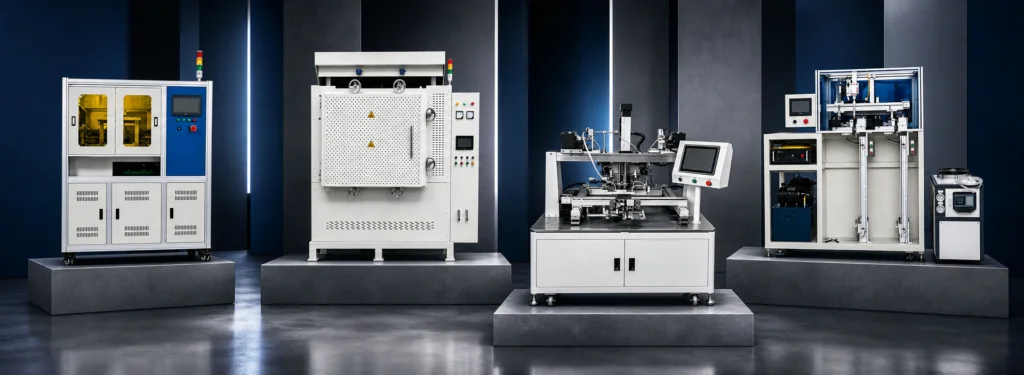
Laser Welding Machine for Vapor Chamber: Complete Guide
Introduction
Modern electronics generate increasing heat as processors become more powerful. Therefore, manufacturers need efficient thermal management solutions for compact devices.
Vapor chambers provide excellent heat spreading through two-phase heat transfer technology. Furthermore, they support cooling applications in AI servers, graphics cards, laptops, and telecommunications equipment.
However, vapor chamber manufacturing requires precise assembly, reliable sealing, and consistent welding quality. Consequently, manufacturers increasingly consider automated laser welding technology.
A Laser Welding Machine for Vapor Chamber uses concentrated laser energy to join compatible copper components. Additionally, programmable controls help maintain accurate welding paths and repeatable processing conditions.
Unlike conventional joining methods, laser welding concentrates heat within a relatively small processing area. Therefore, suitable processes can reduce unnecessary thermal exposure.
At cncooling-thermal, we focus on thermal manufacturing equipment and production technologies. Our website, https://cncooling-thermal.com/, introduces vapor chamber manufacturing equipment and related solutions.
This guide explains laser welding principles, equipment components, manufacturing processes, automation benefits, and purchasing considerations. Furthermore, it explores quality control, production integration, and common technical challenges.
1. What Is a Laser Welding Machine for Vapor Chamber?
A Laser Welding Machine for Vapor Chamber is specialized industrial equipment for joining copper vapor chamber components.
The machine directs concentrated laser energy toward designated welding areas. Consequently, the material melts locally and forms a joint during solidification.
Furthermore, precision motion systems control the laser beam or workpiece position. Therefore, manufacturers can follow programmed welding paths with repeatable accuracy.
A typical machine integrates a laser source, welding head, positioning fixtures, control system, and safety enclosure.
Additionally, advanced configurations may include automatic loading, vision positioning, and weld monitoring.
Main Manufacturing Functions
Laser welding equipment can support several operations:
- Copper chamber shell welding
- Precision seam welding
- Filling-port sealing
- Automatic welding path control
- Component positioning and alignment
- Programmable welding parameter management
- Production process monitoring
- Integration with automated manufacturing systems
However, actual capabilities depend on the laser configuration and chamber design.
Therefore, manufacturers should confirm equipment compatibility before purchasing.
2. Why Is Laser Welding Important for Vapor Chamber Manufacturing?
Vapor chambers require reliable hermetic enclosures to maintain internal working conditions.
Therefore, sealing quality directly influences thermal performance and product reliability.
A defective joint may allow working fluid leakage or unwanted gas entry. Consequently, the chamber may lose thermal performance over time.
Laser welding offers precise energy control and localized heating. Furthermore, automated equipment supports repeatable welding trajectories.
Reliable Hermetic Sealing
First, suitable laser welding parameters can create continuous metal joints.
Additionally, controlled processing helps manufacturers manage seam geometry.
However, visual appearance alone cannot confirm hermetic performance. Therefore, manufacturers should conduct appropriate leak testing.
Reduced Thermal Distortion
Laser welding concentrates heat within a small area.
Consequently, suitable processing parameters may reduce distortion compared with broader heating methods.
Nevertheless, copper’s high thermal conductivity requires careful energy management.
Manufacturing Repeatability
Automated motion systems follow programmed paths.
Furthermore, stored processing recipes help maintain consistent operating conditions.
Therefore, manufacturers can reduce variation between production cycles.
Production Efficiency
Automatic welding can reduce repetitive manual operations.
Additionally, compatible loading systems can shorten handling time.
Consequently, factories may improve throughput through suitable automation.
3. How Does Vapor Chamber Laser Welding Work?
Laser welding uses concentrated optical energy to create a localized molten region.
First, operators position the copper chamber inside a precision fixture.
Next, the control system selects the appropriate welding program.
Then, the laser beam reaches the joint through the welding head.
Consequently, the copper absorbs energy and develops a molten pool.
Meanwhile, the motion system follows the programmed welding trajectory.
Finally, the molten material solidifies and forms the required joint.
Basic Working Sequence
- Load copper vapor chamber components.
- Align and secure the workpieces.
- Select the validated welding program.
- Configure laser output and motion parameters.
- Perform automatic laser welding.
- Inspect the weld seam.
- Conduct suitable leak testing.
- Transfer components to the next production stage.
Furthermore, machine vision can support alignment in suitable configurations.
Therefore, manufacturers can improve positioning consistency.
4. Main Components of a Vapor Chamber Laser Welding Machine
A modern laser welding system combines several mechanical, optical, and electrical components.
4.1 Laser Source
The laser source generates the energy required for welding.
Manufacturers commonly evaluate fiber lasers and other industrial laser technologies.
However, copper’s optical properties create specific processing challenges.
Therefore, engineers must consider wavelength, laser power, beam quality, and operating mode.
4.2 Laser Welding Head
The welding head directs and focuses laser energy onto the joint.
Furthermore, suitable optical components help maintain consistent beam delivery.
Consequently, accurate focus control supports repeatable welding performance.
4.3 Precision Motion System
The motion system controls the position of the workpiece or welding head.
For example, servo-driven axes can follow programmed welding trajectories.
Additionally, suitable positioning systems help maintain seam accuracy.
4.4 Workpiece Fixture
Precision fixtures hold the copper chamber components during welding.
Therefore, they help maintain joint alignment and minimize unwanted movement.
Furthermore, suitable fixture design supports consistent contact between mating surfaces.
4.5 Industrial Control System
The control system coordinates laser output, motion, and machine operations.
Additionally, programmable recipes support different compatible product designs.
Consequently, manufacturers can manage production changeovers more efficiently.
4.6 Vision and Monitoring Systems
Optional cameras can support workpiece alignment and weld observation.
Furthermore, suitable sensors may detect process changes during welding.
However, monitoring systems require validation against actual weld quality.
4.7 Safety Protection System
Industrial laser equipment requires appropriate protective measures.
Therefore, machines should include suitable guarding, interlocks, and emergency controls.
Additionally, fume extraction helps manage welding emissions.
5. Vapor Chamber Laser Welding Process
Manufacturers must coordinate welding with other vapor chamber production stages.
However, the exact sequence depends on the chamber structure and sealing method.
Step 1: Copper Material Preparation
First, manufacturers prepare copper shells according to product drawings.
Next, cleaning equipment removes oil, particles, and surface contamination.
Consequently, clean surfaces support more consistent welding.
Step 2: Chamber Assembly
Next, operators position the upper and lower chamber shells.
Additionally, suitable fixtures maintain the required joint geometry.
Therefore, accurate assembly helps reduce welding variation.
Step 3: Welding Parameter Development
Engineers select suitable laser parameters through sample testing.
For example, they evaluate power, travel speed, focus position, and shielding conditions.
Furthermore, copper thickness and joint geometry influence parameter selection.
Consequently, manufacturers should validate settings before mass production.
Step 4: Automatic Laser Welding
The laser system follows the programmed welding path.
Meanwhile, the control system coordinates laser output and motion.
Therefore, the process creates the required joint.
Step 5: Weld Inspection
After welding, technicians inspect seam appearance and dimensions.
Additionally, suitable inspection methods help identify cracks, porosity, or incomplete fusion.
Consequently, manufacturers can detect potential defects before downstream processing.
Step 6: Vacuum Processing and Fluid Charging
Some manufacturing methods require vacuum evacuation and working fluid charging after enclosure welding.
Therefore, manufacturers preserve a suitable evacuation and filling path.
Next, vacuum equipment removes unwanted gases.
Then, precision filling equipment introduces the required working fluid.
Internal Link Opportunity: Vacuum Degassing Machine
Step 7: Final Sealing
After fluid charging, suitable equipment closes the filling port.
For example, manufacturers may use laser welding or another validated sealing method.
Consequently, the finished chamber maintains its intended internal environment.
Internal Link Opportunity: Vapor Chamber Fully Automatic Laser Sealing Machine
Step 8: Final Quality Testing
Finally, manufacturers evaluate enclosure integrity and thermal performance.
Additionally, leak testing helps identify sealing defects.
Therefore, quality inspection remains essential for reliable production.
6. Key Features and Advantages
A Laser Welding Machine for Vapor Chamber offers several potential manufacturing advantages.
High Welding Precision
First, concentrated laser energy supports localized processing.
Furthermore, programmable motion systems maintain consistent welding trajectories.
Consequently, manufacturers can improve seam positioning accuracy.
Reduced Heat-Affected Area
Laser welding can limit unnecessary heating through suitable parameter control.
Therefore, manufacturers may reduce thermal distortion in compatible chamber designs.
However, actual results depend on material thickness and processing conditions.
Automation Compatibility
Industrial laser systems can integrate with automatic loading and positioning equipment.
Additionally, programmable controls support coordinated production sequences.
Consequently, manufacturers can reduce repetitive handling.
Flexible Processing
Different product designs may require different welding trajectories.
Therefore, suitable machines support programmable motion and interchangeable fixtures.
Consistent Production Quality
Validated processing recipes help maintain repeatable conditions.
Furthermore, monitoring systems can support process traceability.
As a result, manufacturers can investigate production deviations more effectively.
Lower Manual Involvement
Automation reduces some repetitive welding operations.
Consequently, operators can focus on equipment supervision and quality inspection.
7. Laser Welding vs. Traditional Welding Methods
Manufacturers use different joining technologies for vapor chamber production.
Therefore, equipment selection should consider material characteristics and product requirements.
Feature | Laser Welding | Brazing | Resistance Welding |
Heat input | Localized | Often broader | Concentrated at contact regions |
Precision | High potential | Depends on tooling | Depends on electrode design |
Automation | Strong potential | Possible | Strong potential |
Copper compatibility | Requires suitable laser parameters | Requires suitable filler and process | Requires suitable joint design |
Joint geometry | Suitable accessible seams | Suitable capillary joints | Suitable electrode-accessible joints |
Main challenges | Reflectivity, porosity, fit-up | Filler control, thermal exposure | Electrode wear, current distribution |
When Should Manufacturers Choose Laser Welding?
Laser welding may suit applications requiring precise seams and localized heating.
Furthermore, programmable motion supports repeatable processing.
However, brazing or other joining methods may suit different chamber designs.
Therefore, manufacturers should compare methods through sample production and reliability testing.
8. Applications of Vapor Chamber Laser Welding
Vapor chambers support thermal management across several industries.
AI Servers and Data Centers
AI processors generate concentrated thermal loads.
Therefore, vapor chambers help distribute heat toward larger cooling structures.
Furthermore, reliable welding supports consistent enclosure integrity.
Graphics Cards
Modern graphics processors require effective heat spreading.
Consequently, manufacturers use vapor chambers in selected GPU cooling assemblies.
Additionally, precise manufacturing supports compact thermal designs.
Laptop Computers
High-performance laptops combine limited space with demanding thermal requirements.
Therefore, thin vapor chambers provide useful heat spreading capabilities.
Furthermore, controlled welding helps manufacturers manage delicate chamber structures.
Telecommunications Equipment
Communication systems often operate under continuous electrical loads.
Consequently, thermal management components help maintain suitable operating temperatures.
Industrial Electronics
Industrial electronic assemblies may require customized thermal solutions.
Therefore, vapor chambers can support applications with concentrated heat sources.
9. Integration with a Vapor Chamber Production Line
A Laser Welding Machine for Vapor Chamber represents one stage within an integrated manufacturing process.
Therefore, manufacturers should consider equipment compatibility across the complete workflow.
Typical Production Sequence
- Copper sheet preparation
- Copper shell forming
- Wick material preparation
- Wick sintering
- Chamber assembly
- Laser welding
- Vacuum degassing
- Working fluid filling
- Final sealing
- Thermal performance testing
However, manufacturers may adjust this sequence according to product design.
Related Manufacturing Equipment
Internal Link: Vapor Chamber Production Line
A complete production line coordinates multiple manufacturing stages.
Internal Link: Vacuum Sintering Furnace
This equipment supports controlled sintering for compatible copper wick structures.
Internal Link: Automatic Powder Filling Machine
The machine distributes copper powder during suitable wick manufacturing processes.
Internal Link: Vapor Chamber Fully Automatic Laser Sealing Machine
This equipment supports precision sealing operations.
Internal Link: Vapor Chamber Hot Press Hydraulic Machine
Hot pressing equipment supports compatible forming and flattening processes.
Internal Link: Multi-Station Thermal Performance Tester
Testing equipment evaluates finished chamber performance.
Furthermore, coordinated equipment can reduce unnecessary material transfers.
Consequently, manufacturers can improve workflow consistency.
10. Important Technical Parameters
Machine specifications vary according to laser configuration and product requirements.
Therefore, buyers should request actual technical documentation before purchasing.
Parameter | Selection Consideration |
Laser type | Match copper welding requirements |
Laser wavelength | Evaluate copper absorption characteristics |
Laser power | Match material thickness and joint design |
Welding speed | Determine through process validation |
Positioning accuracy | Match product tolerances |
Supported workpiece dimensions | Confirm machine working range |
Cooling system | Match laser operating requirements |
Control system | Support programmable welding recipes |
Automation functions | Match production capacity |
Inspection options | Consider vision and weld monitoring |
Safety enclosure | Match applicable laser safety requirements |
Laser Power
Copper’s thermal conductivity influences welding energy requirements.
Therefore, manufacturers must select suitable laser power and processing conditions.
However, excessive energy can increase spatter or create defects.
Welding Speed
Travel speed affects energy input and seam formation.
Consequently, engineers must balance processing speed with weld quality.
Focus Position
Accurate focus control influences energy concentration.
Therefore, manufacturers should maintain consistent workpiece positioning.
Shielding Conditions
Suitable shielding can help protect the welding area.
However, shielding requirements depend on the process and material.
11. Common Welding Challenges and Solutions
Copper laser welding presents several technical challenges.
Therefore, manufacturers should evaluate process stability carefully.
High Reflectivity
Copper reflects substantial energy at certain laser wavelengths.
Consequently, energy absorption may vary during welding.
Therefore, suitable wavelength selection and parameter development remain important.
High Thermal Conductivity
Copper transfers heat rapidly away from the welding area.
As a result, maintaining suitable molten pool conditions can become challenging.
Therefore, engineers should optimize energy delivery and travel speed.
Welding Porosity
Unstable molten pool conditions can contribute to porosity.
Additionally, surface contamination may increase defect risks.
Consequently, manufacturers should improve cleaning and process control.
Thermal Distortion
Excessive heating can affect thin chamber geometry.
Therefore, engineers should optimize fixtures and welding parameters.
Incomplete Fusion
Insufficient energy or poor joint alignment can cause incomplete fusion.
Consequently, manufacturers should verify joint preparation and welding settings.
Leakage Problems
Small welding defects can compromise enclosure integrity.
Therefore, suitable leak testing remains essential.
Furthermore, manufacturers should investigate recurring defects through process data and inspection results.
12. How to Choose the Right Laser Welding Machine
Selecting suitable equipment requires careful evaluation of product requirements.
Define Chamber Specifications
First, identify chamber dimensions, copper thickness, and joint geometry.
Next, determine required welding accuracy and production capacity.
Therefore, suppliers can recommend suitable equipment configurations.
Evaluate Laser Technology
Different laser systems offer different processing characteristics.
Consequently, manufacturers should compare wavelength, power, and beam quality.
Confirm Automation Requirements
High-volume production may benefit from automatic loading and positioning.
Meanwhile, smaller production batches may require greater flexibility.
Therefore, automation selection should match actual production needs.
Assess Quality Requirements
Define acceptable leakage, dimensional tolerances, and weld defects.
Additionally, establish inspection procedures before equipment commissioning.
Request Sample Welding
Manufacturers should test representative copper components.
Consequently, they can evaluate weld quality, cycle time, and process stability.
Consider Technical Support
Equipment installation, training, maintenance, and spare parts influence long-term operation.
Therefore, buyers should evaluate support arrangements before purchasing.
13. Maintenance and Safety Requirements
Regular maintenance helps maintain stable laser welding performance.
Furthermore, industrial laser systems require appropriate safety measures.
Optical Maintenance
Inspect protective windows and optical components according to manufacturer instructions.
Additionally, keep optical surfaces clean.
Motion System Maintenance
Check guides, drives, fixtures, and positioning components.
Furthermore, follow recommended calibration procedures.
Cooling System Maintenance
Monitor cooling temperature, flow, and fluid condition.
Consequently, the laser source can operate within its specified limits.
Electrical Inspection
Inspect sensors, wiring, and control components.
Additionally, verify emergency stops and safety interlocks.
Laser Safety
Industrial laser welding can create hazardous radiation and airborne emissions.
Therefore, manufacturers must implement suitable guarding, extraction, training, and protective procedures.
Furthermore, maintenance personnel should follow appropriate energy isolation requirements.
14. Why Choose cncooling-thermal?
cncooling-thermal focuses on thermal manufacturing equipment and vapor chamber production technologies.
Our website, https://cncooling-thermal.com/, introduces equipment and manufacturing solutions for thermal management applications.
Application-Oriented Equipment Selection
Different vapor chamber designs require different welding conditions.
Therefore, equipment selection should reflect actual product specifications.
Integrated Manufacturing Planning
Laser welding must coordinate with wick preparation, vacuum processing, and final testing.
Consequently, manufacturers should evaluate the complete production workflow.
Automation-Focused Production
Modern manufacturing increasingly requires programmable and repeatable processes.
Furthermore, automation can reduce unnecessary manual handling.
Quality-Focused Manufacturing
Reliable vapor chambers require consistent welding, vacuum conditions, and sealing integrity.
Therefore, manufacturers should establish measurable quality requirements.
Equipment Consultation
Buyers can explore available manufacturing technologies through cncooling-thermal.
Additionally, product drawings and production targets can support technical discussions.
Visit cncooling-thermal.com to learn more about related thermal manufacturing equipment.
15. Frequently Asked Questions
Q1. What is a laser welding machine for vapor chamber manufacturing?
It uses concentrated laser energy to join compatible copper chamber components.
Furthermore, automatic controls support precise welding paths and repeatable processing.
Q2. Why do manufacturers use laser welding for vapor chambers?
Laser welding provides localized heating and precise seam control.
Consequently, suitable processes can support reliable enclosure manufacturing.
Q3. Can laser welding equipment process copper?
Yes, suitable laser systems can weld copper components.
However, copper requires appropriate laser technology and validated processing parameters.
Q4. What laser type works best for copper vapor chambers?
The best laser depends on copper thickness, joint geometry, and production requirements.
Therefore, manufacturers should compare suitable fiber and other industrial laser technologies.
Q5. Can laser welding create hermetic vapor chamber seals?
Yes, validated laser welding processes can create hermetic joints.
However, manufacturers must verify sealing performance through appropriate testing.
Q6. Can the machine support automatic production?
Yes, suitable configurations can integrate automatic loading, positioning, and welding.
Consequently, manufacturers can reduce repetitive manual operations.
Q7. What causes copper laser welding defects?
Surface contamination, unstable energy absorption, poor alignment, and unsuitable parameters can contribute to defects.
Therefore, manufacturers should control materials, fixtures, and welding conditions.
Q8. How do manufacturers inspect vapor chamber welds?
They may use visual inspection, dimensional measurement, and leak testing.
Additionally, suitable thermal testing helps evaluate finished chamber performance.
Q9. What affects laser welding machine prices?
Laser configuration, positioning accuracy, automation level, and inspection functions influence equipment costs.
Therefore, buyers should request quotations based on actual product requirements.
Q10. Where can I learn about vapor chamber welding equipment?
Visit cncooling-thermal to explore thermal manufacturing technologies and related equipment.
Furthermore, contact the company to discuss available equipment configurations and project requirements.
16. Conclusion
A Laser Welding Machine for Vapor Chamber supports precision manufacturing of advanced thermal management components.
Furthermore, laser technology offers localized heating, programmable welding paths, and automation potential.
Consequently, manufacturers can improve process repeatability through suitable equipment and validated welding procedures.
However, reliable vapor chamber manufacturing requires coordinated production stages.
Therefore, manufacturers must consider wick preparation, assembly, vacuum processing, fluid charging, sealing, and testing.
At cncooling-thermal, we focus on thermal manufacturing equipment and related production technologies.
Visit https://cncooling-thermal.com/ to explore available manufacturing solutions.