
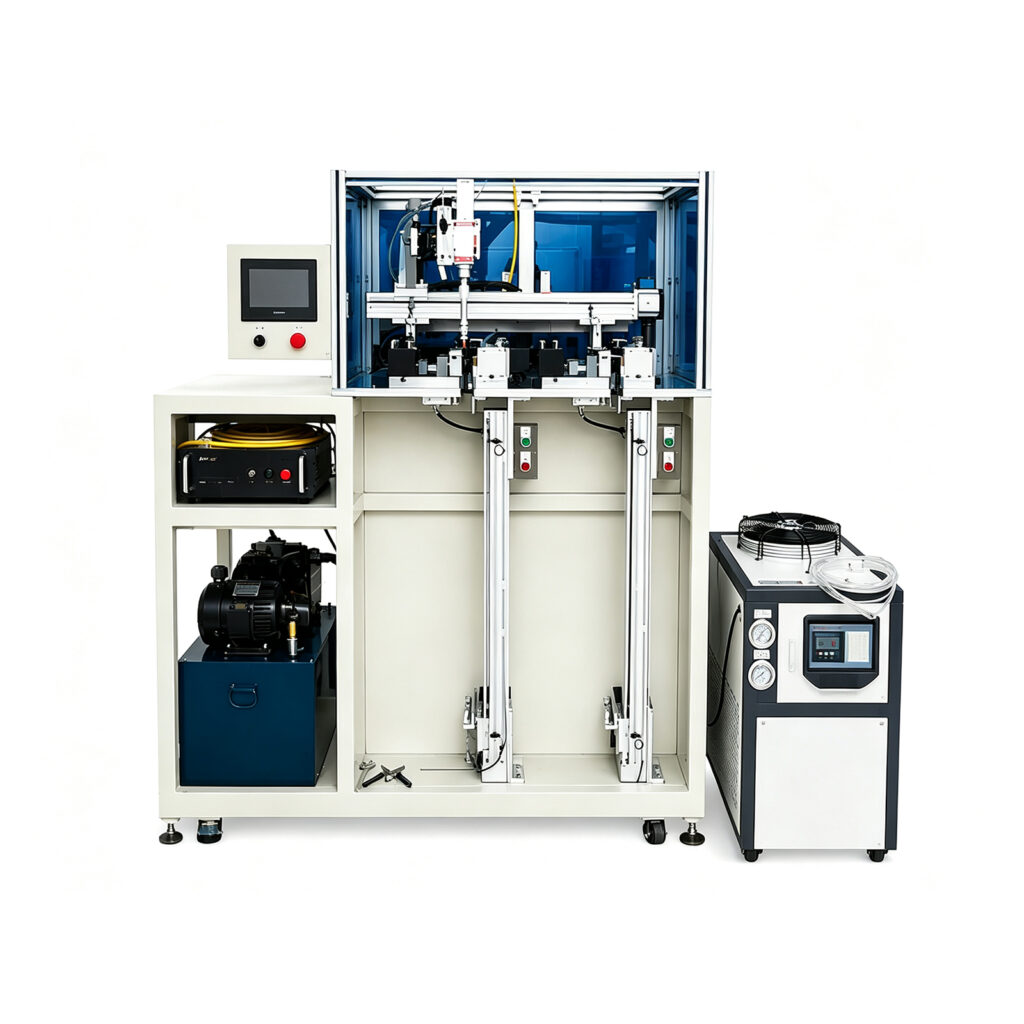
Vapor Chamber Hot Press Hydraulic Machine Guide
Introduction
Modern electronics require increasingly efficient thermal management solutions.
As processors become more powerful, heat concentration also increases.
Therefore, manufacturers need reliable technologies for spreading heat across compact surfaces.
Vapor chambers offer an effective solution for this challenge.
However, producing a high-quality vapor chamber requires precise forming and controlled pressing.
A Vapor Chamber Hot Press Hydraulic Machine supports this important manufacturing stage.
The machine applies controlled pressure and heat to vapor chamber components.
As a result, manufacturers can achieve better flatness and dimensional consistency.
Furthermore, controlled pressing can support stable contact between the chamber and cooling components.
At cncooling-thermal, we focus on advanced thermal manufacturing equipment and production solutions.
Our website, cncoolingthermal.com, provides information about vapor chamber manufacturing technologies.
This guide explains the machine structure, working principle, applications, benefits, and selection factors.
It also explains how hot pressing fits into a complete vapor chamber production process.
1. What Is a Vapor Chamber Hot Press Hydraulic Machine?
A Vapor Chamber Hot Press Hydraulic Machine is specialized equipment for pressing vapor chamber products.
It combines controlled temperature with hydraulic pressure.
Therefore, manufacturers can adjust forming conditions according to different chamber designs.
The machine typically uses a hydraulic system to generate pressing force.
Meanwhile, a heating system controls the temperature of the working area.
Additionally, precision tooling determines the final chamber shape.
The machine can support flattening, forming, and dimensional adjustment processes.
However, the exact application depends on the vapor chamber structure.
For example, some production processes require pressing after welding.
Other processes may use hot pressing during bonding or forming.
Consequently, manufacturers should select equipment according to their specific production sequence.
2. Why Does a Vapor Chamber Need Hot Pressing?
Vapor chamber performance depends heavily on its geometry.
Therefore, manufacturers must control thickness, flatness, and surface contact carefully.
A poorly controlled chamber may create installation problems.
Furthermore, uneven surfaces can increase thermal contact resistance.
Hot pressing provides a controlled method for adjusting chamber geometry.
First, the machine positions the vapor chamber inside a dedicated fixture.
Next, the heating system reaches the required process temperature.
Then, the hydraulic system applies controlled pressure.
Consequently, the chamber reaches the desired shape within the validated process range.
Improving Flatness
Flatness plays an important role in many cooling applications.
For example, GPU and CPU cooling systems require good contact between thermal components.
Therefore, manufacturers often pay close attention to chamber surface flatness.
Controlling Thickness
Thin vapor chambers require precise dimensional control.
However, excessive pressing can damage internal structures.
Therefore, engineers must determine suitable pressure and temperature parameters.
Supporting Assembly
Some vapor chambers connect directly with heat sinks or other cooling structures.
Consequently, accurate dimensions help simplify downstream assembly.
3. How Does a Hot Press Hydraulic Machine Work?
The machine combines hydraulic pressure and controlled heating.
First, the operator loads the vapor chamber into the pressing fixture.
Next, the positioning system aligns the workpiece.
Then, the heating system reaches the target temperature.
Afterward, the hydraulic cylinder applies the programmed pressure.
The tooling compresses the chamber according to the specified process conditions.
Meanwhile, the control system monitors temperature and pressure.
Once the cycle reaches the required conditions, the machine releases pressure.
Finally, the operator removes the finished component.
Basic Working Sequence
Loading → Positioning → Heating → Pressing → Holding → Cooling → Unloading
Furthermore, automatic systems can control these steps through programmable recipes.
Therefore, operators can repeat validated processes more consistently.
4. Main Components of the Machine
A modern hydraulic hot press system contains several major components.
Each component contributes to forming accuracy and process stability.
4.1 Hydraulic System
The hydraulic system generates the required pressing force.
It typically includes hydraulic cylinders, pumps, valves, and pressure controls.
Therefore, stable hydraulic performance supports consistent pressing results.
Additionally, programmable pressure settings can accommodate different products.
4.2 Heating System
The heating system provides controlled thermal energy.
Depending on the machine design, heating elements may use electrical resistance heating.
Furthermore, temperature sensors provide feedback during operation.
Consequently, the control system can maintain the required temperature range.
4.3 Pressing Tooling
The tooling directly contacts the vapor chamber.
Therefore, tooling design strongly influences final product geometry.
Manufacturers may use customized upper and lower pressing plates.
Additionally, tooling materials must tolerate repeated thermal cycles.
4.4 Control System
The control system manages machine operation.
For example, operators can configure pressure, temperature, holding time, and cycle sequence.
Furthermore, digital controls simplify parameter management.
Consequently, manufacturers can create repeatable production recipes.
4.5 Positioning Fixture
The fixture keeps the vapor chamber correctly positioned.
Therefore, it prevents unnecessary movement during pressing.
Accurate positioning also improves dimensional consistency.
4.6 Safety System
Industrial hydraulic presses require suitable safety protection.
Therefore, machines should include emergency stops and appropriate guarding.
Additionally, thermal protection helps reduce operating risks.
5. Vapor Chamber Hot Pressing Process
The hot pressing process varies according to chamber design.
However, manufacturers generally follow several key stages.
5.1 Product Preparation
First, technicians prepare the vapor chamber after upstream processes.
These processes may include welding, vacuum treatment, fluid charging, or preliminary forming.
Next, operators inspect the component before pressing.
Consequently, obvious defects can receive attention before further processing.
5.2 Fixture Loading
The operator places the chamber into the dedicated fixture.
Furthermore, positioning references help maintain alignment.
Therefore, the chamber remains stable during pressing.
5.3 Temperature Setting
Next, the operator selects the validated temperature setting.
The heating system then brings the tooling to the required condition.
However, temperature requirements depend on the manufacturing process.
Therefore, engineers should determine parameters through product testing.
5.4 Hydraulic Pressing
Once the system reaches the target condition, hydraulic pressure increases gradually.
The pressing tooling then applies force across the chamber surface.
Consequently, the chamber reaches the required thickness or flatness.
5.5 Pressure Holding
The machine maintains pressure for a defined period.
This step helps stabilize the final geometry.
Furthermore, controlled holding can reduce dimensional variation.
5.6 Cooling
After pressing, the chamber may require controlled cooling.
Therefore, manufacturers should follow the validated cooling procedure.
5.7 Final Inspection
Finally, technicians inspect the finished chamber.
They may measure thickness, flatness, dimensions, and surface condition.
Additionally, thermal performance testing can verify functional requirements.
Internal Link Opportunity: Multi-Station Thermal Performance Tester
6. Key Benefits of Hydraulic Hot Pressing
A Vapor Chamber Hot Press Hydraulic Machine provides several advantages for industrial manufacturing.
6.1 Controlled Pressing Force
Hydraulic systems can generate substantial and adjustable pressing force.
Therefore, manufacturers can select suitable pressure for different products.
Furthermore, controlled force supports repeatable forming conditions.
6.2 Stable Temperature Control
Heating systems can maintain defined process temperatures.
Consequently, manufacturers can improve process consistency.
6.3 Improved Flatness
Controlled pressing helps correct suitable dimensional deviations.
Therefore, finished chambers can achieve more consistent surface geometry.
6.4 Better Production Repeatability
Programmable pressure and temperature settings reduce manual variation.
Additionally, automatic cycle control improves production consistency.
6.5 Flexible Product Compatibility
Customized tooling can support different chamber sizes.
Furthermore, programmable parameters allow manufacturers to manage different product recipes.
6.6 Higher Manufacturing Efficiency
Automatic pressing reduces repetitive manual operations.
Consequently, factories can improve production workflow.
6.7 Integration with Automation
The machine can integrate with compatible loading and unloading systems.
Therefore, manufacturers can include hot pressing within automated production lines.
7. Applications of Vapor Chamber Hot Pressing
Vapor chambers serve many advanced electronics applications.
Therefore, hot pressing equipment supports several thermal manufacturing industries.
7.1 GPU Cooling
Graphics processors generate high heat loads.
Consequently, vapor chambers can spread heat toward larger cooling structures.
A flat chamber surface also supports efficient contact with downstream cooling components.
7.2 CPU Cooling
High-performance CPUs require effective heat spreading.
Therefore, vapor chambers can help distribute concentrated heat.
Hot pressing supports dimensional consistency for suitable chamber designs.
7.3 AI Computing Equipment
AI processors generate substantial thermal loads.
Furthermore, data center equipment requires compact and efficient thermal solutions.
Therefore, manufacturers increasingly explore advanced vapor chamber technologies.
7.4 Gaming Laptops
Gaming laptops combine high computing power with limited internal space.
Consequently, thin vapor chambers can support compact cooling designs.
7.5 Telecommunications Equipment
Telecommunication devices often operate continuously.
Therefore, reliable thermal management helps maintain equipment performance.
7.6 Industrial Electronics
Industrial control systems may also require compact heat spreading components.
Furthermore, customized vapor chambers can support application-specific thermal designs.
8. Hot Pressing in a Vapor Chamber Production Line
Hot pressing represents only one stage within a complete manufacturing process.
Therefore, manufacturers should evaluate the entire production workflow.
A typical production sequence may include:
Copper Preparation
↓
Shell Forming
↓
Wick Manufacturing
↓
Sintering
↓
Assembly
↓
Laser Welding
↓
Vacuum Degassing
↓
Working Fluid Filling
↓
Sealing
↓
Hot Pressing
↓
Thermal Performance Testing
This integrated workflow helps manufacturers coordinate different processing stages.
Related Equipment
Internal Link: Vapor Chamber Production Line
A complete production line combines several specialized machines.
Internal Link: Vacuum Sintering Furnace
This equipment supports compatible sintered copper wick structures.
Internal Link: Automatic Powder Filling Machine
The machine provides controlled copper powder distribution.
Internal Link: Vapor Chamber Fully Automatic Laser Sealing Machine
Laser equipment supports precision welding and sealing operations.
Internal Link: Vacuum Degassing Machine
Vacuum processing removes unwanted gases before suitable sealing stages.
Internal Link: Multi-Station Thermal Performance Tester
Testing equipment evaluates thermal performance after production.
Consequently, manufacturers can build an integrated production system around their product requirements.
9. Important Machine Parameters
Machine specifications depend on product size and manufacturing requirements.
Therefore, buyers should confirm all parameters with the equipment supplier.
Parameter | Typical Selection Consideration |
Pressing force | Match product forming requirements |
Heating temperature | Match validated process conditions |
Temperature control | Stable and programmable |
Pressing area | Match chamber dimensions |
Hydraulic accuracy | Match dimensional requirements |
Holding time | Adjustable according to process |
Tooling | Customized for product geometry |
Control system | PLC or industrial controller |
Product changeover | Manual or automated |
Safety system | Guarding and emergency protection |
Pressing Force
The required force depends on chamber size and material characteristics.
Therefore, engineers should calculate the required pressing conditions before equipment selection.
Heating Temperature
Temperature should match the specific manufacturing process.
However, excessive heat can affect internal structures or materials.
Therefore, process validation remains essential.
Pressing Area
The pressing plate should adequately cover the target chamber area.
Consequently, uniform force distribution becomes easier to achieve.
Tooling Precision
Tooling accuracy directly influences product geometry.
Therefore, manufacturers should carefully design pressing surfaces and fixtures.
10. How to Choose the Right Hot Press Machine
Choosing a suitable Vapor Chamber Hot Press Hydraulic Machine requires several considerations.
Product Size
First, define the chamber dimensions.
Next, determine the required pressing area.
Therefore, the supplier can design appropriate tooling.
Product Thickness
Thin vapor chambers require careful pressure control.
Consequently, the machine should provide suitable adjustment capabilities.
Production Capacity
Estimate the required daily production volume.
Furthermore, consider future capacity expansion.
A machine that meets today’s requirements may not support future demand.
Automation Level
Manufacturers can choose manual, semi-automatic, or fully automatic configurations.
Therefore, production volume and labor costs should guide the decision.
Tooling Requirements
Different chamber designs may require different pressing fixtures.
Consequently, interchangeable tooling can improve production flexibility.
Process Monitoring
Modern equipment can monitor pressure and temperature during each cycle.
Furthermore, data recording can support process traceability.
After-Sales Support
Equipment commissioning and technical support also matter.
Therefore, buyers should evaluate installation, training, maintenance, and spare parts.
11. Maintenance and Safety
Regular maintenance helps maintain stable machine performance.
Furthermore, proper maintenance can reduce unexpected downtime.
Hydraulic System
First, inspect hydraulic oil and system pressure regularly.
Next, check hoses, valves, seals, and cylinders.
Additionally, follow the equipment manufacturer’s maintenance schedule.
Heating System
Inspect heating elements and temperature sensors periodically.
Therefore, temperature control can remain stable.
Tooling
Keep pressing surfaces clean and free from contamination.
Furthermore, inspect tooling for wear or deformation.
Control System
Check sensors, wiring, switches, and control components.
Additionally, maintain accurate process recipes.
Safety Protection
Always inspect emergency stops and protective systems.
Furthermore, operators should receive appropriate training before using the machine.
Therefore, safe operation should remain a core part of production management.
12. Why Choose cncooling-thermal?
cncooling-thermal focuses on thermal manufacturing equipment for advanced cooling applications.
Our website, cncoolingthermal.com, provides information about vapor chamber production technologies.
We understand that every production project has different requirements.
Therefore, equipment selection should consider product dimensions, production volume, and manufacturing processes.
Integrated Equipment Solutions
A vapor chamber factory often requires several machines.
Consequently, equipment compatibility becomes important.
cncooling-thermal can help buyers evaluate equipment combinations for different production workflows.
Application-Oriented Design
Different vapor chamber structures require different processing methods.
Therefore, pressing equipment should match the actual product design.
Automation Support
Manufacturers increasingly seek automated production systems.
Furthermore, automatic equipment can reduce repetitive labor and improve process consistency.
Production-Focused Approach
Successful manufacturing requires more than a single machine.
Therefore, production planning should consider upstream and downstream processes.
Global Industrial Applications
Vapor chamber technology supports electronics manufacturing worldwide.
Consequently, reliable production equipment can help manufacturers serve demanding thermal management markets.
For more information, visit cncoolingthermal.com.
13. Frequently Asked Questions
Q1: What is a Vapor Chamber Hot Press Hydraulic Machine?
It is specialized equipment that combines hydraulic pressure and controlled heating.
Manufacturers use it for suitable vapor chamber forming and dimensional control processes.
Q2: Why does a vapor chamber need hot pressing?
Hot pressing can help achieve suitable flatness, thickness, and dimensional consistency.
Therefore, it supports downstream thermal assembly requirements.
Q3: Does hot pressing improve vapor chamber performance?
Proper dimensional control can support better thermal contact.
However, overall performance also depends on wick design, vacuum quality, fluid quantity, and sealing.
Q4: Can the machine process different vapor chamber sizes?
Yes, suitable machines can use customized or interchangeable tooling.
However, the actual size range depends on the machine configuration.
Q5: Is hydraulic pressing better than mechanical pressing?
Hydraulic systems offer adjustable force and controlled pressing conditions.
However, the best system depends on the product and manufacturing process.
Q6: Can the hot press machine operate automatically?
Yes, manufacturers can configure automatic control and material handling systems.
Consequently, the machine can become part of an automated production line.
Q7: What parameters should operators control?
Important parameters include pressure, temperature, holding time, and tooling alignment.
Additionally, manufacturers should monitor product dimensions after pressing.
Q8: Can the machine connect with other vapor chamber equipment?
Yes, suitable configurations can integrate with upstream and downstream equipment.
For example, factories can connect hot pressing with welding and thermal testing processes.
Q9: What industries use vapor chambers?
Vapor chambers support GPUs, CPUs, AI servers, laptops, telecommunications equipment, and industrial electronics.
Furthermore, new high-power applications continue to increase demand.
Q10: Where can I find vapor chamber hot press equipment?
You can explore related thermal manufacturing equipment through cncooling-thermal.
Visit https://cncoolingthermal.com/ for more information.
14. Conclusion
A Vapor Chamber Hot Press Hydraulic Machine supports precision manufacturing for modern thermal management components.
The machine combines controlled heating with adjustable hydraulic pressure.
Therefore, it can support suitable flattening, forming, and dimensional control processes.
Furthermore, programmable controls improve production repeatability.
However, successful vapor chamber manufacturing requires a complete process strategy.
Wick preparation, sintering, welding, vacuum treatment, fluid charging, sealing, and testing all influence final quality.
Therefore, manufacturers should evaluate hot pressing as part of the complete production workflow.
At cncooling-thermal, we focus on thermal manufacturing equipment and vapor chamber production solutions.
Our website provides information for manufacturers researching vapor chamber manufacturing technologies.
Visit cncoolingthermal.com to explore related equipment.